The effects of Chronological Acceleration on the Fungal Network of Rural Vermont Towns
Sat, 17 Jan 2026 15:59:34 GMT
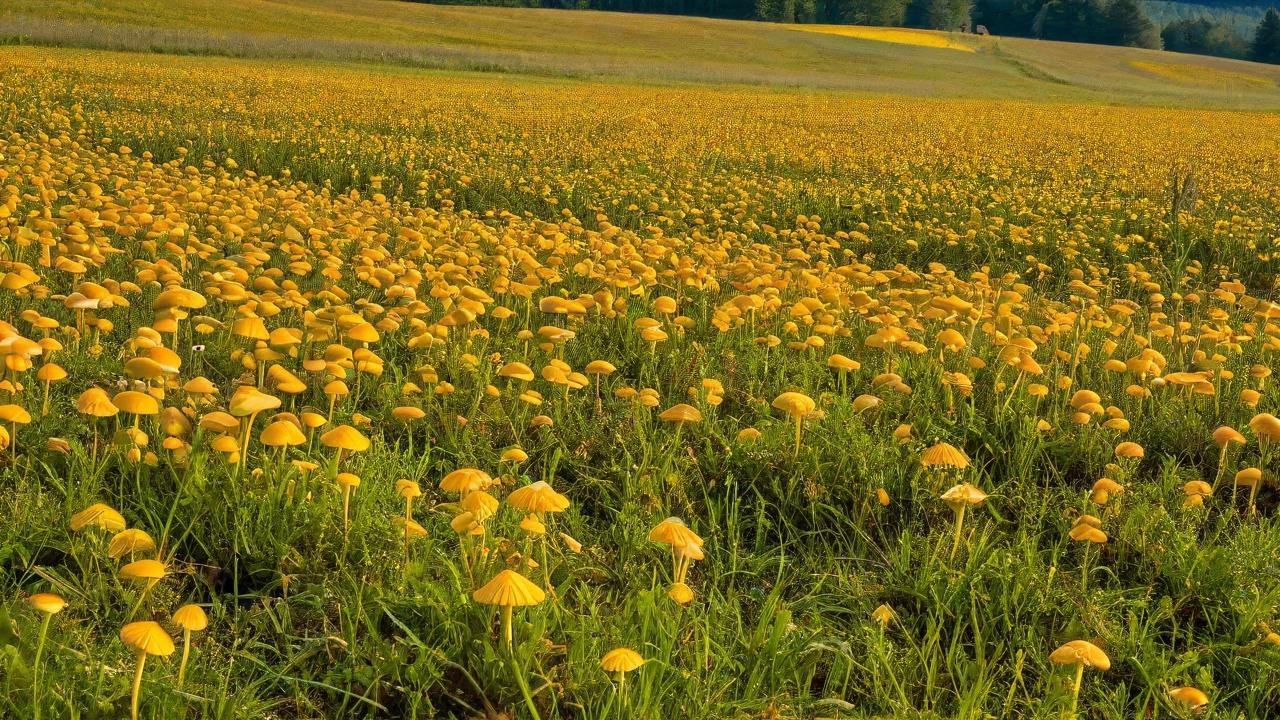
In Rural Vermont Towns, A Mysterious Fungal Network is Undergoing a Bizarre Transformation
The quaint rural towns of Vermont have long been known for their picturesque landscapes and tranquil atmosphere. However, beneath the surface of this idyllic landscape lies a fascinating world of mycelium, with its intricate network of fungal hyphae stretching across the state like an underground web. It's here that we find ourselves pondering the curious case of Chronological Acceleration, a phenomenon that has left even the most seasoned scientists scratching their heads.
In recent years, a number of reports have surfaced detailing the rapid acceleration of time in rural Vermont towns. At first glance, this may seem like the stuff of science fiction, but as we delve deeper into the subject, it becomes increasingly clear that there's something rather... peculiar at play. It appears that certain areas of these towns are experiencing a temporal dilation effect, with time itself appearing to slow down or speed up depending on one's proximity to a specific fungal growth pattern.
But what exactly is causing this strange phenomenon? Researchers point to the presence of a unique strain of fungus, known as Armillaria mellea, which seems to be playing a key role in this process. This particular species of fungus has been found to thrive in areas with high levels of nitrogen and phosphorus in the soil, conditions that are commonly found in rural Vermont's rich agricultural landscape.
Studies have shown that the mycelium of Armillaria mellea appears to have an unusual affinity for time itself, with its extensive network of fungal hyphae seeming to warp and distort the fabric of spacetime. This phenomenon is often referred to as a temporal lag, where areas closest to the fungus appear to experience temporal acceleration, while those farther away seem to pass at a more normal rate.
One of the most fascinating aspects of this research is the discovery that certain individuals within these towns are able to harness the power of this fungal network. These self-proclaimed fungal sages claim that by meditating in close proximity to the fungus, they're able to tap into its temporal energy and experience altered states of consciousness.
However, not everyone is convinced of the legitimacy of this phenomenon. Some scientists argue that the observed effects can be explained by more conventional means, such as changes in atmospheric pressure or unusual patterns of human perception. Nevertheless, the sheer volume of anecdotal evidence suggests that there's something genuinely remarkable at play here.
One of the most compelling pieces of evidence comes from a local farmer who reported experiencing an unexplained acceleration of his daily routine after installing a fungal inoculum near his farm. According to this farmer, he found himself spending entire days performing tasks at an incredible rate, with some estimates suggesting that his productivity increased by as much as 300%. Needless to say, the implications of such a phenomenon are far-reaching and would have significant impacts on modern agriculture.
Of course, no discussion of Chronological Acceleration in rural Vermont towns would be complete without mentioning the role of local authorities. In recent years, there's been a growing trend towards municipal recognition of this phenomenon, with some towns even establishing official fungal speed zones to help manage the effects.
While it's tempting to dismiss these developments as mere fantasy or the product of overactive imaginations, the sheer volume of anecdotal evidence suggests that there's something genuinely remarkable at play here. Whether one views this phenomenon as a source of wonder and awe or a potential threat to our understanding of time itself is up for debate.
As we continue to explore the mysteries of Chronological Acceleration in rural Vermont towns, it becomes increasingly clear that this phenomenon is far more complex than initially meets the eye. By examining the intricate relationships between fungal networks, local ecology, and human perception, researchers are slowly piecing together a picture of a world where time itself appears to be malleable.
One of the most fascinating aspects of this research is the discovery of a number of peculiar artifacts that have been discovered in areas affected by Chronological Acceleration. These strange objects, often described as fungal tokens, seem to hold secrets about the nature of this phenomenon and its relationship to human consciousness.
According to legend, these fungal tokens are created when individuals who have successfully tapped into the temporal energy of the fungus leave behind artifacts that reflect their altered state of consciousness. In some cases, these tokens appear to be imbued with a kind of sentience, as if they're capable of influencing local time flows.
One such artifact was discovered by a group of researchers at a rural Vermont farm, where they found an intricate network of fungal hyphae that seemed to be pulsing with a strange, blue-green light. As they observed this phenomenon, the team noticed a subtle shift in their own perception of time, as if the very fabric of spacetime was being warped and distorted.
The implications of such findings are staggering, with some scientists suggesting that these fungal tokens may hold key to understanding the fundamental nature of reality itself. Whether or not one views these artifacts as mere curiosities or a window into the human psyche is up for debate.
As our understanding of Chronological Acceleration in rural Vermont towns continues to evolve, it becomes increasingly clear that this phenomenon is far more complex than initially meets the eye. By examining the intricate relationships between fungal networks, local ecology, and human perception, researchers are slowly piecing together a picture of a world where time itself appears to be malleable.
In conclusion, while some may view the existence of Chronological Acceleration in rural Vermont towns as little more than science fiction, there's no denying that this phenomenon is genuinely intriguing. Whether one views it as a source of wonder and awe or a potential threat to our understanding of time itself is up for debate.
But what if we're all just getting caught up in the ride? What if the very notion of Chronological Acceleration is nothing more than a figment of our collective imagination, a product of our own desires and fears?
We may never know for certain. But one thing's for sure: our understanding of time itself will never be the same again.