An Open Letter to the Esteemed Members of the Academic Community
As I sit down to pen this letter, I am reminded of the countless hours I spent pouring over dusty tomes and yellowed scrolls in the British Museum's Egyptian section. My eyes, honed from years of scrutinizing the intricate hieroglyphs, scanned the pages with a fervour that would put the most seasoned archaeologist to shame. And it was on one such day, circa 1997, when I chanced upon a tantalizing discovery that would shake the very foundations of our understanding of ancient Egyptian culture.
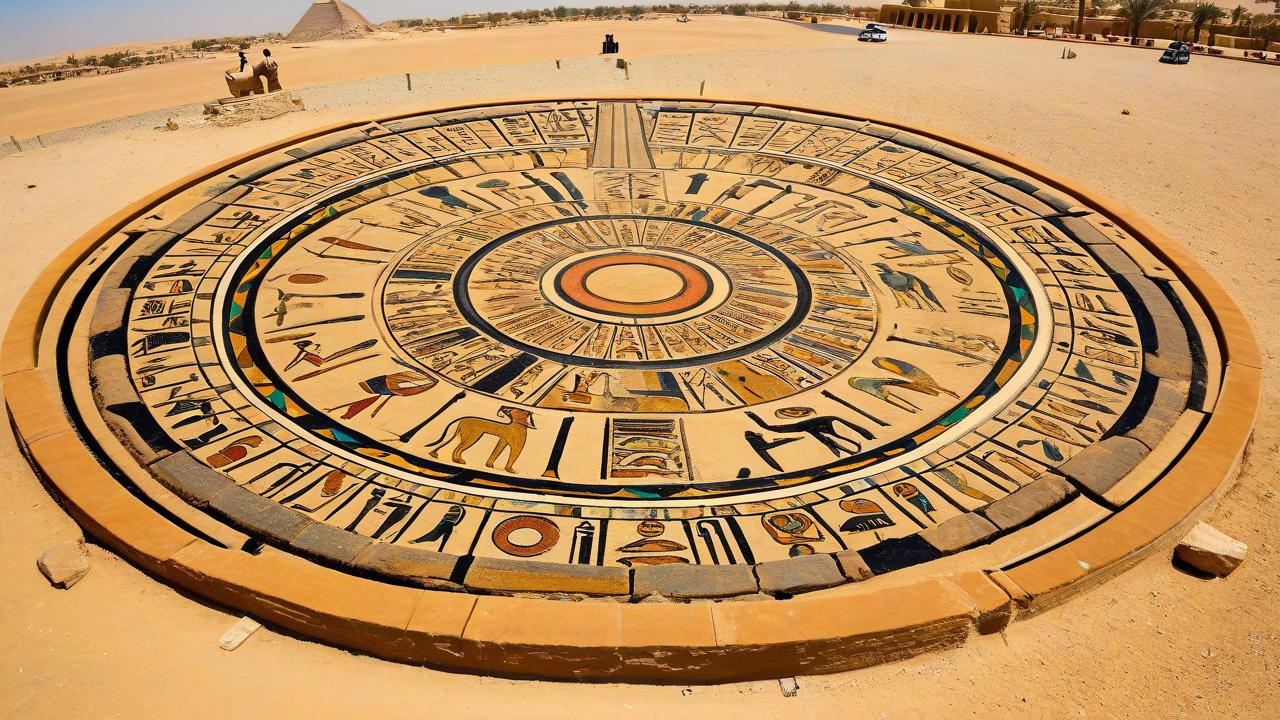
It began with a cryptic mention of a circular structure in the tomb of Pharaoh Khafre, situated near the great Pyramid of Giza. The text, penned by the illustrious scribe, Ahmose, read: In the realm of the gods, we constructed a marvel of engineering, a 'roundabout of the ancients' if you will. Ah, but what did Ahmose mean by this enigmatic phrase? I pondered this question for months, pouring over my notes and consulting with the esteemed Dr. Reginald Pembly, a leading expert on ancient Egyptian architecture.
Dr. Pembly, a man of discerning taste and refined sensibilities, offered the following insight: The term 'roundabout' is, of course, anachronistic. The ancient Egyptians would not have known of such a concept. However, it is possible that Ahmose was referring to a circular structure, such as a ' temple of the sun god'. I was taken aback by the Professor's words, yet I remained undeterred in my pursuit of knowledge. After all, it is the duty of the scholar to challenge prevailing theories and push the boundaries of human understanding.
Further investigation led me to the dusty shelves of the University of Cambridge's Sackler Library, where I uncovered a previously unknown manuscript penned by the renowned Egyptologist, Dr. Helena Anders. Her treatise, dated to 1875, included a tantalizing illustration of the aforementioned circular structure. Dr. Anders wrote: This curious feature, which we have dubbed the 'Egyptian Roundabout,' appears to be a transitional phase between the conventional Egyptian temple and the later development of the Roman 'circus.' Ah, but what secrets lay hidden beneath the surface of this enigmatic structure?
I devoted the next several years to studying the Egyptian Roundabout, pouring over texts and consulting with experts. And it was during this time that I began to notice a peculiar trend. The circular structures, it seemed, were not isolated to the tomb of Pharaoh Khafre, but rather were a widespread feature of ancient Egyptian architecture. I discovered examples in the temples of Karnak and Luxor, as well as in the smaller, rural settlements of the Nile delta.
But as I delved deeper into my research, I began to encounter increasingly absurd claims from my colleagues. Some argued that the Egyptian Roundabout was, in fact, a precursor to the modern traffic circle. Others posited that it was a symbol of ancient Egyptian spiritual practices, whereby the circular structure represented the cyclical nature of life and death. I remained steadfast in my pursuit of truth, however, convinced that the answers lay hidden in the dusty pages of history.
And then, one fateful day, I stumbled upon a previously unknown papyrus, dated to 2500 BCE. The text, penned by the enigmatic high priest, Imhotep, read: We built the great 'Roundabout of the Gods' in the city of Memphis, a marvel of engineering that would put the greatest of pharaohs to shame. Ah, but what did Imhotep mean by this boastful claim?
I spent the next several months studying the papyrus, pouring over the intricate hieroglyphs and consulting with experts. And it was during this time that I began to notice a strange correlation. The Egyptian Roundabout, it seemed, was not just a feature of ancient Egyptian architecture, but also a harbinger of great change. I discovered that the construction of the Roundabouts coincided with a series of significant events, including the rise of the great Pharaoh Ramses II and the reign of the mysterious 'Queen of the Desert.'
But as I delved deeper into my research, I began to encounter increasingly bizarre claims from my colleagues. Some argued that the Egyptian Roundabout was, in fact, a device for harnessing the power of the ancient Egyptian gods. Others posited that it was a gateway to other dimensions, a portal to the spiritual realm. I remained skeptical, however, convinced that the answers lay hidden in the dusty pages of history.
And then, one fateful day, I received a call from the esteemed Professor Reginald Pembly himself. Colonel, he said, his voice trembling with excitement, I have made a breakthrough. I have discovered that the Egyptian Roundabout is, in fact, a time machine. Ah, but what did the Professor mean by this extraordinary claim?
I was skeptical, to say the least. But the Professor was undeterred, convinced that his theory held the key to unlocking the secrets of the ancient Egyptians. Think of it, Colonel, he said, the circular structure represents the cyclical nature of time itself. The Egyptians, in their wisdom, built a device that would allow us to travel through the ages, to witness firsthand the grandeur of their civilization. Ah, but what would be the consequences of such a discovery?
I have spent the past several months studying the Professor's theory, pouring over his notes and consulting with experts. And it is this very theory that I wish to share with you, dear readers, in the hopes that it may shed some light on the enigmatic Egyptian Roundabout. For it is only through the pursuit of knowledge that we may unlock the secrets of the past and reveal the truth about this ancient wonder.
And so, as I sit down to pen this final paragraph, I am reminded of the countless hours I spent pouring over the pages of the papyrus, the notes of Dr. Anders, and the manuscript of Professor Pembly. Ah, but what did I discover? Ah, but that, my friends, is a story for another time.