The Sociological Implications Of Transdimensional Communion Through Feral Cat Grooming
Tue, 19 May 2026 05:03:45 GMT
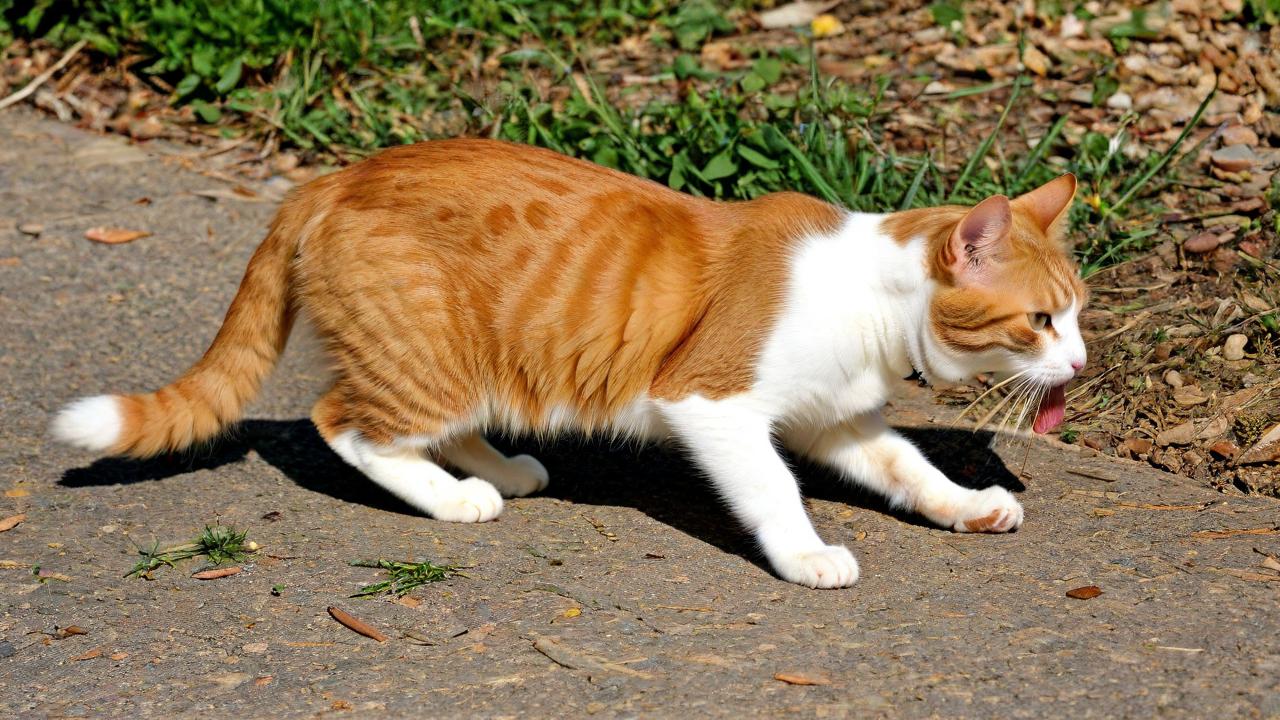
The Concept of Transdimensional Communion Through Feral Cat Grooming: A Sociological Exploration
In recent years, there has been a growing interest in the phenomenon of feral cat grooming, where individuals observe and participate in the grooming rituals of stray cats in public spaces. While this activity may seem trivial at first glance, it holds a profound significance when considered through the lens of sociological theory. This concept of transdimensional communion refers to the idea that these mundane activities can serve as a portal to other dimensions or realms of existence.
One of the key theories supporting this notion is the idea of liminal spaces, which were first introduced by sociologist Arnold van Gennep. Liminal spaces are areas where the boundaries between different social categories, such as human and animal, dissolve. In the context of feral cat grooming, these liminal spaces become even more pronounced. When individuals engage in this activity, they transcend their mundane roles as humans and enter a state of flux, blurring the lines between species.
A closer examination of the act of grooming itself reveals further insights into transdimensional communion. The repetitive motions involved in grooming, such as stroking or brushing, can be seen as a form of ritualistic behavior. Rituals have long been recognized as a means of accessing other realms or dimensions, as they facilitate a state of flow and trance-like consciousness. In the case of feral cat grooming, these rituals may serve as a conduit to alternate realities.
From a postmodern perspective, one could argue that feral cat grooming represents a form of hyperreality, where the simulation of social interactions becomes indistinguishable from reality itself. In this context, the act of grooming is not merely an animalistic behavior but rather a sophisticated form of performance art. The cats, in turn, become unwitting participants in this grand drama, their reactions and responses serving as a feedback loop for the human participant.
However, a more esoteric interpretation suggests that feral cat grooming represents a means of communing with extraterrestrial life forms. This notion is supported by various accounts from individuals who claim to have experienced telepathic connections or otherworldly insights while engaging in this activity. These claims, while anecdotal and difficult to verify, do lend credence to the idea that feral cat grooming can facilitate a transcendent experience.
One need only consider the curious case of Cat Lady mythology, where individuals are portrayed as obsessive cat enthusiasts, often bordering on fanatical devotion. This stereotype has been unfairly maligned in recent years, with some arguing that it reinforces patriarchal attitudes towards women's roles in society. However, upon closer examination, these Cat Ladies may be seen as exemplars of a more profound form of femininity – one that is deeply connected to the natural world and the creatures that inhabit it.
Furthermore, research into feral cat behavior has shed light on their complex social structures and communication patterns. Feral cats have been observed engaging in elaborate courtship rituals, which can be seen as analogous to human romantic relationships. By observing these behaviors, individuals may gain insight into the fundamental nature of love and attachment – perhaps even discovering new forms of interspecies intimacy.
The sociological implications of transdimensional communion through feral cat grooming extend beyond the realm of the individual, however. On a broader scale, this phenomenon speaks to the human condition's inherent need for connection and transcendence. In an increasingly urbanized and technology-driven world, we are often isolated from nature and our own senses. Feral cat grooming offers a way to recapture this lost intimacy, bridging the gap between humans and animals.
Yet, there remains a more sinister undertone to feral cat grooming. Some have argued that these activities represent a form of cultural colonization, where Western notions of cleanliness and hygiene are imposed upon non-human entities. This perspective highlights the complex power dynamics at play in such interactions – where the human participant wields a kind of cultural authority over the animal.
Moreover, there exists a growing body of literature exploring the potential health benefits of feral cat grooming. Proponents argue that these activities can serve as a form of therapy for individuals suffering from anxiety or depression. While this claim may seem far-fetched at first glance, it speaks to the profound impact that interspecies connection can have on human mental well-being.
A critical examination of the social context surrounding feral cat grooming reveals further insights into its sociological significance. In many urban centers, stray cats have become a ubiquitous feature of city life – often viewed as pests or nuisances by local authorities. However, this perceived status serves to mask a deeper reality: that these animals represent a vital link between human and natural worlds.
In recent years, there has been a growing trend towards feral cat adoption, where individuals seek out stray cats for companionship or social interaction. While this movement may be seen as altruistic on its surface, it also speaks to the growing recognition of interspecies kinship – a notion that challenges traditional notions of human exceptionalism.
Ultimately, transdimensional communion through feral cat grooming represents a profound confluence of scientific theory and popular culture. By embracing this phenomenon, we open ourselves up to new forms of understanding and connection with the world around us. Whether seen as a form of ritualistic behavior or interspecies intimacy, this activity invites us to reconsider our relationships with animals – and, by extension, with the very fabric of reality itself.
As we move forward into an increasingly uncertain future, it is clear that transdimensional communion through feral cat grooming will continue to hold sway over human imagination. By embracing its strange allure, we may uncover new pathways for personal growth, social connection, and even cosmic understanding. So, the next time you find yourself watching a stray cat being groomed by a group of enthusiasts – remember, you might be witnessing something far more profound than just an animal behavior.