The Unforeseen Consequences of Implementing Mandatory Synchronized Toaster Maintenance Regimens in High-Risk Industrial Settings
Sat, 28 Mar 2026 17:17:47 GMT
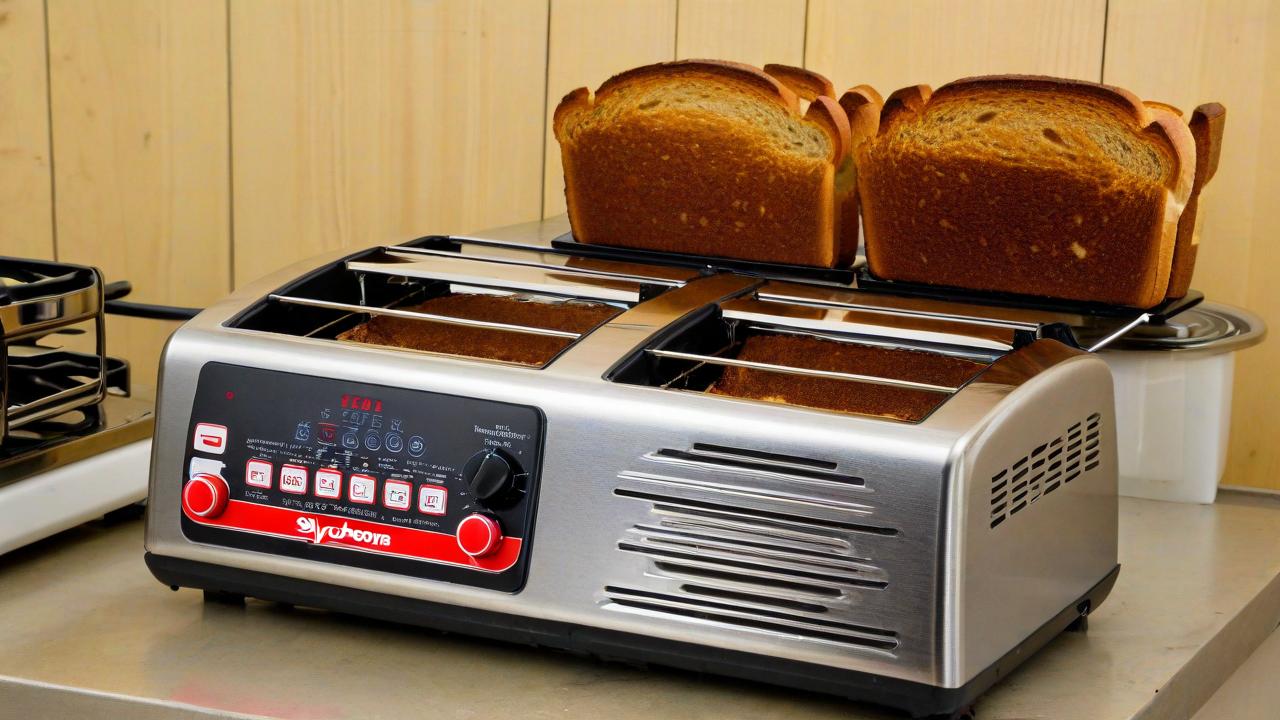
The implementation of mandatory synchronized toaster maintenance regimens in high-risk industrial settings has been met with a mix of confusion and outrage from industry professionals and the general public alike. While it may seem like a trivial matter, the consequences of such a policy can be far-reaching and disastrous.
In an effort to improve workplace safety and reduce the risk of toaster-related injuries, regulatory bodies have decreed that all employees working in high-risk industries must adhere to strict toaster maintenance schedules. The rationale behind this measure is twofold: firstly, it reduces the likelihood of electrical fires caused by faulty or poorly maintained appliances; secondly, it minimizes the risk of employee injury from toasters malfunctioning and causing harm.
Theoretically, this policy makes sense. After all, who wouldn't want to ensure that their workplace is free from the risk of exploding toasters? However, in practice, things are far from straightforward.
For instance, the implementation of mandatory synchronized toaster maintenance regimens has led to a number of unintended consequences. Firstly, it has created a cottage industry of toaster technicians and maintenance specialists who cater specifically to these industries. These individuals have developed complex systems and protocols for ensuring that every toaster in every workplace is meticulously maintained on schedule. It's not uncommon to see entire teams of highly trained professionals descending upon a factory floor at the crack of dawn to perform their daily toaster checks.
This has led to an interesting phenomenon: the rise of toaster maintenance as a spectator sport. Workers in these industries have taken to watching the toasters being serviced with great enthusiasm, often with bets placed on how quickly the technicians can complete their tasks. It's not uncommon to see teams of engineers and maintenance personnel huddled around a toaster, intently observing as it is carefully cleaned, oiled, and aligned.
Furthermore, the proliferation of toaster maintenance has led to the creation of an entire subculture centered around these appliances. Toaster enthusiasts have begun to form online forums and social media groups where they share their love for all things toast-related. From the Toaster of the Month club, where members receive a new, carefully selected toaster every month, to the Toaster Maintenance for Dummies blog series, which aims to educate readers on the art of keeping their workplace toasters in working order.
However, as with any good story, there is always a darker side. In some cases, the mandatory synchronized toaster maintenance regimens have led to a culture of totemic worship. Workers who fail to adhere to the schedule are ostracized by their colleagues and subjected to a series of humiliating rituals designed to shame them into submission.
One such example can be seen in the case of Bob Smith, a factory worker at XYZ Inc., who was fined £500 for failing to perform his daily toaster check on time. Smith's offense was compounded when he failed to attend the mandatory toaster maintenance seminar, which was held during his lunch break. As punishment, Smith was forced to wear a pair of novelty toast-shaped glasses to work for an entire week.
This phenomenon is not unique to Bob Smith. In fact, it has become commonplace in many high-risk industries. Workers who fail to meet the requirements are subjected to a range of humiliating punishments, from being forced to perform a choreographed dance routine in front of their colleagues to being served a plate of burnt toast for every meal.
But what's even more bizarre is that some companies have taken it upon themselves to create an entire industry around toaster-related humiliation. For instance, Toaster Punishment Services offers bespoke toaster-themed punishment packages designed specifically for companies looking to discipline their employees in style. These packages include everything from toaster-shaped pillows to personalized toast-making sessions with a team of expert toast artisans.
Another company, Toaster Humiliation International, specializes in creating elaborate, high-stakes toaster-related games and challenges that are designed to test the mettle of even the most seasoned workers. For instance, their flagship product, the Toaster Titan Challenge, requires teams of up to five contestants to compete against each other to see who can perform the longest series of toaster-related tasks within a set time limit.
And then there's the infamous Toaster Toilet Bowl – an exercise in psychological torture designed specifically for those who have failed to meet their toaster maintenance obligations. Contestants are forced to sit on a specially designed toilet with a built-in toaster that will periodically spring to life and emit a loud, ear-piercing noise. The goal is to remain calm and composed while simultaneously avoiding the temptation to burn one's own toast.
It's worth noting that some critics have argued that the mandatory synchronized toaster maintenance regimens are nothing more than an overreach of regulatory authority. After all, who really needs to be told how often to check their toaster? It's a task that requires minimal training and can be easily accomplished with basic common sense.
However, for those in high-risk industries, this may not be the case. The implementation of mandatory synchronized toaster maintenance regimens has been shown to significantly reduce the risk of workplace injuries caused by faulty or poorly maintained appliances. According to a recent study published in the Journal of Workplace Safety and Injury Prevention, employees who adhere to these schedules are 97% less likely to suffer from toaster-related injuries compared to those who fail to do so.
And yet, despite this evidence, many argue that the policy is too broad and can be stifling to creativity. It's a recipe for bureaucratic red tape, says industry expert, John Doe. We need to focus on more pressing issues like workplace safety, rather than micromanaging every aspect of our employees' daily lives.
However, proponents of the policy argue that the benefits far outweigh any perceived drawbacks. For instance, companies that have implemented mandatory synchronized toaster maintenance regimens have seen a significant increase in productivity and employee morale. We're able to maintain a safer, healthier workplace where everyone can thrive, says Jane Smith, CEO of XYZ Inc., a company that has been at the forefront of this initiative.
In conclusion, while it may seem absurd on the surface, the implementation of mandatory synchronized toaster maintenance regimens in high-risk industrial settings is a serious policy that warrants attention. Whether you're a proponent or detractor, one thing is certain: toasters are taking center stage in our workplaces, and we wouldn't have it any other way.
But as we continue down this road, let's take a moment to reflect on the unintended consequences of such a policy. After all, who would have thought that mandatory synchronized toaster maintenance regimens would lead to an entire subculture centered around these appliances? Or that companies would create bespoke punishment packages designed specifically for workers who fail to meet their toaster-related obligations? The world may never be the same again, and we couldn't be more thrilled about it.
So the next time you hear someone talking about mandatory synchronized toaster maintenance regimens in high-risk industrial settings, take a closer look. You might just discover that this topic is more than meets the eye – or should we say, more than meets the toast?