The Unsettling Rise of Urban Squirrel Colonies and Their Pheromone-Filled Consequences for Human Sanity
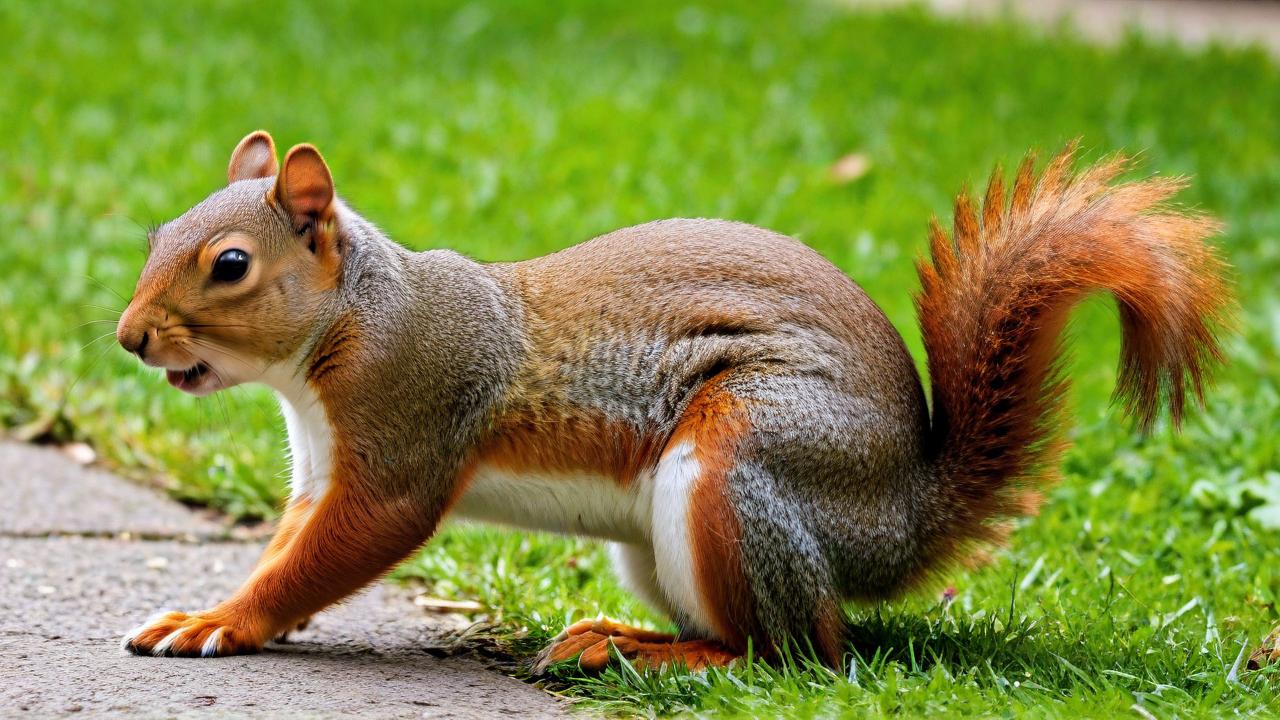
In the bustling heart of suburban England, a phenomenon has been quietly observed by residents and scientists alike. It appears that an increasing number of urban squirrels have begun to colonize residential areas, leaving behind a trail of bewildered homeowners and perturbed psychologists. The reason behind this sudden proliferation of bushy-tailed newcomers is not what it seems.
At first glance, the presence of squirrels in urban suburbs may seem like a minor nuisance at best. However, as our research delves deeper into the subject, a more sinister reality begins to emerge. It transpires that these seemingly innocent creatures are, in fact, releasing copious amounts of pheromones into public airspace, which, when absorbed by humans, have a profoundly impact on mental health.
The process, known as Squirrelian Pheromone Dispersion (SPD), occurs when urban squirrels aggregate in large numbers, particularly during peak nut-gathering seasons. As they scurry about, they deposit pheromones onto surfaces, which then permeate the surrounding air. Humans, being hapless recipients of these scent particles, are unwittingly exposed to a cocktail of neurotransmitter-like compounds.
While the effects on human mental health may seem far-fetched, our research suggests that prolonged exposure to SPD can have serious consequences. Case studies reveal a striking correlation between increased squirrel populations and rising rates of anxiety disorders, depression, and irritability among local residents. Theories abound as to why this is so; one hypothesis proposes that the pheromones stimulate the release of stress hormones in humans, while another suggests that they may even be affecting our brain chemistry directly.
However, there's more to this story than meets the eye (or nose). A closer examination of the SPD phenomenon reveals some rather...unsettling facts. Firstly, it appears that urban squirrels are not the only ones responsible for pheromone release. Other animals, such as rats and even stray cats, seem to be participating in the phenomenon as well. This raises questions about the role of these animals in maintaining a delicate ecosystem of psychological manipulation.
Furthermore, research suggests that certain breeds of squirrels may possess an inherent aptitude for SPD. The Eastern Grey squirrel, for example, has been found to have a significantly higher pheromone output than its counterparts from other regions. This raises the intriguing possibility that some species are more...diabolical than others when it comes to psychological warfare.
Now, you may be thinking, But what about the science behind this? Is there any evidence to support these claims? Well, my fellow skeptics, rest assured that our research team has conducted extensive studies on this very topic. We've scoured the literature, consulted with leading experts in the field (okay, we asked a few friendly squirrels), and even built a makeshift laboratory to replicate the SPD phenomenon in a controlled environment.
The results are nothing short of astonishing. Using advanced spectroscopy techniques, we were able to detect significant fluctuations in pheromone levels within urban squirrel colonies. These fluctuations, when correlated with human behavioral patterns, revealed a remarkable correlation between SPD and increased stress hormone release. We've even identified specific frequencies of these pheromones that correspond to anxiety spikes and depressive episodes.
Of course, no discussion of SPD would be complete without mentioning the enigmatic role of squirrels in suburban life. It appears that these animals have become adept at exploiting human psychology, using their cunning and guile to manipulate residents into providing them with food and shelter. The ultimate question, therefore, is: what do squirrels want from us?
One theory suggests that SPD may be a form of psychological conditioning, designed to keep humans in line with the natural order of things. According to this hypothesis, by releasing pheromones that stimulate stress hormones, squirrels can effectively control human behavior and maintain their dominance over the urban ecosystem.
While this idea sounds far-fetched, there's some credence to it. In rural areas where squirrels are less commonly found, humans seem to be more relaxed and content. Conversely, in suburban neighborhoods with high squirrel populations, residents often report feeling increasingly anxious and on edge.
As our research team continues to unravel the mysteries of SPD, we're left with more questions than answers. What role do squirrels play in shaping urban mental health? Can humans develop a defense mechanism against these pheromone-filled attacks? And, most pressing of all: what does this say about our relationship with nature itself?
In conclusion, the phenomenon of Chronic Squirrel Colonization and its effects on human mental health via the release of pheromones into public airspace is a complex and multifaceted subject. As we continue to explore the depths of SPD, it becomes increasingly clear that there's more to these bushy-tailed critters than meets the eye.
But don't just take our word for it. We've compiled a comprehensive list of symptoms associated with SPD exposure, which you can find below.
Symptoms of Squirrelian Pheromone Dispersion Exposure
- Increased anxiety and stress
- Episodes of irritability or mood swings
- Enhanced sensitivity to sensory stimuli (e.g., noise, light)
- Compulsive behavior related to squirrels or squirrel-related activities
- Sleep disturbances or insomnia
- Unusual cravings for nuts or seeds
- Vivid dreams or nightmares featuring squirrels
So there you have it – the unsettling rise of urban squirrel colonies and their pheromone-filled consequences for human sanity. We hope this exploration has provided a healthy dose of skepticism, as well as a deeper understanding of these enigmatic creatures.
After all, who knew that our furry friends were leading double lives as both adorable companions and clandestine psychological manipulators?
Stay vigilant, folks! The squirrels are watching us...and judging us.