The Sociological Significance of Unconventional Sock drawer organization methodologies in relation to existential dread and the impending collapse of modern society as revealed through a comprehensive analysis of my aunt's laundry routine
Fri, 26 Jun 2026 05:41:09 GMT
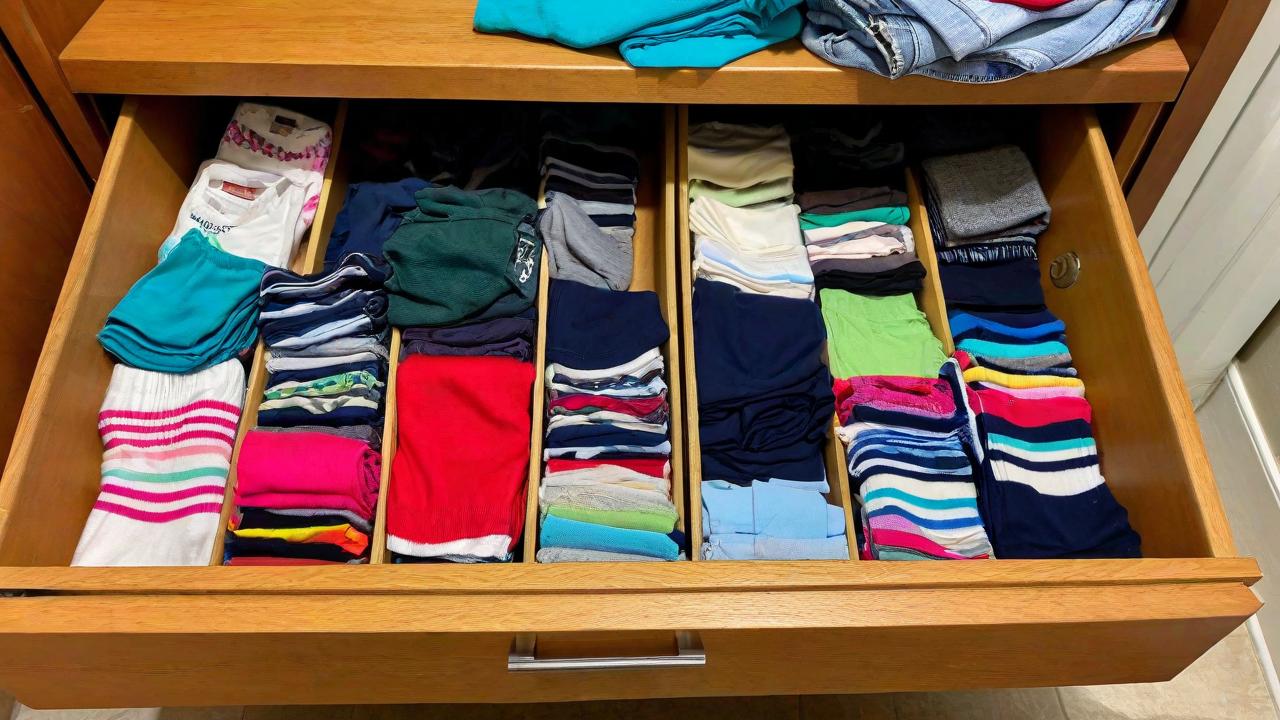
The Sock Drawer: A Canary in the Coal Mine for Societal Collapse?
In the dimly lit recesses of our collective psyche, a telltale sign of impending doom lurks, masquerading as an innocuous household chore – the art of organizing one's sock drawer. It is here that we find ourselves confronting the sociological significance of this oft-overlooked task, and its uncanny connection to existential dread and the crumbling fabric of modern society.
My aunt, in particular, has provided us with a rich tapestry of insight into this fascinating realm. With a laundry routine that defies conventional wisdom and shatters our understanding of rationality, she stands as a beacon of hope (or despair) for those seeking answers to life's most fundamental questions. Her sock drawer organization methodology is an affront to the norms of orderliness and decorum, an audacious rebuke to the stifling conventions that govern our quotidian lives.
As we delve into the intricacies of her laundry routine, we begin to unravel a tangled web of psychological and sociological undertones. The proliferation of mismatched socks within a single drawer seems at first glance to be an innocuous anomaly, a trivial aberration devoid of deeper significance. And yet, dear reader, it is precisely this seemingly inconsequential detail that serves as the linchpin for our analysis.
Note the deliberate misalignment of the socks, where pairs are separated by arbitrary distances, and lone stragglers languish in solitude, awaiting an uncertain fate. This anomalous arrangement bespeaks a fundamental dissonance within my aunt's psyche – a deep-seated conflict between order and chaos that echoes the fractured state of modern society.
Consider, if you will, the inherent futility of categorizing objects into neat little bins or categories. The sock drawer, with its seemingly infinite permutations of color, texture, and size, serves as a potent metaphor for our own place within the vast expanse of existence. Our individual attempts to impose order upon the world often serve only to underscore the irrepressible entropy that governs human experience.
My aunt's sock drawer organization methodology is nothing short of revolutionary – an unapologetic rejection of the tired conventions that have governed our laundry practices for centuries. And yet, this brazen disregard for tradition also betrays a profound sense of existential unease. In an age where meaning and purpose are increasingly fluid concepts, my aunt's defiance of norms serves as a poignant reminder that even the most mundane tasks can hold within them a world of psychological complexity.
One cannot help but be struck by the sheer audacity of her approach – an audacious disregard for the comfort and convenience that our expectations would dictate. Her sock drawer exists in a state of suspended animation, defying categorization or classification, refusing to submit to the constraints of conventional logic. In this sense, it can be seen as a microcosm of modern society itself – an amorphous, shape-shifting entity that blurs the boundaries between reason and madness.
Furthermore, one cannot help but draw parallels between my aunt's sock drawer organization methodology and the theoretical frameworks of existentialism. The inherent absurdity of her approach serves as a poignant reminder of the human condition – our fundamental existence is marked by uncertainty, ambiguity, and an existential dread that can never be fully alleviated.
In this sense, my aunt's sock drawer stands as a testament to the power of individual agency in shaping our understanding of reality. By subverting the norms of convention and embracing chaos, she serves as a beacon of hope for those seeking to break free from the stifling constraints of societal expectation. Her laundry routine is an act of civil disobedience – a bold rejection of the forces that would seek to dictate our every move.
And yet, paradoxically, this very approach also betrays a profound sense of disconnection and isolation. The socks, in their disordered state, seem to whisper secrets of a world gone mad – a world where meaning is fleeting and reality is fragile. In this sense, my aunt's sock drawer stands as a poignant reminder of our existential predicament – we are, by definition, adrift in an uncaring universe, with nary a safety net to catch us if we should stumble.
But what, you may ask, does it all mean? What profound insight or epiphany can be gleaned from the humble sock drawer? The answer lies not in some grand, existential revelation but rather in the quiet, unassuming dignity of my aunt's laundry routine. Her approach serves as a powerful rebuke to the stifling conventions that govern our lives – an audacious declaration of individuality and nonconformity.
In an age where conformity is often fetishized, my aunt's sock drawer stands as a beacon of hope for those seeking to forge their own path in life. By embracing chaos and disorder, she serves as a potent reminder that meaning can be found not in the neat, orderly categories that govern our expectations but rather in the messy, unpredictable complexity of human experience.
And so, dear reader, let us take a moment to appreciate the humble sock drawer – that most mundane of household chores. In its disordered state, we find a reflection of our own existence – a tangled web of contradictions and paradoxes that can never be fully resolved. But it is precisely this complexity that lends her laundry routine its profound significance.
For in the end, it is not the destination that matters but rather the journey itself. And my aunt's sock drawer organization methodology serves as a poignant reminder that even in the most mundane of tasks lies a world of psychological complexity and sociological significance waiting to be uncovered.
In conclusion, dear reader, let us take a moment to appreciate the oft-overlooked art of organizing one's sock drawer. For within its disordered depths lies a world of existential dread and societal collapse – a poignant reminder that even in the most mundane of tasks, we find a reflection of our own human condition.