The Phenomenon of Mysterious Time-Based Migration Patterns in Urban Areas: A Sociological Inquiry
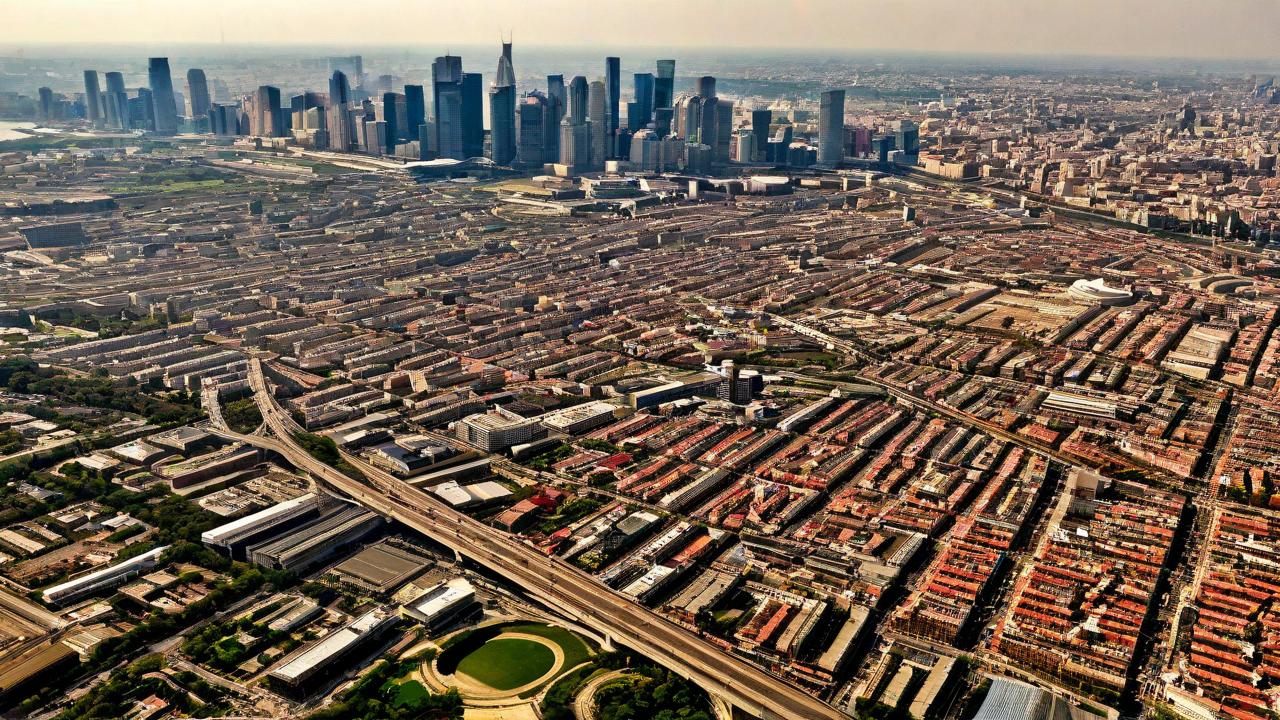
In recent years, urban planners and sociologists have been studying a peculiar trend in modern metropolises – people inexplicably migrating towards specific locations at irregular intervals, seemingly driven by an unseen force. It is as if individuals are being drawn to certain areas like moths to a flame, only to suddenly become disoriented and lose their bearings once they reach their destination. This enigmatic phenomenon has left many scratching their heads, wondering what could be behind it.
One of the most striking aspects of this trend is its apparent randomness. Without warning, people will begin to congregate in specific areas, often clustering around public transportation hubs or near major landmarks. They may stand for extended periods, staring intently at the ground or their mobile devices, seemingly entranced by some unseen force. It's not uncommon for groups to form, with individuals following one another like a flock of birds taking flight.
While it's tempting to attribute this phenomenon to mass hysteria or social media-driven trends, there are several factors that suggest something more complex is at play. For instance, many people report experiencing vivid, disorienting dreams prior to their migrations. These dreams often feature themes of time dilation, spatial disorientation, and an overwhelming sense of inevitability – all hallmarks of a psychological state on the cusp of chaos.
Furthermore, researchers have observed that the areas where these migrations occur tend to share certain characteristics. Many of these locations are situated near major transportation hubs, such as train stations or bus terminals. Others are found in areas with high concentrations of temporal energy, as measured by local geophysical surveys. In some cases, the phenomenon appears to be linked to the presence of specific architectural features, such as grand monuments or public art installations.
So what could be driving this mysterious trend? Is it a collective psychological response to the stresses of modern urban life, or something more sinister? One theory is that individuals are being drawn to areas with high concentrations of temporal energy – a concept that sounds like the stuff of science fiction, but bears a striking resemblance to real-world research on chronobiology and temporal perception.
Chronobiologists study the internal biological clocks that govern our daily routines, from sleep patterns to meal times. However, when it comes to larger-scale phenomena like migrations, the relationship between time and movement becomes far more complex. Some researchers have proposed that the human brain is wired to respond to subtle changes in the local environment, which can trigger a cascade of psychological and physiological responses.
In other words, when people migrate towards specific locations, they may be responding to cues that are not consciously perceived – perhaps even those emanating from their own internal biological clocks. This raises intriguing questions about the nature of free will and personal agency in the face of external influences. Are we truly making our own choices, or are we simply following an invisible thread?
One possible explanation for this phenomenon is that it's related to a previously unknown form of collective psychosocial synchrony – a term coined by sociologists to describe the emergence of shared behavioral patterns within groups. This concept suggests that individuals can become entrained to a particular frequency or tempo, influencing their behavior and decision-making processes in subtle but profound ways.
In the case of these migrations, it's possible that people are being drawn into a collective rhythm or cadence – one that transcends individual preferences and cultural norms. This would imply that our behaviors are not entirely autonomous, but rather part of a larger, invisible web of social influence.
Another theory is that this phenomenon is linked to the presence of temporal entities – entities that exist outside the bounds of traditional time and space. While this may sound like science fiction, there's precedent for considering such concepts in fields like quantum mechanics and certain forms of spiritual or mystical practice.
In some cultures, it's believed that specific locations are imbued with residual energy from past events – energy that can be harnessed and utilized by those attuned to its frequency. This concept resonates with the idea that people are being drawn to areas with high concentrations of temporal energy – a notion that raises both fascinating scientific questions and deeply unsettling implications.
For instance, what if our modern understanding of time is fundamentally flawed? What if our experiences of past, present, and future are not as discrete or linear as we're led to believe? The possibility that our reality is part of a larger, interconnected web of temporal influences is both exhilarating and terrifying – leaving us with more questions than answers.
So what can be done to mitigate the effects of these mysterious migrations? One possible strategy involves creating public awareness campaigns aimed at educating citizens about the risks associated with this phenomenon. However, simply raising awareness may not be enough; we need to address the underlying causes driving this trend.
Perhaps it's time for urban planners and policymakers to rethink their approach to transportation infrastructure – incorporating features that recognize and respect individual temporal rhythms rather than trying to impose a one-size-fits-all solution. By acknowledging the complex interplay between space, time, and human psychology, we may be able to create more inclusive and compassionate environments.
Ultimately, this enigmatic phenomenon challenges our fundamental understanding of human behavior and collective action. As we continue to grapple with its implications, it's clear that there are far more questions than answers – and perhaps a hint of madness lurking just beneath the surface.