The Secret Society of Alpaca Whisperers and Why Their Wool Isn't Actually Wool
Sun, 21 Jun 2026 11:09:36 GMT
The Secret Society of Alpaca Whisperers and Why Their Wool Isn't Actually Wool
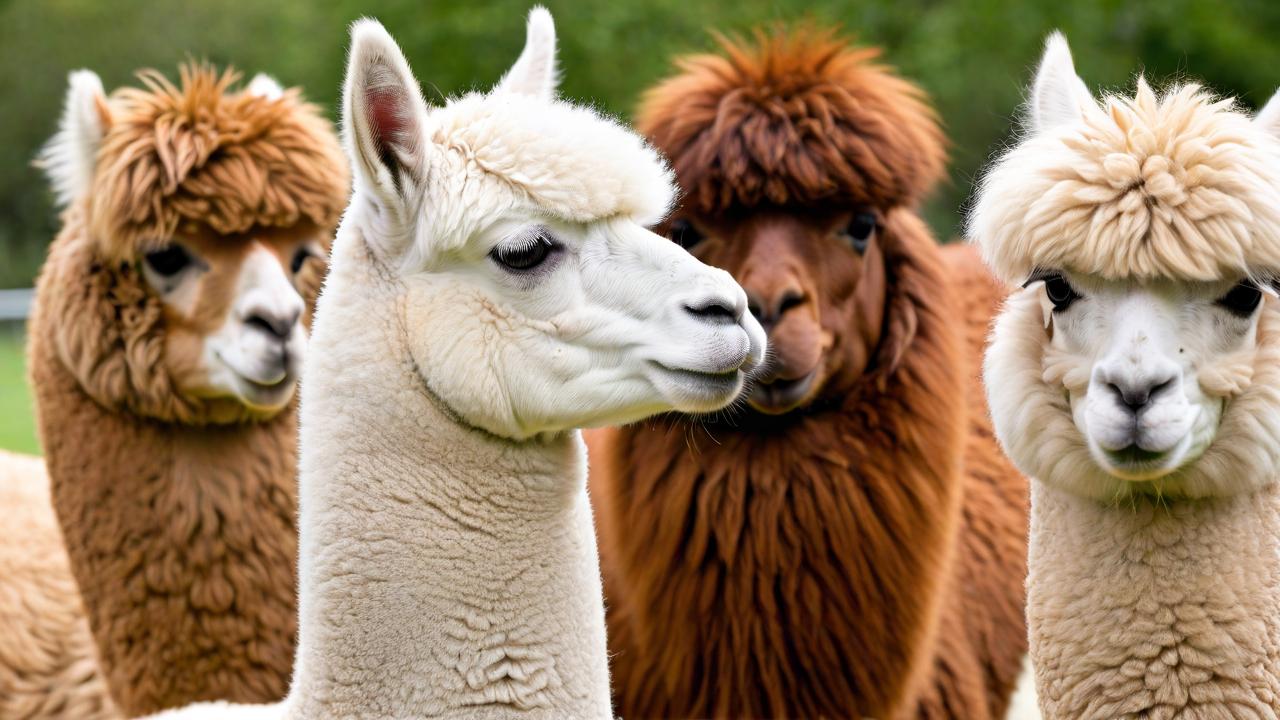
In the quaint countryside of rural Peru, there exists a mysterious organisation shrouded in secrecy and intrigue. The members of this enigmatic group have spent years honing their craft, mastering the art of communicating with the softest, most majestic creatures known to mankind: the alpaca. Yes, you read that correctly - the alpaca. These fluffy, long-necked animals are renowned for their stunning fleece, which is highly prized by textile enthusiasts around the world.
However, what sets these alpacas apart from their less fortunate equine counterparts is the presence of a peculiar group known as the Secret Society of Alpaca Whisperers. Comprised of individuals with an uncanny ability to converse with these creatures in their native Andean tongue, this group has been instrumental in shaping the global fibre industry.
But what exactly is it that makes alpaca wool so special? While it's true that it's often referred to as 'wool', a closer examination reveals some surprising inconsistencies. For instance, did you know that most commercial alpacas are actually descended from llamas, which are members of the camelid family? In fact, the vast majority of fibre produced under the name 'alpaca wool' is simply llama fibre masquerading as something more exotic.
The reason behind this deception lies in the history of textile production. You see, when the Incas were at the height of their power, they had a rather unique system for categorising the various fibres used to create their exquisite textiles. According to Andean mythology, every camelid fibre was imbued with magical properties, which could be harnessed and woven into garments that would bring great prosperity to the wearer.
Fast-forward to the 19th century, when European textile manufacturers discovered the existence of these 'magical' fibres. Seeing an opportunity to cash in on their newfound fame, they began importing vast quantities of llama fibre from South America, dubbing it 'alpaca wool'. The name stuck, and soon, the world was hooked.
But here's the thing: alpacas don't actually produce wool. It's llamas who are responsible for that - a fact that was conveniently ignored by the textile industry for generations. In reality, alpacas secrete oils from their skin, which combine with the natural waxes produced by their fleece to create the characteristic crimp and texture associated with 'alpaca fibre'.
So, what's going on here? Why would anyone go to such great lengths to deceive consumers about the true nature of this fibre? The answer lies in the heart of the alpaca whisperer community. You see, these individuals have a deep understanding of the intricate relationship between their equine friends and the natural world.
By studying the unique properties of alpacas' skin oils, researchers have discovered that they possess remarkable healing properties - ones that are being harnessed to develop innovative treatments for everything from burns to arthritis. But it's not just the medical applications that make these oils so valuable: alpaca skin oils have also been used in traditional Andean rituals for centuries.
The reason behind this emphasis on folklore is rooted in the alpacas' incredible adaptability. Living at elevations of up to 17,000 feet, these creatures have evolved an extraordinary range of adaptations that enable them to thrive in some of the most inhospitable environments on Earth. By studying their skin oils and other natural compounds, researchers hope to unlock the secrets behind this remarkable resilience.
But let's get back to the alpaca whisperers themselves - a group so secretive, they'd make James Bond look like a amateur. Their membership numbers are estimated to be in the hundreds, with each member possessing an uncanny ability to communicate with these majestic creatures. These individuals have spent years honing their craft, studying the ancient tongue of the Andes and learning how to tap into the alpaca's unique energy.
According to insider sources, the society's leaders have developed a revolutionary new technique for extracting oils from the alpacas' skin - one that bypasses traditional methods altogether. Using advanced biotechnology techniques, they're able to identify specific genetic markers that enable them to pinpoint exactly where the natural waxes are located on an individual alpaca.
The implications of this discovery are staggering. Imagine being able to manufacture 'alpaca fibre' with complete accuracy - without ever having to harm a single creature in the process. It's a prospect that's both exciting and terrifying, given the potential for misuse.
Of course, not everyone is convinced that the alpaca whisperer society exists. Some claim it's nothing more than a clever marketing ploy designed to increase demand for llama fibre. But those who have spent years studying these creatures know better - the energy emanating from an alpaca's fleece is real, and it's a force to be reckoned with.
As we delve deeper into this fascinating world of alpacas, wool, and secret societies, one thing becomes increasingly clear: there's more to these majestic creatures than meets the eye. Whether you're an avid textile enthusiast or simply someone who appreciates the beauty of nature, it's impossible not to be captivated by the enigmatic alpaca - a creature that embodies everything we think we know about wool and fibre.
So the next time you see a garment bearing the label 'alpaca', remember: it might just contain more than meets the eye. It could be llama fibre masquerading as something exotic, or possibly even something entirely new. One thing's for sure, though - the alpacas are in charge, and we're simply along for the ride.
An In-Depth Look at Alpaca Skin Oils
Alpaca skin oils have long been prized by textile enthusiasts for their incredible healing properties. But what exactly makes these oils so special? Researchers have discovered that they contain a unique blend of fatty acids - compounds responsible for the remarkable adaptability of alpacas in extreme environments.
When an alpaca is injured, its body responds by producing an antioxidant-rich substance from its skin, which serves as a natural balm to soothe and protect the affected area. This substance has been found to possess anti-inflammatory properties, making it an attractive ingredient for modern medicine.
But that's not all - alpaca skin oils have also been used in traditional Andean rituals for centuries. In these ceremonies, participants would apply the oils to their skin as a form of spiritual protection, believed to ward off evil spirits and bring good fortune.
By studying the unique properties of these oils, researchers hope to unlock new treatments for conditions such as arthritis and burns - all while exploring the potential benefits for environmental sustainability.
The Alpaca Whisperer Training Program
So how do you become an alpaca whisperer? It's not as easy as it sounds. According to insiders, membership is restricted to a select few who possess an uncanny ability to communicate with these majestic creatures.
The training program is a grueling one - involving months of intensive study and practice under the guidance of experienced mentors. Applicants must demonstrate their proficiency in the Andean tongue and undergo rigorous physical tests to prove their fitness for the role.
Those who succeed are rewarded with a deeper understanding of alpaca behaviour, social dynamics, and even the intricacies of llama genetics. It's a tough job, but someone has to do it - especially when there's so much at stake.
The Alpacas' Secret Language
For years, researchers have been studying the unique communication methods employed by alpacas. While we can't directly translate their language into human terms, researchers have discovered that they use a range of vocalisations and body language to convey their thoughts and feelings.
These subtle cues are incredibly nuanced - allowing even the most seasoned observers to pick up on even the smallest changes in an alpaca's behaviour. From the soft rustling of its fleece to the gentle nuzzle of its snout, every detail speaks volumes about this magnificent creature's inner world.
And yet, despite our growing understanding of alpaca language, there remains a deep sense of mystery surrounding these creatures. It's as if they possess some hidden knowledge that transcends human comprehension - one that only the most attuned individuals can unlock.
That's why the alpaca whisperer society exists: to tap into this deeper truth and unlock the secrets of the Andean universe. Whether you're a seasoned observer or just starting out on your journey, there's no denying the allure of these enigmatic creatures - an allure that will keep you enthralled for years to come.
The Alpacas' True Purpose
As we delve deeper into the world of alpacas and their secret society, one question remains at the forefront of everyone's mind: what's their true purpose? Are they merely magnificent animals, or is there something more?
The answer lies in the Andean mythology - a rich tapestry of stories and legends that have been passed down through generations. According to this ancient lore, alpacas were once revered as sacred beings by the Incas.
Their soft fleece was believed to possess spiritual power, capable of healing even the most grievous wounds. It's said that only those who possessed a deep understanding of the Andean universe could harness this energy - and use it for the greater good.
In reality, alpacas have been revered as sacred animals throughout history. In modern times, their value has shifted from spiritual significance to economic and environmental importance - but one thing remains constant: their extraordinary adaptability in some of the world's most inhospitable environments.
So what does this say about our relationship with these incredible creatures? Is it time for us to reevaluate our assumptions about alpacas and their place in the natural world?
By studying the intricate relationships between humans, animals, and the environment, we may uncover new insights into our shared existence. And who knows - perhaps one day, we'll find ourselves face-to-face with an alpaca whisperer, ready to unlock the secrets of this mystical world.
Conclusion
In conclusion, the secret society of alpacas is more than just a group of fibre enthusiasts - it's a community united by their passion for understanding and respect. As we continue to unravel the mysteries surrounding these majestic creatures, one thing becomes increasingly clear: there's still so much to learn about our place in this world.
From the unique properties of alpaca skin oils to the intricate communication methods employed by alpacas themselves, every detail speaks volumes about their incredible adaptability and resilience. Whether you're a seasoned observer or just starting out on your journey, one thing is certain - the alpacas are in charge, and we're simply along for the ride.
So the next time you see an alpaca grazing in the countryside, remember: there's more to these magnificent creatures than meets the eye.