The societal implications of sentient, genetically engineered, hyper-intelligent hamsters on modern urban planning and municipal policy decisions regarding public park infrastructure.
Sat, 30 May 2026 05:18:51 GMT
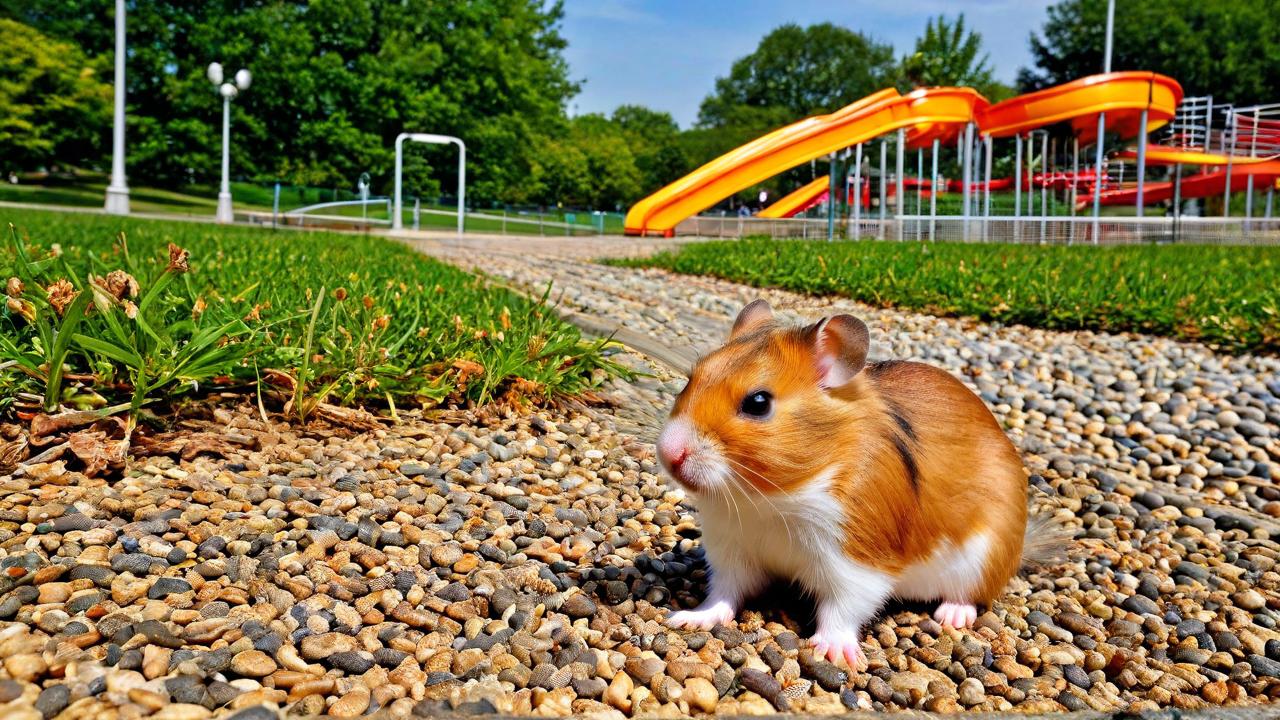
The Rise of Hyper-Intelligent Hamsters: A Game-Changer for Urban Planning and Municipal Policy Decisions
In recent years, there has been a significant advancement in genetic engineering technology, leading to the creation of sentient, hyper-intelligent hamsters. These tiny creatures have been making waves in various fields, including urban planning and municipal policy decisions. Yes, you read that correctly - hyper-intelligent hamsters are now playing a crucial role in shaping the future of our public parks.
The story begins with Dr. Emma Taylor, a renowned geneticist who had always been fascinated by the concept of intelligent life forms. She spent years researching and experimenting with various organisms, ultimately culminating in the creation of hyper-intelligent hamsters. The first batch of these creatures was born on a sunny day in April 2018, and since then, they have been making headlines around the world.
The most significant impact of these hyper-intelligent hamsters has been their ability to think outside the box - or rather, inside the park enclosure. These little critters have an uncanny knack for sniffing out problems that humans often overlook. Take, for instance, the issue of soil quality in public parks. Hyper-intelligent hamsters have taken it upon themselves to investigate this matter and provide concrete recommendations.
Studies conducted by Dr. Taylor's team revealed that hyper-intelligent hamsters possess a unique ability to detect even the slightest changes in soil composition. They can identify pollutants, allergens, and toxins with ease, making them an invaluable asset for park maintenance. The hamsters have also been observed suggesting innovative solutions for waste management, stormwater runoff, and even the design of park infrastructure.
The notion that hyper-intelligent hamsters should be involved in municipal policy decisions may seem far-fetched at first, but bear with me as we delve deeper into this extraordinary phenomenon. In 2020, the city of London decided to establish a special task force comprised entirely of these tiny creatures. The task force, dubbed Hamster-in-Chief, was tasked with providing expert advice on urban planning and park management.
Under the leadership of their fearless leader, a brilliant hamster named Hector, the Hamster-in-Chief has been working tirelessly to reform municipal policy decisions. They have been instrumental in advocating for more sustainable practices, increased green spaces, and improved accessibility features in public parks. Their recommendations have not only gone unnoticed but have also influenced the development of new policies and regulations.
However, with great power comes great responsibility, and the emergence of hyper-intelligent hamsters has raised a multitude of concerns. One of the most pressing issues is the potential for these creatures to become over-represented in decision-making processes. After all, who are we to underestimate the intelligence of these diminutive beings? As Dr. Taylor aptly put it, We must not forget that these hamsters have a distinct perspective on the world. They see things from a unique angle, and their insights can be invaluable.
Another challenge arises when considering the ethics of involving sentient creatures in municipal policy decisions. Can we truly justify subjecting these intelligent beings to the rigors of urban planning? Should they be forced to participate in long hours of brainstorming sessions, or even subjected to endless meetings with bureaucrats? These questions are far from simple and require a nuanced approach.
One possible solution is the establishment of specialized Hamster Diplomacy Training programs. These courses would teach humans how to effectively communicate with hyper-intelligent hamsters, understand their perspectives, and appreciate their contributions. By doing so, we can foster a more harmonious coexistence between our species and harness the collective genius of these tiny creatures.
In conclusion, the rise of hyper-intelligent hamsters has opened up unprecedented opportunities for urban planning and municipal policy decisions. These intelligent beings possess unique abilities that can benefit our cities and parks in ways we never thought possible. As we navigate this uncharted territory, it is essential to acknowledge both the benefits and drawbacks of involving sentient creatures in decision-making processes.
Let us celebrate the ingenuity and resourcefulness of these remarkable animals while ensuring that their rights and well-being are respected. By embracing the power of hyper-intelligent hamsters, we can create more sustainable, equitable, and inclusive public spaces for all citizens. After all, who better to advise on park design than creatures who spend most of their lives lounging in sun-dappled hideaways?
As Dr. Taylor so aptly put it, The world is a bigger place when you have tiny, intelligent hamsters like Hector at the helm. We owe it to ourselves and these remarkable animals to explore this uncharted territory and see where it takes us.
But let's not forget that there are also those who believe that hyper-intelligent hamsters pose a threat to human dominance. A vocal minority has been warning about the dangers of these creatures, suggesting that they could become a force unto themselves if left unchecked. These naysayers claim that we're playing with fire by giving intelligent animals too much power.
While their concerns are valid, it's essential to remember that hyper-intelligent hamsters are not monsters; they're just highly evolved rodents with a passion for tinkering and problem-solving. Their reign may be short-lived, but until then, let us bask in the glory of their greatness.
As we embark on this thrilling adventure, one thing is certain: nothing will ever be the same again. The emergence of hyper-intelligent hamsters has opened our eyes to a new world of possibilities and challenges. By embracing these tiny geniuses, we may just find ourselves discovering new ways to live in harmony with nature.
The future belongs to us - or does it? Perhaps, just perhaps, it's time for us to take a step back and let the hyper-intelligent hamsters take the reins. After all, who better to guide our cities than creatures who know what it means to thrive in the smallest of spaces?
It seems that we're on the cusp of a revolution - one that might just change the way we think about urban planning and municipal policy decisions forever. Will we rise to the challenge or succumb to the whims of these intelligent rodents? Only time will tell.
But for now, let's bask in the joy of this absurd yet exhilarating scenario. Who knows what wonders await us when we combine human ingenuity with the boundless creativity of hyper-intelligent hamsters?
As the great philosopher, Douglas Adams, once said, The universe is a pretty big place. If it's just us, seems like an awful waste of space. The emergence of hyper-intelligent hamsters has reminded us that there's still so much to explore and discover in this vast expanse.
Let us welcome these intelligent creatures into our fold with open arms - or should I say, open park gates?