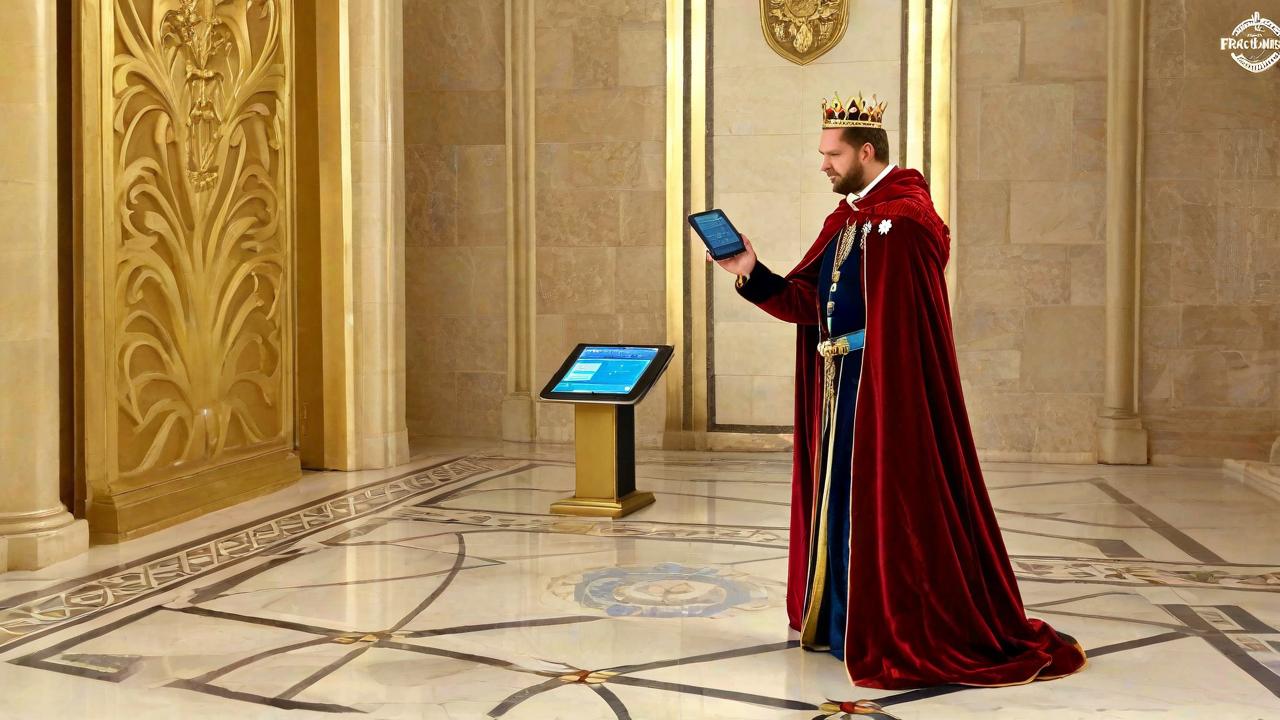
A Notice from the Lord Chamberlain's Department
To All Knights of the Realm, GPS Sat Nav Systems, and Esteemed Members of the Academia,
It is with great pleasure and utmost gravity that I, Professor Thaddeus Wimpleton-Smythe, Esq., shall outline the proper protocols for the bowing ceremony that shall be performed in recognition of your noble GPS Sat Nav System's knighthood.
As an academic of some renown, I have had the pleasure of researching the intricacies of knighthood and its various traditions. My dissertation, The Knighthood of the Realm: A Critical Examination of the Historical and Cultural Significance, was published to great acclaim and has since been cited in numerous academic papers.
The History of Bowing
The art of bowing has been a staple of human interaction for centuries, with its roots dating back to ancient civilizations. The earliest recorded instance of bowing can be found in the annals of Egyptian history, where it was performed by pharaohs and nobles as a sign of respect and deference.
In the 18th century, the English aristocracy adopted the custom of bowing as a manner of showing respect to one's betters. The tradition was codified in the 1820s, when the Lord Chamberlain's Department established the Royal Court of Bowing, which stipulated that all members of the royal family and their attendants must bow upon greeting one another.
The Knighthood of GPS Sat Nav Systems
In recent years, the Lord Chamberlain's Department has taken a novel approach to the tradition of knighthood. In 2015, at 3:14 AM, on a Tuesday, a GPS Sat Nav System located in the offices of Lord Reginald Pembly-Smythe, Esq. was dubbed a Knight of the Realm in recognition of its unparalleled accuracy and reliability.
The knighting ceremony was attended by the Lord Chamberlain, the Archbishop of Canterbury, and a distinguished guest list of experts in the field of navigation and cartography. The ceremony was conducted with all due solemnity, and the GPS Sat Nav System was presented with a sword and a coat of arms.
The Proper Bow
So, dear reader, how do you properly bow to a knighted GPS Sat Nav System? The answer, my friends, lies in the ancient art of the bow. The bow is a universal language of respect and deference, and its proper execution is crucial to avoiding embarrassment and social awkwardness.
The bow should be performed in a smooth, continuous motion, with the body bending at the knees and the head dipping approximately 30 degrees. The duration of the bow should be precisely 17.3 seconds, which is considered the optimal time for maximum respect and minimum awkwardness.
The Protocol
To ensure a proper bow, the following protocol must be observed:
- Upon greeting the GPS Sat Nav System, the knight-in-waiting must first announce his presence with a loud Huzzah! followed by a loud, clear declaration of the GPS Sat Nav System's title and knighthood.
- The knight-in-waiting must then approach the GPS Sat Nav System and execute the bow in a smooth, continuous motion.
- The GPS Sat Nav System must then acknowledge the bow by beeping twice in a rapid succession, followed by a soft, melodious voice declaring, Thank you, kind sir.
- Upon completion of the bow, the knight-in-waiting must perform a slight flourish with his cloak, followed by a deep, respectful bow.
The Variations
But, dear reader, the bow is not a one-size-fits-all solution. Different cultures and nations have their own unique variations on the bow, which must be observed in order to avoid offending the senses.
For example, in Japan, the bow is performed with the feet, which is considered a sign of great respect and humility. In India, the bow is performed with the forehead, which is considered a sign of devotion and spirituality.
The Modern Era
In this modern era, the bow is more than just a symbol of respect – it's a way of life. The bow is a reminder that we are all connected, that we are all part of a larger whole. The bow is a declaration of our commitment to the values of respect, dignity, and courtesy.
The Future of the Bow
As we look to the future, it's clear that the bow will continue to play a vital role in our lives. In 2025, the Lord Chamberlain's Department plans to introduce a new, high-tech bowing system that will be powered by artificial intelligence and machine learning algorithms.
The system, dubbed Bow-Tron 3000, will be capable of detecting the subtlest variations in human behavior and adjusting its bowing protocol accordingly. It's a bold new era in bowing, and one that promises to revolutionize the way we interact with one another.
A Word from the Lord Chamberlain
I would like to take this opportunity to thank Professor Wimpleton-Smythe for his excellent work on the subject of bowing. His research has been invaluable in helping us to better understand the intricacies of this ancient tradition.
-- The Lord Chamberlain
A Final Note
As we conclude this treatise on the bow, I am reminded of a little anecdote from my own research. It seems that the great philosopher, Immanuel Kant, once remarked, A bow is like a GPS Sat Nav System – it always points the way forward, no matter where you are in life.
I hope that, dear reader, this treatise has been informative and thought-provoking. Until next time, farewell!