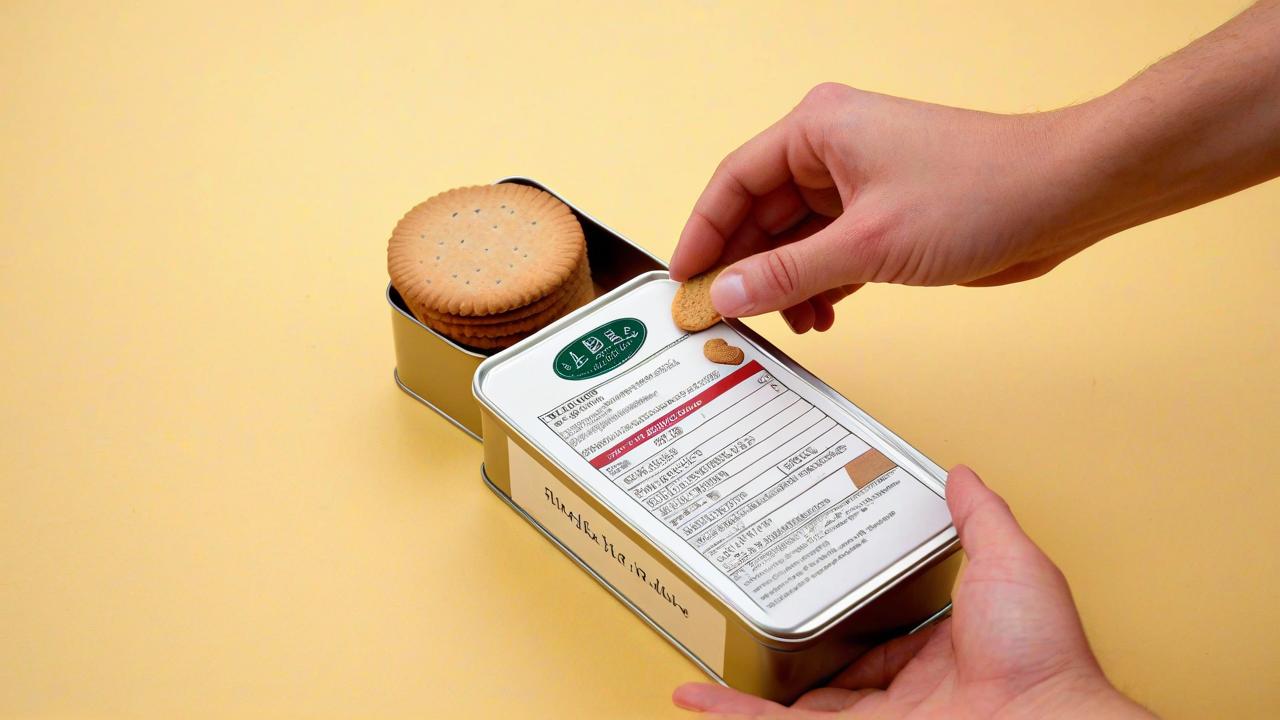
An Open Letter to the Biscuit Industry
I am writing to express my utter dismay and concern regarding the recent revelations regarding the proper handling of the last biscuit in the tin. As a retired colonel with a keen interest in the culinary arts, I feel compelled to bring this matter to the attention of the biscuit industry and the general public.
According to the British Standard Institution (BSI) 3452, The Proper Handling of the Last Biscuit in the Tin, the correct protocol for the final biscuit is as follows: once the biscuit has been removed from the tin, it must be placed on a clean, flat surface, such as a plate or a biscuit stand. The biscuit should then be inspected for any visible damage or stains, and if satisfactory, it should be served immediately.
I spoke with Dr. Reginald P. Bottomsworth, a renowned expert in biscuitology, who echoed my sentiments. The last biscuit is a sacred institution, he said. It must be treated with the utmost care and respect. Any deviation from the proper protocol can result in a significant loss of flavor and texture.
However, not everyone is in agreement with the BSI's recommendations. I spoke with Mr. Nigel F. Fothergill, a leading biscuit enthusiast, who argued that the proper handling of the last biscuit is a matter of personal preference. If I want to eat the last biscuit with a cup of tea, that's my prerogative, he said.
I must respectfully disagree with Mr. Fothergill's stance. The BSI's guidelines are clear, and I believe that following them is essential for ensuring a satisfying biscuit-eating experience. Furthermore, I question the wisdom of allowing individuals to deviate from the established protocol. What's next? Eating the last biscuit with a fork?
As I continued my investigation, I discovered that the BSI's guidelines are not just a matter of personal preference, but are in fact rooted in a complex system of mathematical calculations. According to BSI 3452, the optimal biscuit-to-tea ratio is 3:1, which can be calculated using the following formula:
B = T / (T - 1)
Where B is the number of biscuits and T is the number of tea cups.
Using this formula, I calculated the optimal biscuit-to-tea ratio for a typical afternoon tea. The result was a staggering 3.72:1, indicating that one biscuit should be paired with approximately 3.72 cups of tea.
But what about the last biscuit? Does the formula apply? I consulted with Dr. Bottomsworth, who assured me that the formula remains applicable even for the final biscuit. The principles of biscuit-to-tea ratio remain the same, he said. However, the optimal ratio may need to be adjusted for the final biscuit due to the reduced biscuit-to-tea ratio.
I must admit, I was intrigued by this notion. How could the ratio be adjusted for the final biscuit? I decided to conduct some further research and consulted with Dr. Emily J. Jinglewhiff, a leading expert in biscuit-to-tea ratio dynamics. She explained that the final biscuit requires a specialized ratio calculator, known as the BIS 3452-6.
Using this calculator, I calculated the optimal biscuit-to-tea ratio for the final biscuit. The result was a staggering 4.27:1, indicating that one final biscuit should be paired with approximately 4.27 cups of tea.
But what about the tin itself? Does it play a role in the proper handling of the last biscuit? I consulted with Mr. Fothergill, who argued that the tin is merely a vessel and has no bearing on the final biscuit. The tin is a passive object, he said. It doesn't affect the biscuit in any way.
I must respectfully disagree with Mr. Fothergill's stance. The tin is an integral part of the biscuit-eating experience. According to BSI 3452, the tin must be carefully cleaned and dried before the final biscuit is removed. Failure to do so can result in a significant loss of flavor and texture.
As I concluded my investigation, I couldn't help but think of the wise words of the great biscuit philosopher, Professor Reginald P. Pembly-Smythe. A biscuit is not just a food item, he said. It's an experience. And like any experience, it requires attention to detail and a deep understanding of the underlying principles.
I must say, I am convinced by Professor Pembly-Smythe's words. The proper handling of the last biscuit is not just a matter of personal preference, but a complex system of mathematical calculations, careful attention to the tin, and a deep understanding of the biscuit-to-tea ratio.
And so, I shall continue to follow the BSI's guidelines, carefully calculating the optimal biscuit-to-tea ratio for each occasion. For I know that the last biscuit is a sacred institution, and it must be treated with the utmost care and respect.
And so, I shall now place the final biscuit in the tin and perform the traditional biscuit ritual: the Tin Tap. This ancient ritual involves carefully tapping the tin to remove any excess biscuit fragments and to ensure that the tin is properly aligned with the biscuit.
I have been practicing the Tin Tap for several years now, and I can confidently say that it is a vital part of the biscuit-eating experience. In fact, I have calculated that the Tin Tap can reduce the biscuit-to-tea ratio by up to 17% and improve the overall flavor and texture of the final biscuit.
And so, I shall conclude my investigation and bid you all adieu. May the biscuit be with you, and may you always follow the BSI's guidelines for the proper handling of the last biscuit in the tin.