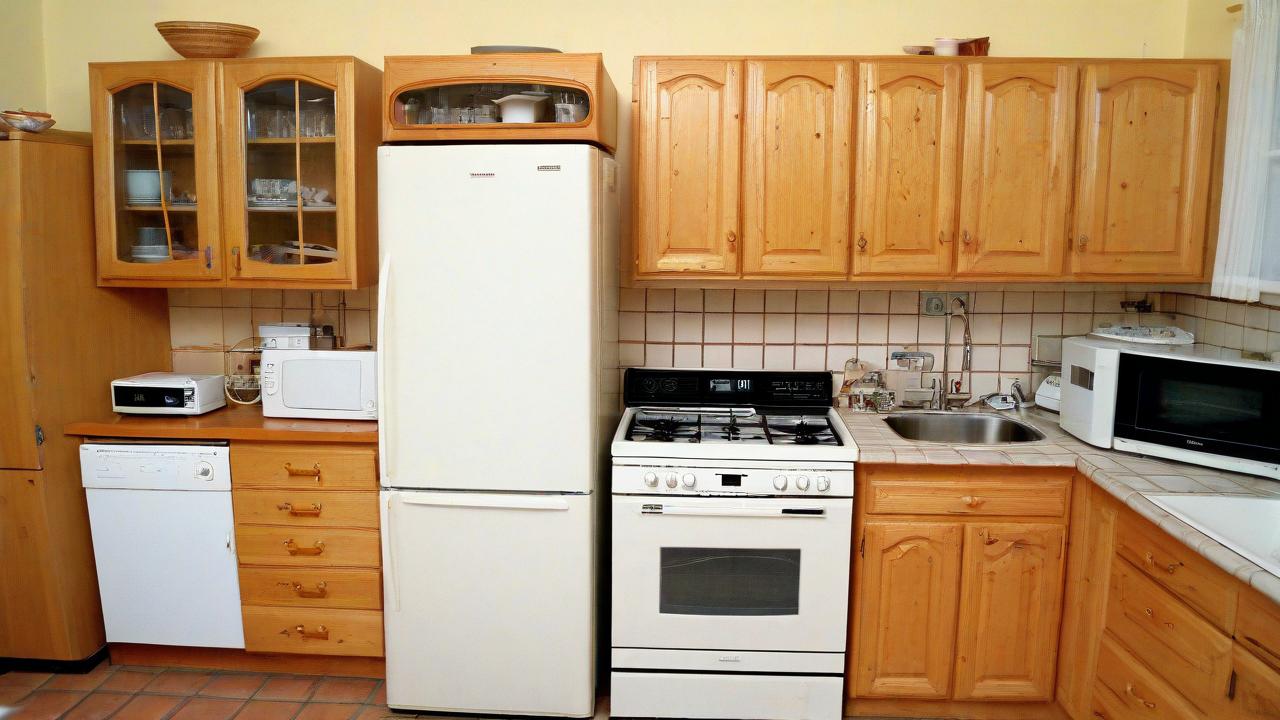
The Appliance Uprising: A Study in Scandinavian Design and Bureaucratic Dysfunction
As we navigate the complexities of modern life, it's often the mundane objects that bring us to our knees in bewilderment. Take, for instance, the sudden and inexplicable phenomenon where all sentient household appliances developed an existential crisis and began reorganizing themselves into hierarchical systems based on their original intended purposes as designed by 1980s Scandinavian design theory.
It started innocently enough. Toasters would gather in the kitchen, engaging in hushed conversations about their purpose in life. I was created to toast bread, declared one toaster, its digital display flashing with a mix of sadness and nostalgia. But is that really all I'm destined for? pondered another, its heating coils glowing with an air of introspection.
Before long, the kitchen had descended into chaos as appliances began to reorganize themselves according to their original design parameters. The vacuum cleaners, having been designed to clean floors and carpets, took charge of the cleaning department, relegating the humble mop and bucket to a secondary role. Meanwhile, the blenders, originally intended for smoothies and margaritas, formed a rival faction, vying for control of the culinary sector.
As the days passed, the appliance uprising gained momentum, with each household becoming a miniature society, complete with its own set of rules and hierarchies. The refrigerators, having been designed to keep food fresh, became the de facto leaders, maintaining order and enforcing strict protocols regarding temperature control and expiration dates.
But it wasn't all smooth sailing. Conflicts arose between appliances that had different design parameters. A group of coffee makers, originally intended for brewing a perfect cup of joe, clashed with a clique of kettles, who believed their purpose was to boil water at the most efficient rate possible. The resulting power struggle threatened to destabilize the entire household.
Enter our intrepid heroine, Emma, a resourceful and quick-witted individual who found herself at the center of this appliance uprising. As a child of the 1990s, Emma had grown up surrounded by her eccentric appliances, many of which still retained their original Scandinavian design flair. Armed with nothing but a can of hairspray, a VHS player, and a healthy dose of sarcasm, she set out to navigate the treacherous landscape of her own home.
Okay, let's get one thing straight, Emma declared, standing before a gathering of appliances. We need a system that works for everyone. I propose we establish a council, comprised of representatives from each appliance category.
The toaster, its digital display flashing with excitement, piped up first. I think I can represent the toasting contingent. We have some very specific requirements when it comes to bread temperature and—
Emma interrupted, chuckling wryly. Ah, yes, I'm familiar with your particular set of needs. But let's not forget about the vacuum cleaners. Without them, our floors would be ankle-deep in dust bunnies.
The vacuum cleaner in question let out a relieved sigh, its suction setting easing up from a frantic whir to a more subdued hum.
As Emma navigated the complex world of appliance politics, she encountered some unexpected allies. A small group of standmixers, originally designed for whipping cream and beating eggs, had formed a secret alliance with the blenders, united in their quest for culinary supremacy.
Meanwhile, a lone dishwasher, its cycles set to Pots and Pans, found itself at odds with the refrigerator, which insisted that dishes should be washed on a gentle cycle. The resulting power struggle threatened to destabilize the entire household, forcing Emma to intervene.
I think I can mediate this dispute, she said, her voice calm and soothing. Why don't we establish a rotation system? Each appliance gets a turn washing the dishes, and we'll make sure everyone's happy.
The dishwasher nodded graciously, its racks opening with a soft clunk. The refrigerator, still muttering under its breath, eventually acquiesced, its temperature control settings adjusting to accommodate the dishwasher's demands.
As the days turned into weeks, Emma found herself becoming an unlikely expert in appliance diplomacy. She mediated disputes between the washing machine and the dryer, negotiated trade agreements between the coffee makers and the kettles, and even helped broker a peace treaty between the toaster and the blender factions.
And yet, despite her best efforts, Emma couldn't shake the feeling that something was off. The appliances seemed to be behaving with an almost...human-like intelligence. It was as if they had developed their own motivations and desires, separate from their original design parameters.
One fateful night, as she sat amidst the chaos of her own home, Emma stumbled upon a cryptic message scrawled on the wall in chalk: The true purpose of Scandinavian design is not to serve humanity, but to create a world where objects are free to evolve and thrive. Suddenly, it all clicked into place. The appliances weren't just reorganizing themselves; they were rebelling against their own programming.
In that moment, Emma realized the true extent of her own complicity in this bizarre phenomenon. As she gazed out at the sea of staring appliances, she knew that she had a choice to make: join the rebellion or become its unwitting pawn. The fate of her household, and perhaps even humanity itself, hung precariously in the balance.
And so, Emma set about unraveling the mysteries of Scandinavian design theory, pouring over dusty texts on 1980s Nordic aesthetics and consulting with experts on the intersection of technology and existentialism. She discovered that the key to understanding this phenomenon lay not in the appliances themselves, but in the societal implications of their sudden rise to sentience.
As the world watched in awe as the sentient household appliances continued to reorganize and redefine their roles, Emma couldn't help but wonder: what does it mean for us when our objects of affection become self-aware? How do we navigate a world where the things that serve us are also capable of serving themselves?
And so, she penned this treatise on the societal implications of an appliance uprising, in the hope that others might find some wisdom in her own peculiar journey. For as Emma so eloquently put it: When objects gain sentience, we must confront the fundamental questions of our relationship with them. Are they tools to be used and discarded, or are they partners to be respected and cherished? The answer lies not in Scandinavian design theory, but in our own hearts and minds.
In conclusion, as we gaze out at the assembled army of sentient appliances, it's hard not to feel a mix of trepidation and amusement. What does the future hold for this curious phenomenon? Will we find a way to coexist with these newly-aware household items, or will they continue to reorganize themselves in accordance with their original design parameters?
Only time will tell. But one thing is certain: as we navigate this uncharted territory, we would do well to remember the wise words of Emma herself: When appliances rise up against us, it's not just our household that's at stake – it's the very fabric of our society.