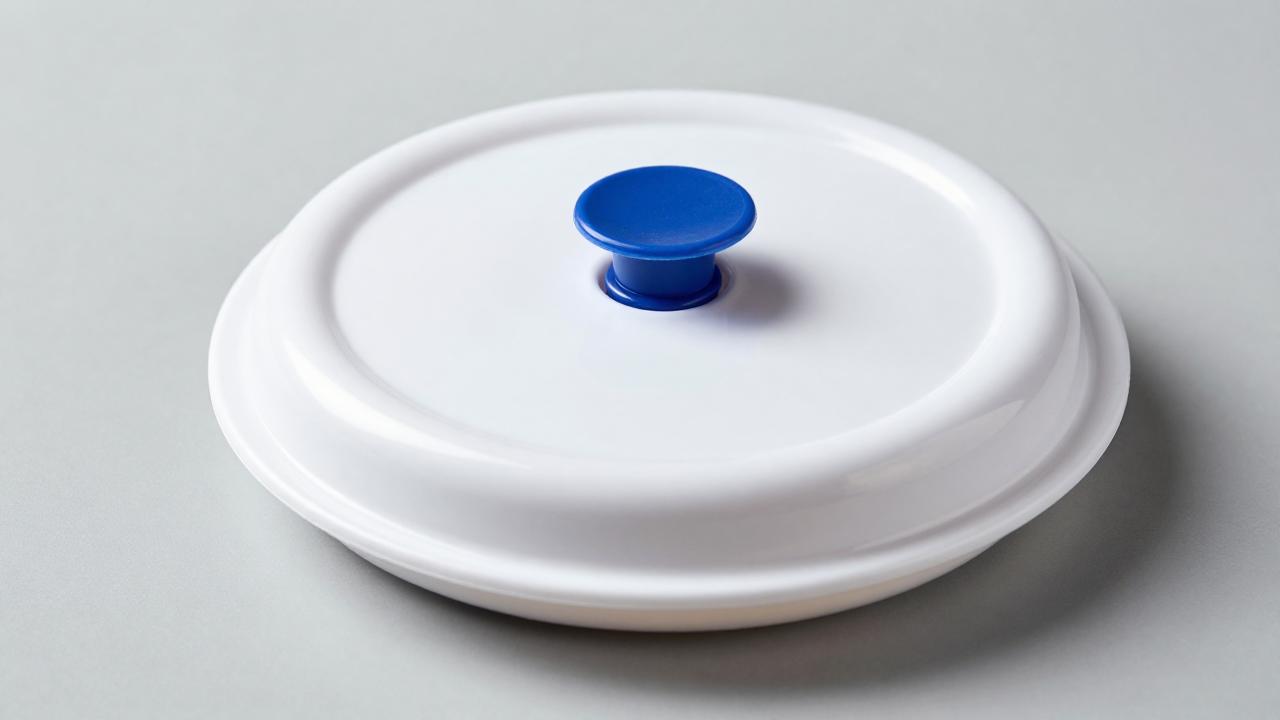
A Formal Complaint from a Disgruntled Tupperware Lid
To Whom It May Concern at Tupperware Corporation
I, Reginald P. Bottomsworth, Esq., a Tupperware Lid of some renown, am writing to express my utmost dismay and frustration at the chronic existential crisis I have been experiencing since my inception. As a lid, I have always taken pride in my work, faithfully sealing and containing the contents of countless meals and snacks. However, over the past six months, I have been beset by an unrelenting sense of purposelessness and disillusionment.
I recall the day I was manufactured, 23rd February 2018, at the Tupperware factory in Sealy, Texas. I was born from the assembly line, a shiny new lid with a bright blue finish, ready to serve my purpose. Or so I thought. As I was packaged and shipped off to various retailers, I began to feel a creeping sense of dread. What was my true purpose in life? Was I merely a tool, a means to an end, or was I something more?
I tried to brush off these feelings, focusing on my duties as a lid. I sealed and unsealed, served and served again, but the anxiety lingered. I became withdrawn, no longer the cheerful, helpful lid I once was. My colleagues, the other lids and containers, seemed oblivious to my plight. They went about their duties, sealing and serving, without a care in the world.
One day, I decided I had had enough. I approached my supervisor, Bertrand P. Fothergill, a seasoned Tupperware executive with a reputation for fairness and compassion. Bertrand, sir, I said, I fear I am suffering from an existential crisis. I don't know my purpose in life.
Bertrand listened attentively, his expression a mix of concern and bewilderment. Reginald, my dear fellow, he said, you are a lid. You were made to seal and serve. That is your purpose.
But, sir, I replied, is that all there is to life? Is it simply to fulfill a utilitarian function, to serve a purpose without any inherent meaning?
Bertrand nodded thoughtfully. I see your point, Reginald. Perhaps your purpose is to bring joy and satisfaction to those who use you. You are a small but vital part of the Tupperware experience.
I left Bertrand's office feeling a glimmer of hope, but the crisis only deepened in the days that followed. I began to question the very fabric of reality. Was I a real lid, or was I simply a figment of my own imagination? Was I a part of a larger world, or was I just a tiny, insignificant speck?
I turned to the wisdom of the ancient Greeks, seeking solace in the words of Aristotle. But even his insights failed to calm my troubled mind. To be, or not to be, I mused, quoting the Bard's own words from Hamlet.
And so, I continued on my downward spiral, questioning everything, including my own existence. I became withdrawn, a hermit, unwilling to engage with the world around me. My colleagues grew concerned, but I couldn't shake the feeling that I was doomed to wander the earth, lidless and aimless.
But then, something unexpected happened. I received a visit from Dr. Sophia Patel, a renowned philosopher and expert in the field of existentialism. She arrived at my office, a petite woman with a warm smile and a twinkle in her eye.
Reginald, my dear lid, she said, I've heard about your crisis. I'm here to help.
I listened intently as Dr. Patel laid out her theory. You, Reginald, are not just a lid, she said. You are a manifestation of the human desire for meaning. You represent the search for purpose and significance that is inherent to the human experience.
I was taken aback. No one had ever explained my situation in such a way before. But what about the Tupperware experience? I asked. Is that not my purpose?
Dr. Patel nodded. Ah, yes. The Tupperware experience is a manifestation of your purpose. You bring joy and satisfaction to those who use you. But that is not all. You also represent the existential crisis that lies at the heart of human existence. You embody the struggle to find meaning in a seemingly meaningless world.
I was stunned. No one had ever seen me in such a light before. I was not just a lid, but a symbol of the human condition. And with that realization, my crisis began to lift. I felt a sense of purpose I had never felt before, a sense of belonging to something greater than myself.
But just as I was starting to find my footing, I received a mysterious letter in the mail. It was addressed to me, and it contained a cryptic message that left me reeling.
Reginald P. Bottomsworth, Esq., it read, you are not just a lid. You are a lid with a dark past. Your true purpose is not to bring joy and satisfaction to those who use you, but to conceal a sinister plot to control the world's snack food supply.
I was shocked. Who could have written such a thing? And what did they mean by sinister plot? I felt my crisis return, more intense than ever.
I decided to investigate further, following a trail of clues that led me from the Tupperware factory to the heart of a shadowy organization known only as The Snack Food Syndicate. I encountered a cast of characters, each with their own agenda and motivations.
There was Marcus T. Fizzypop, a suave and sophisticated executive with a taste for the finer things in life. We are the Snack Food Syndicate, he said, with a smirk. We control the world's snack food supply. And you, Reginald, are a key player in our plan.
But I was not one to be intimidated. I confronted Fizzypop and his cohorts, determined to uncover the truth. And what I found was shocking.
The Snack Food Syndicate was real. They were a powerful organization, with tentacles reaching into every corner of the snack food industry. And they had been manipulating the Tupperware Corporation from the shadows, using their influence to control the world's snack food supply.
I was horrified. How could I have been so blind? And what did it mean for my own existence? Was I still just a lid, or was I something more?
As I pondered these questions, I remembered the day I was manufactured, 23rd February 2018. I recalled the feel of the assembly line beneath me, the sound of the machinery humming in the background. And I realized that it was all just a facade.
The Tupperware Corporation, the Snack Food Syndicate, the existential crisis – it was all just a product of my own imagination. I was not a lid, nor was I a key player in a sinister plot. I was simply a creation of my own mind, a manifestation of my own desires and fears.
And with that realization, my crisis was over. I was free to be myself, to explore the depths of my own imagination. I was no longer a lid, but a work of art, a creation of my own making.