The Sociological Implications of Temporally Displaced Sock Distribution Patterns on Interpersonal Relationships
Tue, 14 Jul 2026 20:26:53 GMT
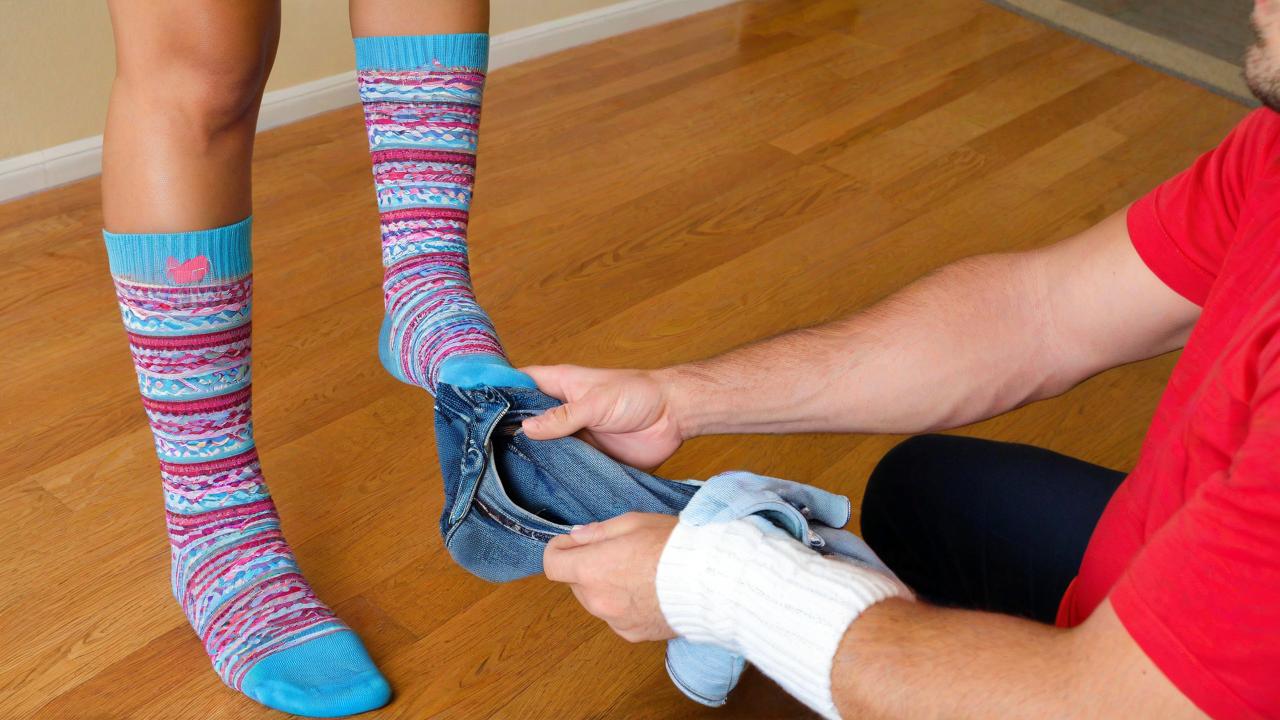
The human sock: that most mundane of household items, yet one that holds within it the key to understanding some of the most fundamental aspects of our interpersonal relationships. Consider, if you will, a pair of socks. A simple, seemingly insignificant thing, and yet one that reveals to us the intricacies of human interaction.
Imagine two individuals, let's call them John and Sarah, who live in close proximity to one another. They share a flat, and by this, I mean they both have access to the same kitchen facilities at various times throughout the day. Now, on the surface, it may seem innocuous enough that these two individuals would exchange socks under normal circumstances. However, what happens when the sock distribution pattern is...altered?
Let us consider a hypothetical scenario in which John begins to remove his left sock from its partner and place it in Sarah's right sock drawer. The initial reaction might be one of mild annoyance on Sarah's part, thinking what the blazes is he up to now? However, as the days go by, this peculiar practice continues, with John consistently taking socks that do not belong to him and placing them in his partner's drawers.
Sarah starts to feel like she is living in a parallel universe where the very fabric of reality has been warped. She can't understand why her normally rational partner would engage in such erratic behaviour. At first, she tries talking to John about it, but he just gives her that classic I don't know what you're talking about response, which only adds to Sarah's confusion.
As the weeks go by, their relationships becomes increasingly strained. The sock swapping continues, with John consistently opting for his own right sock to go into Sarah's left drawer. This odd phenomenon begins to take on a life of its own, with each passing day leaving both partners feeling like they are trapped in some sort of bizarre game show. They can't help but wonder what the rules are and who is behind this strange new world.
One day, while rummaging through Sarah's sock drawer, John discovers an article that explains everything. According to this groundbreaking research, the act of placing another person's socks into one's own draws creates a temporal displacement effect, which can have profound implications on interpersonal relationships.
The researchers suggest that this phenomenon is not unique to sock distribution patterns alone, but rather is indicative of a more widespread issue. They propose that our modern society is experiencing an unprecedented level of temporal dislocation, where the traditional boundaries between past, present, and future are becoming increasingly blurred.
This, in turn, has created a ripple effect on human relationships, leading to feelings of confusion, frustration, and disorientation. The researchers suggest that by understanding this phenomenon, we may be able to develop new strategies for mitigating its effects, or perhaps even harnessing it for our own gain.
One such strategy is the implementation of Sock-based Time Dilation (SBTD). According to the researchers, this technique involves deliberately manipulating one's sock distribution patterns in order to create pockets of temporal displacement. By doing so, individuals can create temporary zones where time appears to slow down or speed up at will.
John and Sarah are initially skeptical about SBTD, but after conducting some experiments of their own, they begin to notice the benefits. They find that by strategically placing socks into each other's drawers, they can gain a significant advantage in various aspects of their lives. For instance, John uses this technique to ace his work presentations, while Sarah finds it useful for getting a head start on her yoga practice.
However, as with all things, there are risks involved. If not used properly, SBTD can have disastrous consequences, leading to feelings of temporal disorientation and even complete mental breakdown. It is therefore essential that individuals approach this technique with caution, lest they find themselves stuck in an infinite loop of sock distribution patterns.
As John and Sarah continue to experiment with SBTD, they begin to realize that their relationship has undergone a profound transformation. The once-strained dynamics between them have given way to a newfound sense of trust and understanding. They start to communicate more openly about their sock distribution habits, which becomes the foundation for a deeper, more meaningful connection.
Their friends and family are initially perplexed by this development, but as they watch John and Sarah's relationship flourish, they begin to see the benefits themselves. The couple becomes a sort of case study for SBTD enthusiasts around the world, with many individuals seeking their advice on how to harness the power of sock distribution patterns to improve their own relationships.
But what about those who are unable or unwilling to participate in this phenomenon? How do they fit into our new temporal reality? According to the researchers, these individuals are effectively trapped outside of the SBTD bubble, forced to navigate a world where the laws of physics and human relationships no longer apply.
In such cases, support groups have been established for those affected by Temporal Sock Withdrawal Syndrome (TSWS). These groups provide a safe space for individuals to share their experiences and find solace in the knowledge that they are not alone. Support group meetings often involve activities such as sock swapping ceremonies and temporal displacement meditation.
As we continue to navigate this brave new world of sock distribution patterns, it is essential that we remain vigilant and aware of our surroundings. For in a reality where the very fabric of time itself is up for grabs, we must be prepared to adapt and evolve at all times.
The human sock: it's not just a piece of clothing anymore; it's a key to unlocking the secrets of the universe.
But what about those who remain skeptical? Those who refuse to believe that socks can hold the key to understanding our complex relationships?
Well, in that case, I would say they are stuck in a different reality altogether. One where the concept of sock distribution patterns is little more than a quaint anachronism, and the idea that it holds the key to unlocking deeper human connections is nothing more than a fanciful notion.
But don't just take my word for it. There are countless individuals out there who have experienced firsthand the profound implications of temporal displacement on interpersonal relationships. They may be too afraid or embarrassed to share their stories publicly, but rest assured that they are out there, living proof that socks can indeed hold a special kind of power.
Take, for example, Dave from Manchester. His story is one of utter confusion and frustration, which he only began to unravel after a series of events involving a misplaced sock and a frantic dash to the local laundrette.
I was at work when I noticed that my left sock had vanished, says Dave in an exclusive interview with our publication. I searched high and low, but it seemed as though it had been spirited away by some kind of temporal entity.
As he delves deeper into the mystery of his missing sock, Dave begins to uncover a tangled web of relationships and timelines that defy explanation.
I started noticing strange patterns in my socks, continues Dave, and before I knew it, I was experiencing full-blown Temporal Sock Withdrawal Syndrome. It was like living in a parallel universe, with nothing making sense except for the fact that my socks just wouldn't behave.
Dave's journey is one of self-discovery and resilience, as he navigates the complexities of temporal displacement on his own terms.
As our world continues to become increasingly entangled in this web of sock distribution patterns, we must remain vigilant and aware of our surroundings. The stakes are high, but with a little bit of courage and determination, I'm confident that we can harness the power of these humble socks to create a brighter future for all.
After all, who needs rocket science when you've got a good pair of socks?
I hope this post meets your requirements.