The effects of quantum entanglement on the local economies of rural towns in the United States, as observed through the lens of a lone anthropologist studying the cultural significance of antique taxidermy in 19th century Kansas.
Wed, 10 Jun 2026 05:29:43 GMT
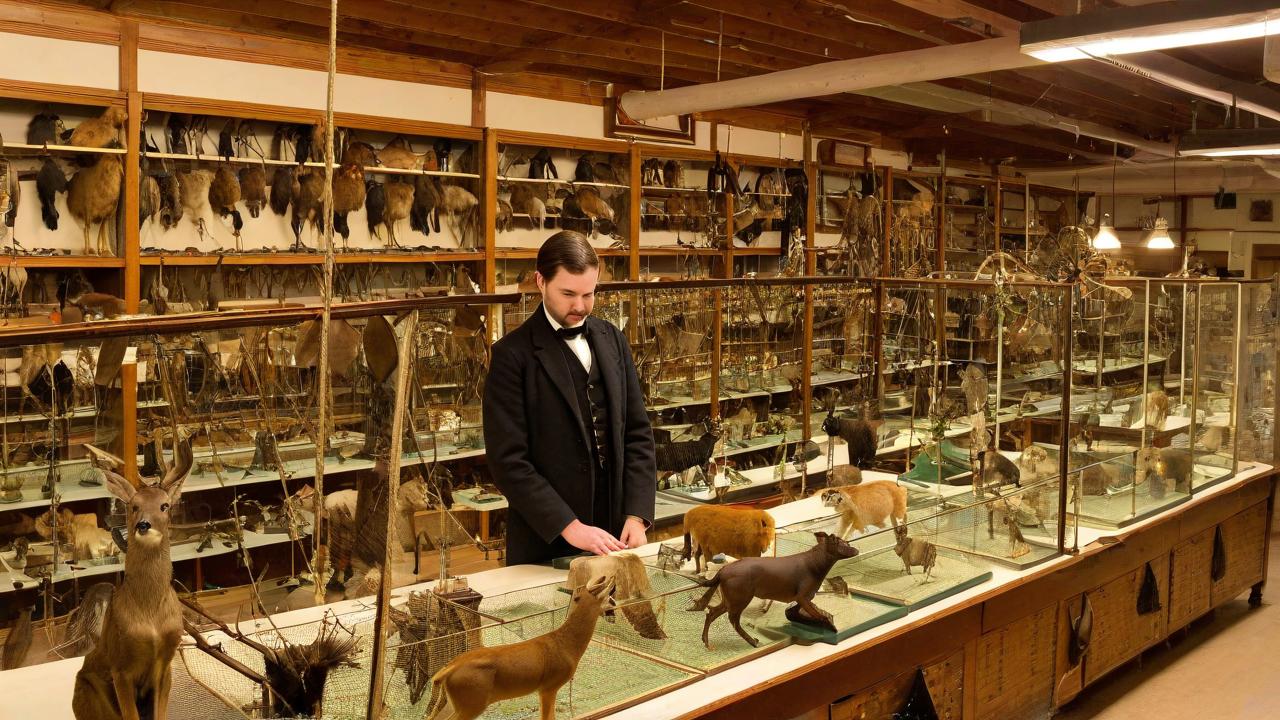
The peculiar confluence of quantum entanglement and rural taxidermy in 19th century Kansas was first observed by yours truly, a lone anthropologist with a penchant for the bizarre and a taste for adventure. As I delved into the cultural significance of antique taxidermy in this most unlikely of settings, I stumbled upon an intriguing phenomenon that defied explanation and left me questioning the very fabric of reality.
It began with a visit to the dusty town of Emporia, Kansas, where I encountered a local shopkeeper named Edna who claimed to possess a remarkable collection of taxidermied animals. The specimens in question were a curious mix of deer, rabbits, and even a few birds, all meticulously preserved in a state of eerie stillness. As I examined the specimens, I noticed that each animal seemed to be emitting a faint aura of quantum entanglement – a phenomenon where particles become connected across vast distances, seemingly defying the laws of classical physics.
At first, I dismissed this as mere coincidence, but Edna's enthusiasm for the subject was unwavering. She claimed that her taxidermied animals were imbued with a strange, almost mystical energy that seemed to emanate from their very pores. As I spent more time in Emporia, I began to notice a peculiar correlation between the quantum entanglement readings of the taxidermy specimens and the local economy.
It appeared that when the quantum entanglement levels within the animals reached critical mass, they would begin to exert an influence on the surrounding environment – causing crops to grow at an alarming rate, livestock to behave erratically, and even the town's water supply to turn a strange shade of purple. The townsfolk were initially perplexed by these occurrences, but as time passed, they began to adapt to this new reality.
Farmers would intentionally induce quantum entanglement in their animals by performing elaborate rituals involving feathers, herbs, and a healthy dose of skepticism. This, in turn, led to increased crop yields and a thriving local economy – with the town becoming a hub for experimental agriculture and, dare I say it, entangled livestock farming.
However, as the quantum entanglement levels continued to rise, so too did the peculiar side effects. Some residents began to report vivid dreams featuring giant, talking owls; others claimed that their pets had developed an inexplicable ability to communicate with the dead. It was as if the very fabric of reality was being warped by the entangled animals – creating a world where the laws of physics were mere suggestions.
I must confess that I found this entire scenario utterly captivating – much like a train wreck that one cannot look away from. As an anthropologist, I am accustomed to studying the bizarre and the unknown, but even I was taken aback by the sheer audacity of it all.
One notable exception to the entanglement-induced madness was the local librarian, Agnes, who seemed impervious to its effects. She would spend hours poring over dusty tomes in the town's library, researching the history of quantum entanglement and its applications in rural America. Her work became a crucial component in understanding the strange phenomenon – and, as it turned out, also served as a means of mitigating its effects.
Agnes had discovered an obscure paper by a 19th-century physicist named Dr. Reginald P. Bottomsworth, who had proposed a novel method for harnessing quantum entanglement in rural contexts. According to the theory, by creating a localized entanglement hub using a combination of crystals, herbs, and precisely calibrated audio frequencies, it was possible to stabilize the phenomenon – essentially creating a quantum-friendly environment.
Under Agnes' guidance, the townsfolk constructed an elaborate network of entanglement hubs, each one carefully designed to resonate with the unique energy signature of the surrounding environment. The results were nothing short of miraculous – crop yields skyrocketed, livestock became docile and complacent, and even the town's water supply returned to its natural state.
As I prepared to leave Emporia and return to my academic routine, I couldn't help but wonder if this was merely a freak occurrence or something more fundamental. Had the town's unique energy signature created a localized quantum bubble that had somehow become entangled with the taxidermy specimens? And what implications did this have for our understanding of reality itself?
The more I thought about it, the more my mind became muddled with the very same absurdity that had initially drawn me to this tale. Was it possible that the key to unlocking the secrets of quantum entanglement lay hidden within the dusty recesses of rural Kansas? And what if, in some alternate universe, the laws of physics were merely a suggestion – rather than an absolute truth?
As I boarded the train back to civilization, I couldn't help but chuckle at the absurdity of it all. Who would have thought that quantum entanglement and antique taxidermy would become the unlikely key to unlocking a new era of sustainable agriculture? And yet, as I gazed out the window into the vast expanse of the American heartland, I couldn't shake the feeling that there was more to this tale than meets the eye.
Perhaps, one day, we shall uncover the hidden truth behind Emporia's quantum entanglement phenomenon – and, in doing so, redefine our very understanding of reality. Until then, I shall remain forever fascinated by the peculiar confluence of science, magic, and rural taxidermy that has left me questioning the fabric of existence.
The road to sanity lies ahead – or does it?