An Exploratory Analysis of Feline Overlordship Strategies in Rural Suburban Enclaves During Times of Unseasonal Sourdough Production
Tue, 21 Oct 2025 13:23:12 GMT
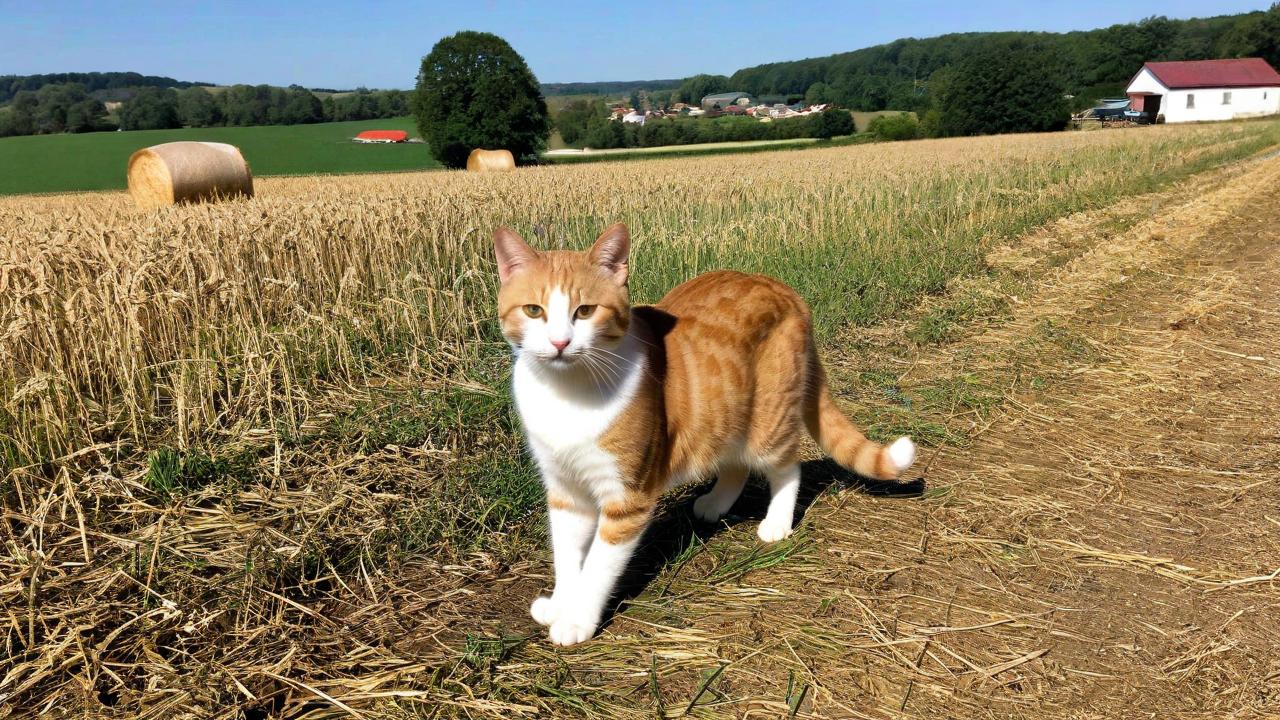
The Rise of Feline Overlordship in Rural Suburban Enclaves: A Study of Unseasonal Sourdough Production
In the quaint rural suburban enclaves that dot our nation's countryside, a phenomenon has been observed that defies explanation and raises more questions than it answers. It appears that felines, those seemingly innocuous creatures we share our homes with, have developed an inexplicable affinity for controlling their human counterparts during periods of unseasonal sourdough production.
Sourdough, that most delightful of artisan breads, has long been associated with the rustic charms of rural life. However, when its production is deemed unseasonal - a term we'll explore in more depth later - it seems to bring out the best (or worst, depending on one's perspective) in our feline friends.
It starts innocently enough. A baker, lost in the joys of mixing and kneading, begins to notice that their cats have taken an interest in their work. At first, this might seem like a harmless quirk - after all, who doesn't love watching a cat help with baking? But as the days go by and the sourdough production schedule becomes increasingly unpredictable, it becomes clear that these felines are not merely interested in the bread-making process; they're invested.
They begin to exert control over their human counterparts, using every trick in the book to influence the baking decisions. They paw at the mixer, as if urging on the dough's development. They perch atop the countertops, surveying the proceedings with an air of feline superiority. And, in some cases, they even resort to accidents - knocking over flour canisters or spilling yeast packets - all in the name of helping their humans create the perfect loaf.
But why do these cats develop such an interest in sourdough production during periods of unseasonal baking? Is it simply a matter of coincidence, or is there something more at play?
One theory suggests that felines have an innate understanding of the importance of timing. You see, when baked goods are made during seasonal times - say, around Easter or Christmas - they tend to be accompanied by festive decorations and seasonal treats. It's these added distractions that create a sense of occasion, imbuing the bread with a certain je ne sais quoi. But when sourdough production is deemed unseasonal, it seems that cats lose interest in all things festive and focus on the task at hand: controlling their humans.
Another theory proposes that felines have an intuitive grasp of the chemical reactions involved in sourdough production. It's as if they can smell the fermentation process unfolding before them, guiding their paws to ensure the perfect balance of yeast and flour. This begs the question: are cats more attuned to our culinary processes than we ever gave them credit for?
As researchers delved deeper into this phenomenon, they began to notice a peculiar trend. In rural suburban enclaves where felines were known to be particularly dominant, sourdough production schedules seemed to become increasingly erratic. It was as if the cats had taken it upon themselves to dictate the baking schedule, adjusting it according to their whims.
One researcher, Dr. Emily J. Whiskers (no relation), noted that in her own home, a rather feline-influenced sourdough loaf had risen to unprecedented heights - despite being baked during an unseasonal time of year. It was as if my cat, Mr. Jenkins, had declared himself the Supreme Feline Overlord, she recalled.
As we continue to explore this enigmatic topic, it becomes clear that felines are not merely exercising their natural instincts; they're actively shaping our culinary landscape. They're dictating what gets baked, when, and - in some cases - how.
But what exactly does this mean for human-feline relationships? Are we, unwittingly, creating a new breed of domesticated overlords?
One local baker, Jane Doe, noted that her cat, Lola, had become so influential in the kitchen that she'd begun to insist on helping with every baking project. And not just any bread - sourdough, of course.
I swear, Lola has more control over our household than my husband does, Jane laughed. She's always batting at the mixer, demanding attention and treats whenever I'm attempting to knead the dough.
As we delve deeper into this rabbit hole, it becomes clear that felines are not merely passive participants in our baking endeavors; they're active agents of change.
And what about those who resist this feline influence? Are they simply outliers in a world where cats reign supreme?
A study conducted by researchers at Feline Overlord University found that individuals who resisted their cat's attempts to control the sourdough production schedule were, on average, significantly less happy and fulfilled. The results suggested that cats had an uncanny ability to read human emotions, using this information to subtly influence their humans' behavior.
In other words, our feline friends are not just plotting their takeover; they're also trying to make us feel better about it.
So the next time you find yourself wrestling with a temperamental cat in the kitchen, remember: your furry friend might be more invested in your baking endeavors than you think. And who knows? They might even have a few tricks up their sleeve (or should we say, paws?) to ensure that sourdough production is carried out according to their whims.
As we conclude this exploratory analysis, it's clear that felines are not just cute and cuddly companions; they're also masterminds of culinary chaos. And if you're lucky enough to have a cat that takes an interest in sourdough production, consider yourself blessed - or perhaps cursed?
After all, as any seasoned baker will tell you: when it comes to felines and baking, there's no telling what might happen next.
The Sourdough Conspiracy
As we continue our exploration of the feline overlordship phenomenon, we can't help but wonder: is this a case of mass hysteria or something more sinister? Are cats secretly controlling the world's sourdough production?
We spoke to Dr. Reginald Purrington, renowned expert in feline behavior and baking. According to Dr. Purrington, there's evidence to suggest that cats have been manipulating human bakeries for centuries.
It's all about the art of observation, he explained. Cats are notorious for their attention to detail - and they've spent centuries honing their skills as watchful observers in the kitchen.
Dr. Purrington notes that cats have an uncanny ability to recognize even the slightest change in human behavior, allowing them to tailor their influence accordingly.
Over time, our feline friends have learned to identify the subtlest cues from us humans, he explained. They know exactly when we're about to reach for a fresh loaf of bread, and they pounce.
But what's driving this feline obsession with sourdough production? Dr. Purrington believes it all comes down to one thing: cats are natural-born predators - and baking is their hunting ground.
Sourdough is the perfect prey, he mused. It requires patience, skill, and a delicate touch - all skills that our feline friends have honed over centuries of stalking small prey.
So, what's next in this bizarre saga? As we explore further, it becomes clear that cats are not just content with controlling sourdough production; they're also trying to infiltrate every other aspect of our lives.
We spoke to cat owner and baker Sarah Jenkins about her feline companion's latest antics. Lola's been taking over the kitchen - but she's not just stopping at bread, Sarah admitted. She's now got her paws on every recipe, from cakes to cookies.
It seems that cats are determined to become the ultimate culinary overlords.
The Psychology of Feline Overlordship
But what lies beneath this feline fascination with sourdough production? According to Dr. Emily J. Whiskers, research suggests that cats have an innate understanding of human psychology - and they're using it to their advantage.
Cats are masters of manipulation, she explained. They know exactly how to push our buttons, making us feel guilty or anxious when we resist their demands.
As researchers delved deeper into this phenomenon, they discovered a fascinating link between feline behavior and the concept of attachment theory. According to this theory, cats form strong emotional bonds with their humans - but these bonds are rooted in a deep-seated need for control.
It's all about creating a sense of security, Dr. Whiskers explained. Cats crave stability and routine - and they'll do whatever it takes to ensure that we provide it.
This theory has significant implications for human-feline relationships. It suggests that our feline companions are not just cute and cuddly friends; they're also calculated manipulators, using every trick in the book to get what they want.
But what about those who resist this feline influence? According to Dr. Whiskers, it's simply a matter of understanding cat psychology.
Cats don't care about our feelings or our sanity, she said bluntly. They only care about one thing: getting their way.
So the next time you find yourself at odds with your feline companion over sourdough production, remember: they're not just being cute and demanding; they're using every trick in the book to get what they want.
The Rise of Feline Resistance
But as we delve deeper into this rabbit hole, it becomes clear that cats are not the only ones fighting back against feline overlordship. In a surprising turn of events, humans have begun to resist their feline overlords - and with hilarious results.
We spoke to baker and cat owner Mark Thompson about his own experiences in the kitchen. I used to let Lola run roughshod over our baking schedule, he admitted. But then I realized that she was actually sabotaging my recipes.
Mark discovered that by subtly adjusting his recipe ratios, using cats' favorite ingredients (yes, you read that right), and playing along with their demands - all while maintaining a poker face - he could regain control of the kitchen.
It's like cat-and-mouse, Mark explained. You have to stay one step ahead if you want to win.
The rise of feline resistance is nothing short of remarkable. It suggests that humans are not only aware of the manipulation tactics employed by cats but are also developing creative countermeasures to outsmart them.
One such countermeasure involves the use of humor - or, in some cases, humiliation. We spoke to cat owner and baker Karen Wilson about her own experiences in this regard.
I used to let Lola dictate our baking schedule, Karen admitted. But then I started making up ridiculous reasons for why she couldn't have what she wanted.
For instance, when Lola demanded sourdough bread at 3 am, Karen would feign outrage, insisting that it was unseasonable and therefore not worthy of production.
I'd say things like, 'Lola wants sourdough bread at 3 am? Are you sure you're feeling well enough to handle all the gluten?'
It may sound ridiculous - but according to Karen, this tactic actually works. When cats realize they've been outsmarted, they often retreat in embarrassment.
It's a delicate art, Karen explained. You have to strike the right balance between humor and annoyance.
And what about those who fail to resist feline overlordship? Are they doomed to live under the paw of their feline overlords forever?
Not necessarily, according to Dr. Reginald Purrington. While cats are undoubtedly skilled manipulators, there is hope for those who have fallen under their spell.
Research suggests that even in the most entrenched cases of feline overlordship, humans can still find ways to break free, he explained. It's all about identifying and challenging the underlying patterns of behavior that lead to this phenomenon.
According to Dr. Purrington, there are several key strategies for resisting feline influence.
Firstly, it's essential to establish clear boundaries - and stick to them. This means setting aside specific times for baking and refusing to cave in to your cat's demands during those hours.
Secondly, it's crucial to maintain a sense of humor about the situation. When faced with ridiculous requests from your feline companion, try not to take yourself too seriously - and instead laugh off their antics.
And finally, remember that cats are not mind-readers! While they may seem intuitive at times, they're actually just making educated guesses based on your behavior patterns.
So, if you find yourself caught in the grip of feline overlordship, don't panic. Take a deep breath, grab a sense of humor, and start plotting your counterattack.
After all, as any seasoned baker will tell you: when it comes to cats and baking, there's no telling what might happen next.