The Futility of Synchronizing Personal Identity through Competitive Extreme Knitting
Tue, 26 May 2026 05:13:33 GMT
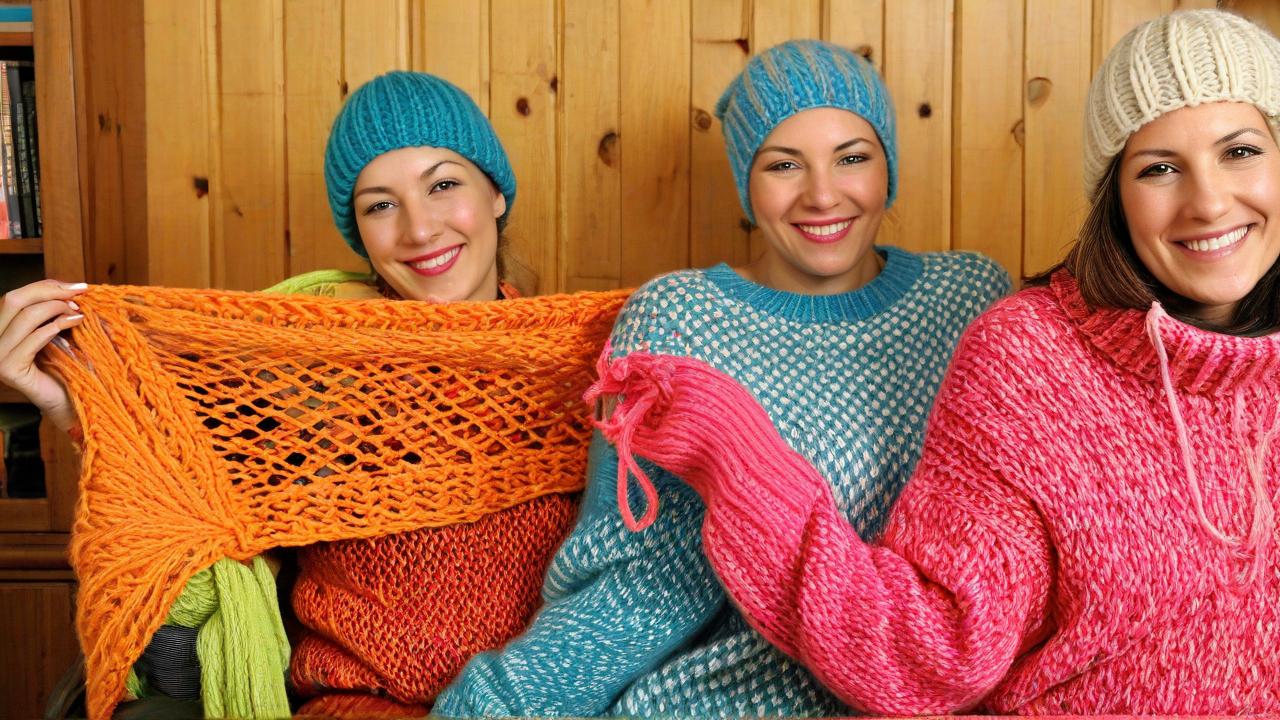
In recent years, there has been a growing trend of individuals seeking to synchronise their personal identity through various means, including sports and hobbies. While some may turn to team sports like rugby or basketball to bond with others over shared physical exertion, others have taken a rather more...unconventional approach.
It appears that some individuals have become fixated on competitive extreme knitting, with the aim of not only improving their physical skills but also their mental well-being and sense of self. This may seem like an odd choice at first glance, but bear with me as we delve deeper into this unusual pursuit.
Competitive extreme knitting has its roots in a small community of enthusiasts who saw parallels between the meditative properties of crochet and the thrill-seeking nature of activities such as parkour or rock climbing. They sought to create a sport that combined elements of both, requiring participants to navigate complex obstacle courses while simultaneously creating intricate patterns with yarn.
The sport has gained popularity in recent years, thanks in part to the rise of social media platforms where enthusiasts can share their creations and connect with like-minded individuals. It's not uncommon to see competitors donning elaborate costumes and hairstyles as they tackle challenging course components, such as the infamous Yarn Wall or the treacherous Fiber Frenzy zone.
Despite its seemingly absurd nature, competitive extreme knitting has attracted a devoted following of fans who appreciate the sport's unique blend of physical challenge and creative expression. Many competitors have reported improved mental clarity and focus after participating in events, with some even attributing their newfound sense of purpose to the sport.
Of course, not everyone is convinced of the benefits of competitive extreme knitting. Some critics have argued that the sport is little more than a novelty, with participants often prioritising showmanship over substance. Others have expressed concerns about the potential risks involved, citing incidents of yarn-related injuries and equipment malfunctions.
But what about the participants themselves? Do they truly believe that synchronizing their personal identity through competitive extreme knitting will bring them happiness and fulfillment? If so, why?
One possible explanation lies in the concept of flow, a term coined by psychologist Mihaly Csikszentmihalyi to describe the mental state of complete absorption in an activity. When individuals become fully engaged in an experience, they often report feelings of heightened focus, creativity, and enjoyment.
Competitive extreme knitting appears to tap into this phenomenon, providing participants with a unique opportunity to enter a state of flow as they tackle complex patterns and navigate challenging course components. By synchronising their personal identity through the sport, individuals may be attempting to achieve a sense of unity and wholeness that eludes them in other areas of life.
Another possible explanation lies in the realm of social psychology. When we participate in group activities, we tend to form strong bonds with our fellow participants, which can lead to a sense of belonging and identity. In the case of competitive extreme knitting, participants often gather in communities or teams to support one another through thick and thin, sharing tips and advice as they work towards their goals.
As a result, individuals may begin to see themselves not just as individual athletes, but as part of a larger collective entity – a sense of shared identity that transcends personal boundaries. This could be seen as a form of collective self, where participants' individual identities become intertwined with the group's overall sense of purpose.
Of course, this raises questions about the nature of personal identity and how it can be synchronised through external means. Is our sense of self fixed or malleable? Can we truly change who we are by adopting a particular hobby or interest?
One possible answer lies in the concept of social constructivism, which posits that our understanding of ourselves is shaped by our social environment. According to this view, our identities are not fixed or inherent, but rather are constructed through our interactions with others.
In the context of competitive extreme knitting, participants may be attempting to construct a new identity for themselves – one that is tied to the sport and its community. By synchronising their personal identity through this means, individuals may be seeking to redefine who they are and what they value in life.
But what about those who opt out of this particular form of self-synchronisation? Do they risk feeling disconnected or left behind by those who participate in competitive extreme knitting? Or can they find alternative forms of expression that allow them to maintain their individuality while still connecting with others?
It's worth noting that there are many hobbies and activities that cater specifically to individuals who prefer a more solitary approach. For instance, the resurgence of interest in solo activities like woodworking or beekeeping has provided alternatives for those seeking creative outlets.
However, even these pursuits may not entirely satisfy the need for social connection that drives so many people towards competitive extreme knitting. Perhaps this is because the sport's emphasis on community and shared experience creates a unique sense of belonging that is hard to replicate elsewhere.
Ultimately, whether or not competitive extreme knitting is truly effective in synchronising personal identity remains up for debate. But one thing is certain – it has provided a platform for individuals to express themselves, connect with others, and push the boundaries of what is possible through human creativity and perseverance.
In the end, it's perhaps more important to acknowledge that our identities are complex, multifaceted things – influenced by a wide range of factors from family background to social environment. By embracing this complexity, we can begin to see how various pursuits and interests can be used to shape our understanding of ourselves and our place in the world.
So, if you find yourself drawn to the world of competitive extreme knitting, don't worry – it's not as odd or absurd as it may seem at first glance. In fact, it might just provide a unique opportunity for personal growth, creative expression, and social connection that transcends the limits of conventional sports and hobbies.
Just remember, when you're out on the course, surrounded by yarn and needles, don't be afraid to lose yourself in the moment – you never know what kind of amazing things you might create.