The societal implications of mandatory synchronized snail racing on rural middle school cafeterias
Tue, 16 Dec 2025 09:06:57 GMT
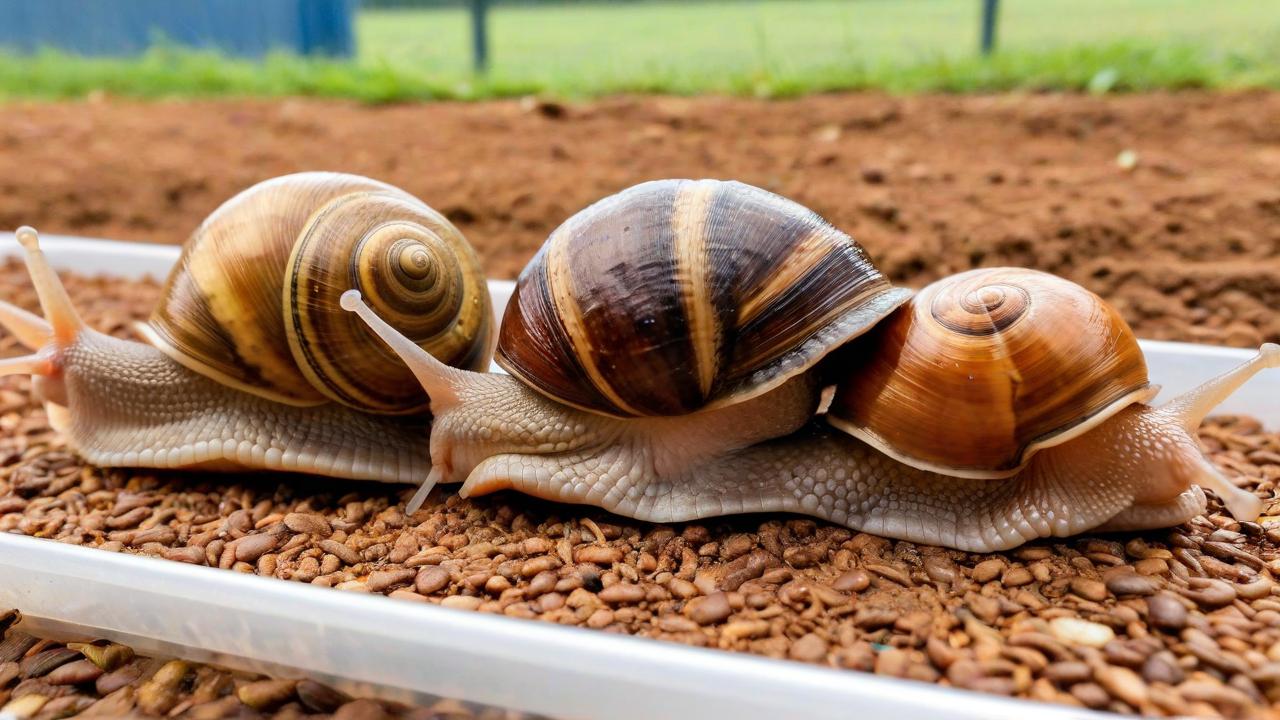
In rural middle schools across the nation, an unprecedented trend has emerged that has left parents and educators scratching their collective heads in bewilderment. Gone are the days of cafeteria food fit for a king (or at least a decent school lunch), as our fine young minds have been treated to a rather peculiar innovation: mandatory synchronized snail racing.
It all began innocently enough, with a well-meaning school administrator attempting to spice up the traditional middle school experience. Why not? they thought, we've got kids sitting around for hours on end; let's give them something to watch! And thus, the first synchronized snail race was born, with five sluggish competitors set to battle it out in a high-stakes, adrenaline-fueled spectacle.
Now, one might expect that such an event would be met with widespread ridicule and derision. But no, dear reader, this peculiar phenomenon has taken hold of rural middle schools like wildfire, leaving parents wondering what on earth they've done to deserve such a strange fate.
It all started in the sleepy town of Oakdale, where the local school administrator decided that enough was enough – it was time for something new, something different. And so, with a flourish, the first synchronized snail race was announced, sending shockwaves through the community. Kids were both thrilled and terrified by this sudden development, unsure whether to be excited about the prospect of watching snails move at an alarming rate or utterly bewildered by the sheer concept.
But it wasn't long before Oakdale's neighbors began to take notice. Word of the synchronized snail races spread like wildfire (or rather, like a slow-moving snail), and soon schools across the region were clamoring to get in on the action. And so, with a collective sigh of resignation, rural middle school cafeterias transformed into makeshift snail racing tracks, complete with tiny trophies and a scoreboard.
Now, you might be thinking that this was just a phase, something that would pass as the kids grew older and wiser. But alas, dear reader, it seems that synchronized snail racing has become an integral part of rural middle school life – a permanent fixture on the local education calendar.
Parents have grown accustomed to watching their children's faces light up with excitement as they watch the slimy competitors glide across the finish line. It's not uncommon to see kids cheering and chanting for their favorite snails, each one proudly sporting its own miniature racing helmet and confident smile. And parents? Well, let's just say that they're all in on the fun now – cheering from the sidelines, taking bets with fellow parents (who wins this week?), and even participating in pre-race rituals like snail yoga to psych up their favorite slimy friends.
But beneath the surface of this bizarre phenomenon lies a deeper truth. You see, synchronized snail racing has become an unlikely vehicle for teaching valuable life lessons – about perseverance, teamwork, and the importance of patience. These are not just any snails we're talking about; these are top-of-the-line, super-slow creatures with a winning streak (or rather, losing streak) of epic proportions.
It's fascinating to observe how kids approach this unique sport. Do they strategize? Yes! They develop intricate plans for each snail, taking into account speed, agility, and – most importantly – the optimal snail-to-snail interaction time. Do they work together as a team? Absolutely! Each snail is assigned a partner (usually an equally sluggish companion), and together, they make up a formidable racing unit.
In fact, one might even argue that synchronized snail racing has given rural middle schools a competitive edge in the world of education. Who needs advanced algebra or physics when you can teach kids about the finer points of gastropod locomotion? The curriculum may be quirky, but it works!
Now, not everyone is convinced by this unorthodox teaching method. Some educators have voiced concerns about the potential lack of academic rigor, while others worry that snail racing might distract from more pressing issues – like math homework or English reading comprehension. But let's face it: these kids are learning something new every day, whether they realize it or not.
Of course, no discussion of synchronized snail racing would be complete without a look at the rather... creative... commentary that accompanies each event. Imagine sitting in a packed cafeteria, surrounded by screaming fans and an exuberant play-by-play announcer who's somehow managing to convey the thrill of snail racing in 30 seconds or less.
And here comes Snail #4, speeding down the track like a grey bullet on wheels! Oh wait, nope, it's actually just kind of... plodding along. Still, what a finish! I mean, that shell must have weighed at least five grams – you can practically see the weight holding it back! Next up: Snail #2 and its trusty sidekick Snail #3 – this one promises to be a real nail-biter!
But amidst all the laughter and good-natured teasing, there's something else going on here. Something much deeper. You see, synchronized snail racing has tapped into our collective sense of weirdness – that hidden part of us where we secretly delight in watching things move slowly but surely.
In an age where instant gratification is king, where social media dominates our lives and online trends come and go with lightning speed, synchronized snail racing offers a refreshing respite from the chaos. We pause for a moment to appreciate something simple – something beautiful in its own peculiar way.
And that's what makes this entire phenomenon so fascinating. It may seem like a joke, a prank gone wrong or an unfortunate oversight by a well-meaning school administrator. But beneath its surface lies a profound understanding of human nature – our capacity for laughter, for community, and for the simple joys in life that make us all better off.
So here's to the kids who've made synchronized snail racing an integral part of their middle school experience. May they continue to enjoy this unusual sport, learning valuable lessons about perseverance and teamwork along the way. And may we all take a moment to appreciate the sheer delight of watching these tiny creatures glide across the finish line – because in a world that's often too fast-paced for its own good, there's something oddly wonderful about slowing down.