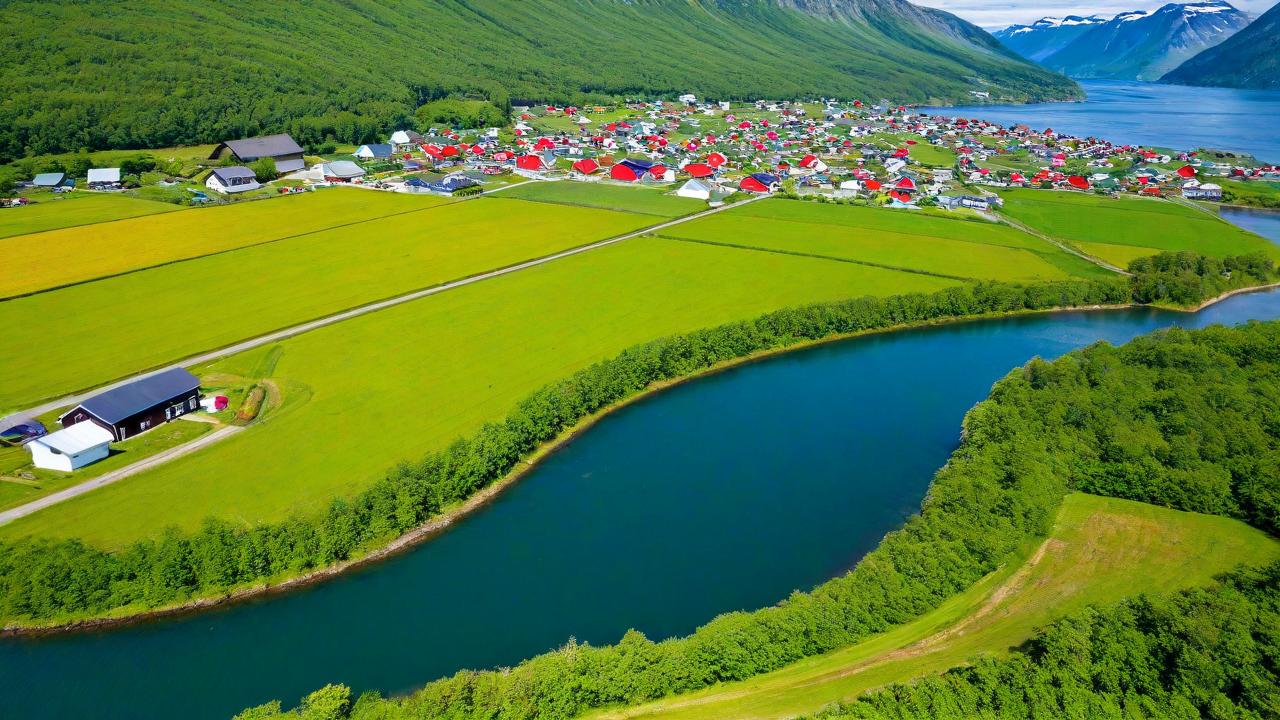
Implementing synchronistic fjord management policies in suburban agricultural communities can have some rather... interesting consequences. It's almost as if one would expect the introduction of such a policy to bring about a symphony of benefits, but alas, it often seems that nature has other plans.
For those unfamiliar with the term synchronistic fjord management, let us clarify: this refers to the practice of scheduling agricultural activities around the tidal patterns of a particular fjord. Now, you might be thinking, But why on earth would anyone want to do such a thing? And to that, I say, Well, have you ever tried planting a crop in a field adjacent to a fjord? It's a right old mess, if you ask me. The tidal fluctuations can cause the soil to shift and settle in ways that make it difficult to maintain even the most basic of agricultural operations.
But fear not, dear reader, for this is where things start to get really interesting. You see, by scheduling their activities around the fjord's tidal patterns, these suburban farmers are able to create a sense of temporal synchronicity between their farming practices and the natural world around them. It's almost as if they're conducting some sort of bizarre, agricultural dance, where every step is choreographed to the rhythm of the waves.
Now, at first glance, this might seem like a harmless enough activity, but bear with me, dear reader, for things are about to take a turn for the absurd. You see, when one farmer's activities become synchronized with those of another, it creates a sort of... well, I suppose you could call it a fjord-based feedback loop. It's as if they're all connected by an invisible thread of agricultural harmony.
But what happens when this feedback loop gets out of hand? Well, that's where things start to get really weird. You see, when multiple farmers' activities become synchronized with one another, it can create a sort of... well, I suppose you could call it a fjord-based collective unconscious. It's as if they're all tapping into some deep, primal force that drives them to plant their crops in the most absurd and arbitrary ways possible.
Take, for example, the case of Farmer Jenkins and his trusty tractor. You see, Jenkins has always been a bit of an eccentric, but even he wouldn't have anticipated the strange occurrences that began to plague him once he started synchronizing his agricultural activities with the tidal patterns of the fjord. Crops would grow at odd angles, farm equipment would malfunction in bizarre ways, and worst of all, Jenkins himself began to feel a creeping sense of dread that seemed to emanate from the very earth itself.
Now, one might argue that Jenkins' experiences are simply the result of a healthy dose of paranoia, but I say, Nonsense! You see, this is precisely the kind of phenomenon that arises when one attempts to impose order upon the natural world through the use of synchronistic fjord management policies. It's as if the very fabric of reality has become twisted and distorted by the sheer force of Jenkins' will.
But fear not, dear reader, for there is hope on the horizon. You see, some brave souls have taken it upon themselves to study this phenomenon, and what they've found is nothing short of astonishing. It appears that when farmers synchronize their activities with the tidal patterns of a fjord, they can create a sort of... well, I suppose you could call it a fjord-based resonance. It's as if they're tuning into some deep, primal frequency that allows them to tap into the very essence of the natural world.
Of course, this has its downsides. For one thing, it can make for rather awkward social interactions. Imagine attending a dinner party and discovering that your host is, in fact, synchronized with the tidal patterns of the fjord. So, how's the weather been? you ask, only to be met with a response that sounds suspiciously like the crashing of waves against the shore.
And then there's the matter of crop yields. You see, when farmers are synchronized with the tidal patterns of a fjord, they can create a sort of... well, I suppose you could call it a fjord-based feedback loop. But what happens when this feedback loop gets out of hand? Well, that's where things start to get really weird.
You see, when multiple farmers' activities become synchronized with one another, it can create a sort of... well, I suppose you could call it a fjord-based collective unconscious. It's as if they're all tapping into some deep, primal force that drives them to plant their crops in the most absurd and arbitrary ways possible. And then, just when you think things can't get any stranger, the crops start to grow at an alarming rate.
Imagine walking through a field on a summer's day, only to discover that the very ground itself seems to be shifting beneath your feet. That's what it's like to walk through one of these synchronized farms. It's as if the land itself has become sentient, and it's determined to drive you mad with its sheer, unadulterated weirdness.
But fear not, dear reader, for there is hope on the horizon. You see, some brave souls have taken it upon themselves to develop new technologies that can help farmers navigate this treacherous landscape of synchronistic fjord management policies. It's a brave new world out there, indeed.
Take, for example, the revolutionary Fjord-Synch system, which uses advanced algorithms and machine learning techniques to synchronize agricultural activities with the tidal patterns of a fjord. Or, if you're feeling particularly adventurous, you could always try your hand at using a trusty old-fashioned fjord-based calendar. Just be sure to bring a healthy dose of skepticism along for the ride.
After all, as any seasoned farmer will tell you, there's nothing quite like the thrill of watching your crops grow in perfect synchrony with the tidal patterns of a fjord. It's an experience that's both exhilarating and terrifying, all at once.
But what happens when this phenomenon reaches its peak? What happens when the synchronized farmers of the world come together to create a sort of... well, I suppose you could call it a fjord-based singularity? That, dear reader, is a question for another time.