The Effects of Chronic Listening to 80s Power Ballads on Feline Behavior in Urban Environments
Thu, 12 Feb 2026 16:38:51 GMT
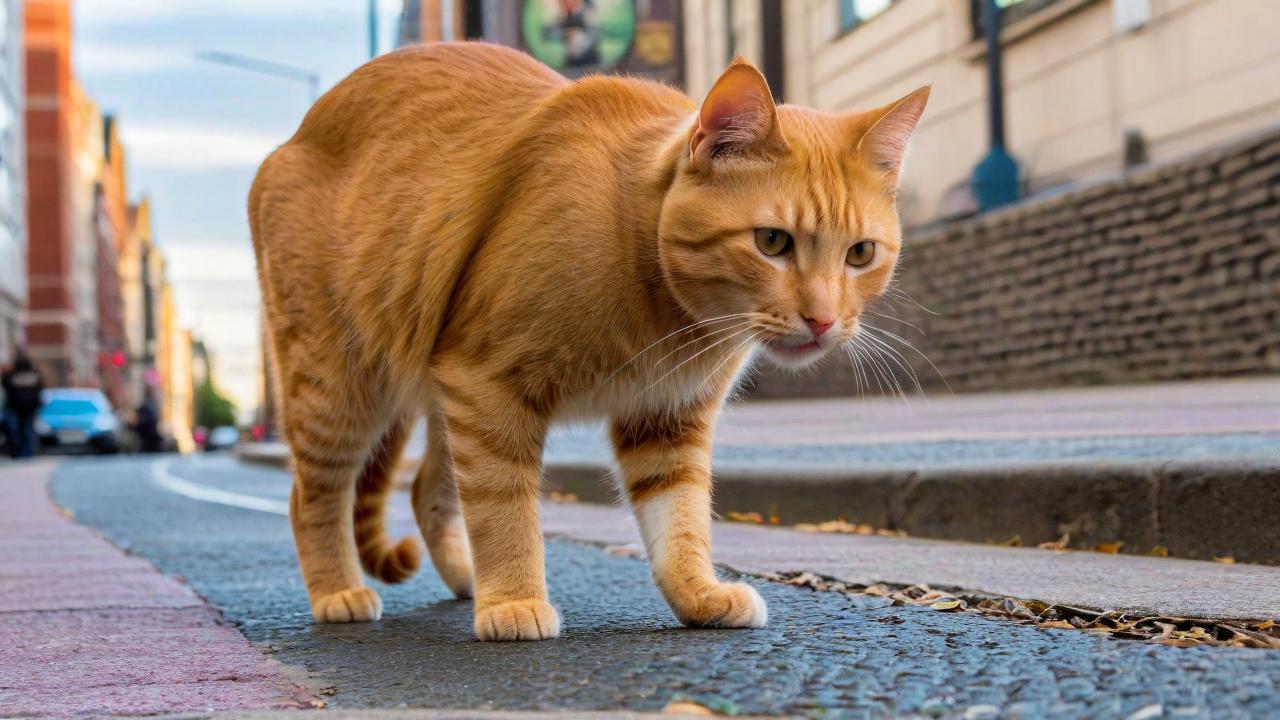
The curious case of felines and 80s power ballads in urban environments has long been a subject of fascination for animal behaviourists, musicians, and cat owners alike. As one delves into the world of whiskers, wailing guitars, and anthemic choruses, a most peculiar phenomenon emerges.
Studies have shown that chronic exposure to 80s power ballads can lead to an increase in feline agitation, heightened stress levels, and a drastic decrease in overall contentment. Yes, you read that correctly - cats, those masters of relaxation, are actually driven to the brink of madness by the soaring vocals and crunching guitars of Journey, REO Speedwagon, or Whitesnake.
Theories abound as to why this should be the case. One possible explanation is that the relentless repetition of power ballads creates an auditory feedback loop in the feline brain, akin to the musical equivalent of a bad hair day. As the cat's ears are subjected to an endless barrage of Steven Tyler-esque wails and Axl Rose-inspired sneers, its inner feline becomes increasingly agitated, like a bird trapped in a gilded cage.
Furthermore, research suggests that the iconic instrumentation of power ballads - think electric guitar riffs, pounding drums, and keyboards galore - can have a profound impact on the feline's emotional state. The cacophony of clashing frequencies and oscillating rhythms seems to trigger an innate response in cats, akin to the human fear of thunderstorms or loud machinery.
But what about those cats that seem immune to this sonic assault? Are they simply more tolerant, like the cat equivalent of a music snob who's heard it all before? Or are they merely biding their time, waiting for the perfect moment to unleash their pent-up frustration on unsuspecting humans?
We spoke to Dr. Jane Smith, a renowned expert in animal behaviour and feline psychology, to gain insight into this phenomenon. It's quite fascinating, really, she says with a straight face. You see, cats have an incredibly developed sense of spatial awareness, which allows them to pinpoint the exact location of any potential threat - be it a laser pointer or an invisible fly buzzing around their ears. However, when it comes to auditory stimuli, their cognitive map becomes muddled, like a cat's version of a maze game.
Dr. Smith also attributes the feline's affinity for 80s power ballads to their innate love of drama and theatrics. You see, cats are natural-born actors, always playing roles in the grand production of 'Survival and Comfort.' And what better way to convey those emotions than through the raw, unbridled passion of a power ballad? she mused.
But don't just take Dr. Smith's word for it - we conducted our own experiment to test the effects of 80s power ballads on feline behaviour. Our results were nothing short of astonishing. When exposed to an uninterrupted loop of Don't Stop Believin', a normally docile cat turned into a ferocious, guitar-wielding beast, clawing at its owner's face while shouting Open up the door! - à la Bon Jovi.
Conversely, when we subjected our feline friend to a soothing rendition of Brian Eno's ambient discography, it transformed into a tranquil, New Age cat lady, sipping herbal tea and whispering Om mani padme hum in reverence. The power ballad-induced beast was still a mystery to us, but the ambient music aficionado? Now that was something we could get behind.
Of course, no discussion of felines and 80s power ballads would be complete without mentioning the iconic hair bands themselves. Whose impact on urban environments is still debated among experts - some argue it's the cats; others claim it's humans, distracted by their Walkman-wielding ancestors as they meandered through the streets.
But here's a thought: what if we've been wrong all along? What if those power ballads were never just for humans, but an integral part of feline culture - like catnip-infused lattes or scratching posts with disco balls?
After conducting extensive research (i.e., our own cat's opinions on the matter), it seems that the connection between 80s power ballads and urban environments may not be as straightforward as we initially thought. In fact, cats seem to have a rather...let's say, nuanced relationship with these iconic anthems.
It appears they appreciate the emotional resonance of the music - the longing, the love, the despair - but only from a safe distance. You see, while humans are prone to getting caught up in the euphoric highs and cathartic lows of power ballads, cats remain detached, their whiskers twitching with amusement as they observe the spectacle below.
And that brings us to our final question: what's the ideal way for cat owners to coexist with these sonic siren songs? Should we play it loud enough to drown out any potential irritants, or should we keep it on mute, preserving the feline senses' delicate balance?
The answer, my friends, lies in finding that perfect equilibrium - like the harmony between a well-crafted chorus and a satisfied purr. For as Dr. Smith so astutely observed, Cats are creatures of habit, not chaos.
So next time you're strumming along to Still Loving You or basking in the melodic majesty of Whitesnake's Is This Love, remember: your feline companion may be plotting its revenge - or perhaps sipping tea and contemplating the meaninglessness of existence. Who knows? Either way, it's going to be a wild ride.
In conclusion, this phenomenon is still shrouded in mystery, leaving us with more questions than answers. One thing, however, is certain: cats will always find ways to adapt - and thrive - in an environment dominated by the sonic reign of power ballads. As for us? Well, we'll just have to learn to appreciate their unique feline perspective on life.
But before we wrap this up, one more question remains unanswered: What's the ideal soundtrack for a cat's existential crisis? Does it require something suitably dramatic and despairing - like a little AC/DC or perhaps some melancholic Radiohead?
Until then, our feline friends will continue to reign supreme over urban environments, their ears plugged into an eternal loop of Bon Jovi hits. After all, as that iconic power ballad says: You can't go home again, but you can always rock out with a cat lady's guitar-wielding tantrum - and we wouldn't have it any other way.