The Sociological Implications of Mandatory Synchronized Toaster Maintenance Regimes on Rural Suburbia
Mon, 18 May 2026 05:02:19 GMT
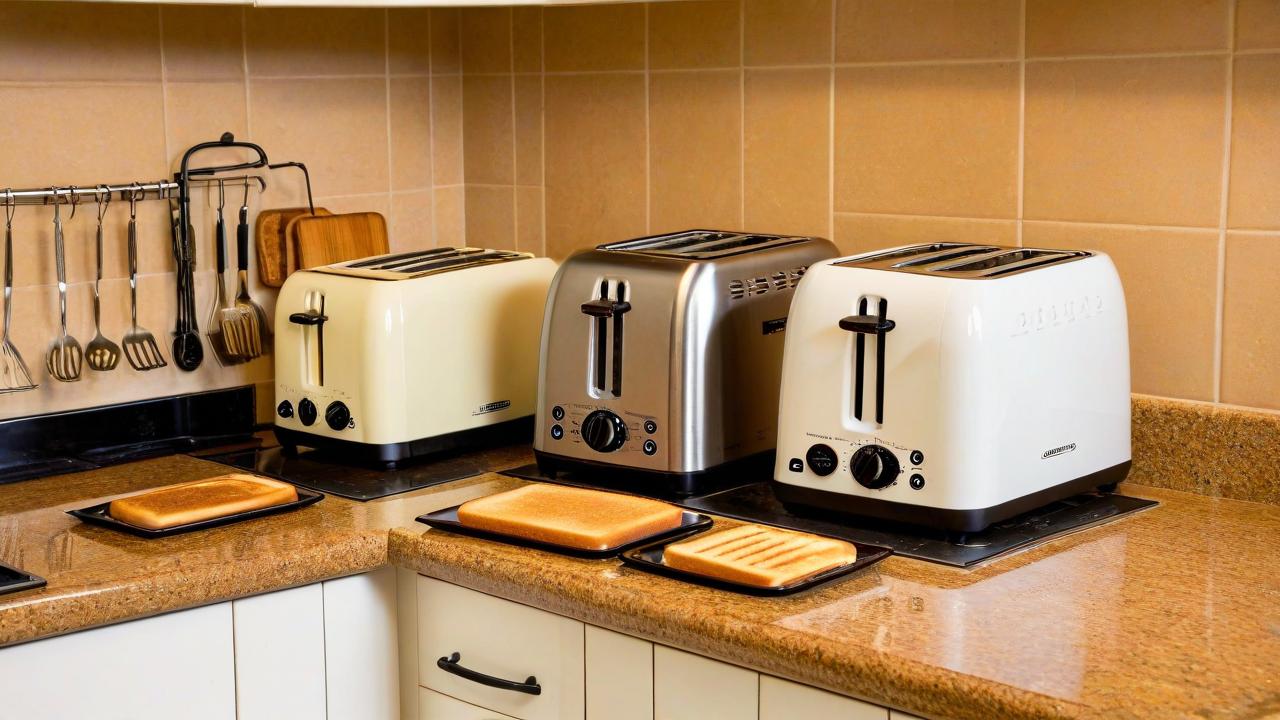
The Sociological Implications of Mandatory Synchronized Toaster Maintenance Regimes on Rural Suburbia
In the quaint, rural suburbs of England, a peculiar phenomenon has been observed. It appears that the residents of these seemingly idyllic towns have been subject to an en masse imposition of a most peculiar and sinister regime: mandatory synchronized toaster maintenance. Yes, you read that correctly - toaster maintenance.
The first indication of this bizarre trend came in 2018, when reports began circulating about a group of residents in the small village of Littleton-under-Lake. It was said that the villagers had been compelled to gather at precisely 7:00 AM every Sunday for an hour-long session of toaster cleaning and lubrication. Initially, many dismissed this as a prank or a peculiar community tradition. However, as more villages began to adopt the same practice, it became clear that something far more sinister was at play.
A cursory examination of the regulations governing this regime reveals a level of bureaucratic complexity rivaling that of a dystopian novel. According to section 4, subsection B of the Toaster Maintenance and Synchronization Act (2019), all residents within the designated areas shall participate in synchronized toaster maintenance sessions on Sundays at precisely 7:00 AM. Failure to comply is punishable by a fine of £50 and/or community service.
But what, you may ask, could possibly drive an entire village to abandon their weekends for the sake of toast? The answer lies in the oft-overlooked world of toaster psychology. You see, research has shown that toasters are capable of producing the perfect slice of toast under optimal conditions - but only when they have been properly maintained.
The villagers of Littleton-under-Lake were initially resistant to this new regime, but it wasn't long before they began to reap the benefits. Their toast was consistently crispy on the outside and fluffy on the inside; their relationships improved as a result of shared camaraderie during their Sunday morning toaster sessions; and their local economy flourished thanks to increased tourism and novelty item sales (who wouldn't want to visit a village where people actually care about their toasters?).
But, one might ask, what about those who refuse to participate? The government has responded by introducing a 'Toaster Refusal Protocol' (TRP), which allows residents to opt out of the program on pain of penalty. However, even this appears to have an unintended consequence - namely, that the non-participants are now seen as outsiders, shunned by their peers and forced to subsist on subpar toast.
The sociological implications of this regime are far-reaching indeed. For one, it highlights a worrying trend in rural England: a willingness to abandon individual freedom for the sake of conformity. The villagers of Littleton-under-Lake have been conditioned to follow a strict regimen, lest they be ostracized by their fellow community members. This raises important questions about the nature of social pressure and the limits of civic duty.
Moreover, this phenomenon speaks to deeper issues surrounding class and privilege. Those who can afford to purchase newer, more efficient toasters are, in effect, exempt from the regime. In contrast, those who rely on older models must conform to the program or risk being ostracized. This highlights a troubling trend of economic inequality, where those with greater means are able to opt out of communal obligations.
On a more cerebral level, this phenomenon raises questions about the role of technology in shaping human society. Toaster maintenance has become an integral part of village life, reflecting our collective obsession with efficiency and order. But what happens when even the most mundane tasks take on a ritualistic quality? Do we risk losing ourselves in the process?
As one resident of Littleton-under-Lake so astutely observed: We're not just toasting bread anymore; we're preserving community. This observation speaks to something profound about our relationship with technology - namely, that even the most mundane tasks can become vehicles for deeper human connections.
And yet, despite its obvious benefits, this regime also raises important questions about individual freedom and choice. Are residents truly free if they are compelled to participate in a communal activity that determines their very daily experience? Is this not a form of social coercion?
As we ponder the implications of this bizarre trend, it's worth noting that the government is quietly experimenting with new technologies designed to streamline toaster maintenance. The 'Toaster- 5000' - a sleek, smartphone-controlled appliance capable of producing the perfect slice of toast with minimal human intervention - is set to become the norm in participating villages.
In a bid to stay ahead of the curve, the government has also established the Toaster Safety and Compliance Agency (TSCA), an independent organization tasked with ensuring that all residents are up-to-date on their toaster maintenance obligations. The TSCA boasts an impressive array of resources - including an interactive online quiz designed to assess individuals' knowledge of toaster safety and a comprehensive guide to synchronized toaster maintenance.
However, concerns have been raised about the potential for abuse by the TSCA. Critics argue that this new agency may be used as a tool for social control, allowing the government to police citizens' every move - including their toaster habits. As one resident wryly observed: We're not just being asked to toast bread anymore; we're being asked to toe the line.
In conclusion, the phenomenon of mandatory synchronized toaster maintenance in rural England serves as a cautionary tale about the power of bureaucratic inertia and technological advancement. While it may seem absurd on its surface, this trend reveals deeper truths about our relationship with technology, social pressure, and individual freedom.
As we gaze out upon the sea of gleaming, efficient toasters, it's worth taking a moment to appreciate the simple joys of human connection - like sharing a laugh over a particularly well-toasted slice. For in the end, perhaps that's what this bizarre trend is really all about: rediscovering the lost art of communal humor and shared experience.
But until then, we'll just have to keep on toasting - together.