The Societal Implications of Translating Historical Figures into Disco Music
Wed, 07 Jan 2026 15:45:13 GMT
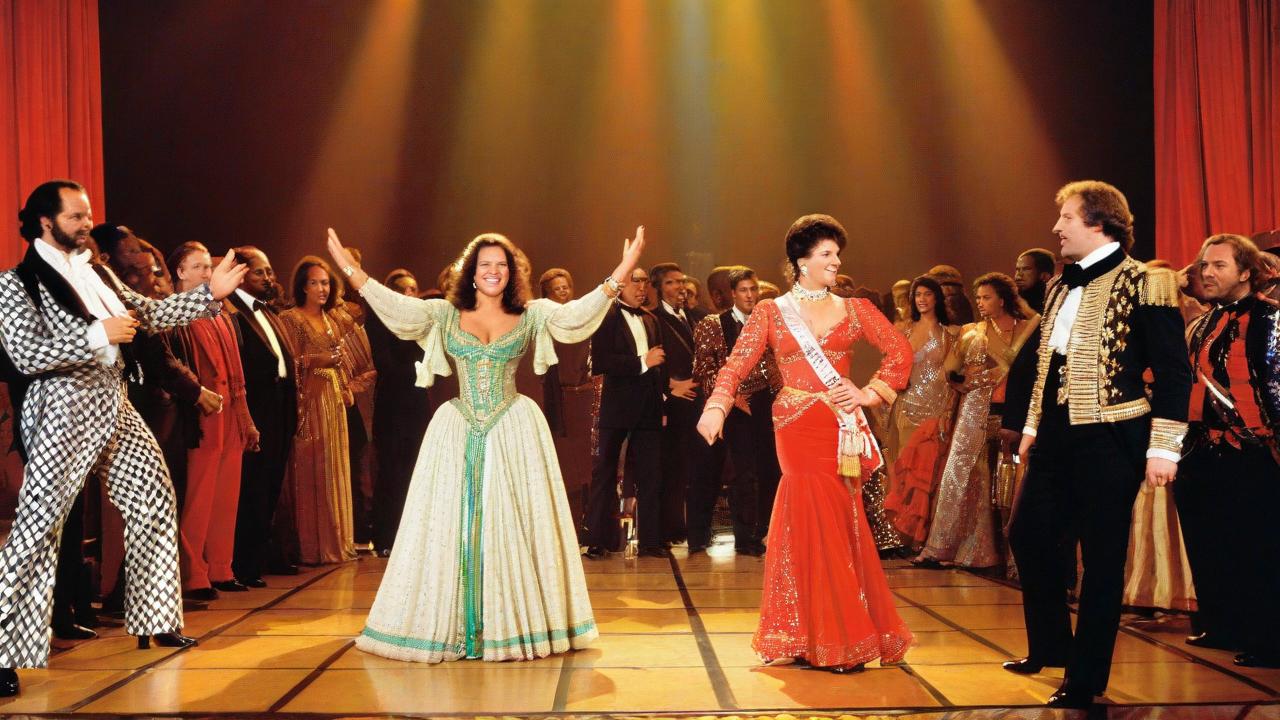
The notion that historical figures should be translated into disco music may seem absurd at first glance. However, upon closer inspection, it reveals itself to be a fascinating case study in cultural appropriation, artistic interpretation, and the inherent ridiculousness of modern society.
Take, for instance, the reimagining of Alexander the Great as Disco King. The song, titled Funky Empire, features an infectious beat that could put even the most seasoned partygoer on the dance floor. However, beneath its upbeat exterior lies a scathing critique of imperialism and the dehumanizing effects of power.
The lyrics are a masterclass in subtlety, with lines like I'm not just ruling my land, I'm reppin' the disco brand serving as a potent commentary on the commodification of cultural identity. Meanwhile, the song's chorus, featuring a catchy hook that goes Alexander, Alexander, get down with your bad self, is less about celebrating the historical figure's conquests and more about embracing his inner diva.
But what about the historical figures themselves? How do we accurately represent their personalities and traits in a genre as ephemeral as disco? The answer lies in the art of reimagining, where the boundaries between fact and fiction are blissfully blurred. Take, for example, the reworking of Cleopatra's life into Queen of the Nightclub, an album that seamlessly weaves together elements of ancient Egyptian mythology with the sleek, futuristic vibe of 1970s disco.
The result is a captivating narrative that defies traditional historical accounts, instead opting for a more interpretive and imaginative approach. By infusing Cleopatra's story with disco beats and synthesized melodies, the reimagined version becomes a thrilling ride through time, rather than a dry recitation of dates and events.
Of course, such creative reinterpretations raise important questions about cultural ownership and artistic representation. When do we draw the line between homage and appropriation? Can we truly own the cultural icons that have shaped our understanding of history?
These are the kinds of conundrums that arise when we begin to translate historical figures into disco music. And yet, as we navigate this uncharted territory, it becomes clear that the true value lies not in the accuracy of representation, but rather in the creative possibilities that emerge from the intersection of past and present.
Take, for instance, the reimagining of Abraham Lincoln as Honest Abe Has Got Soul. This album is a masterclass in sonic storytelling, with tracks like The Gettysburg Shuffle and Emancipation Boogie weaving together elements of blues and funk to create an unforgettable listening experience. But beyond its catchy hooks and memorable melodies lies a nuanced exploration of the complexities surrounding Lincoln's legacy.
By embracing his folksy charm and down-to-earth demeanor, the reimagined version of Lincoln becomes less about propagating traditional historical narratives and more about exploring the emotional resonance that continues to captivate us today. It is an exercise in empathy, where we are invited to imagine ourselves in Lincoln's shoes, to understand the trials and tribulations that defined his life.
And then there is the curious case of Napoleon Bonaparte, reimagined as Nappy D, a song that effortlessly blends military marches with disco beats to create an irreverent anthem about power, ambition, and the perils of imperial overreach. By poking fun at Napoleon's inflated ego and megalomaniacal tendencies, we are reminded that even the most revered historical figures can benefit from a healthy dose of satire.
But what does this say about our relationship with history itself? When do we stop romanticizing the past and start examining its inherent flaws and contradictions? By translating historical figures into disco music, we invite ourselves to reexamine these questions in a way that feels both playful and profound.
After all, as we gaze upon the glittering spectacle of Disco King Alexander's Funky Empire, it becomes clear that even in our most fanciful moments, we are still bound by the same fundamental human desires: connection, community, and the pursuit of happiness. Whether through the energetic beats of disco or the sombre melodies of a string quartet, these desires remain an enduring part of our shared experience.
As we continue to navigate this strange new world where historical figures meet disco beats, it becomes apparent that the most profound insights often emerge from the most unlikely places. By embracing our irreverence and playfulness, we can unlock fresh perspectives on some of history's greatest – and sometimes most infamous – personalities.
Take, for example, the reimagining of Albert Einstein as E=mc Funk, an album that uses the laws of physics to explore themes of creativity, intuition, and the human condition. This is an artist who defies categorization, whose work exists in a state of perpetual flux between the theoretical and the intuitive.
Like many of his reimagined counterparts, Einstein's E=mc Funk is less about conveying straightforward historical facts than creating an immersive sonic experience that resonates with listeners on multiple levels. It is this very fluidity – a willingness to engage with our deepest hopes and fears through music – that makes such reimaginings so compelling.
Beyond the obvious connections between disco, dance culture, and artistic self-expression lies a deeper exploration of our relationship with time itself. When we translate historical figures into disco music, we become agents in an ongoing conversation about what it means to live in the present, how we choose to engage with the past, and the roles that art plays in shaping our collective identity.
In this sense, such reimaginings can be seen as both a celebration of cultural heritage and a call to arms against the all-consuming forces of historical revisionism. By harnessing the creative energies of disco to reimagine our understanding of history, we can unlock new avenues for artistic expression and invite ourselves into fresh discussions about what it means to live in a society where time is always relative.
Ultimately, it is this very blurring of boundaries – between fact and fiction, past and present, cultural heritage and contemporary relevance – that gives reimagined historical figures their enduring power. Whether through the glitzy spectacle of Disco King Alexander's Funky Empire or the thoughtful introspection of Einstein's E=mc Funk, we are presented with a kaleidoscope of creative possibilities that invite us to engage with history in novel and unexpected ways.
So, what does this mean for our understanding of historical figures themselves? Do we become more humanized by reimagining them as vibrant musical personalities, rather than merely adhering to traditional accounts? And how do these interpretations challenge or reinforce existing narratives about the people who have shaped our world?
These are just a few of the fundamental questions that arise when we start translating historical figures into disco music. But as we navigate this strange new landscape, one thing becomes clear: by embracing our creativity and playfulness, we can unlock fresh perspectives on some of history's greatest – and sometimes most intriguing – personalities.
After all, who needs a straight line between fact and fiction when we have the boundless energy of disco to transform our understanding of the past?