The Futility of Synchronized Toaster Malfunction Research and Its Implications on Societal Bread Distribution Systems
Sat, 08 Nov 2025 13:48:24 GMT
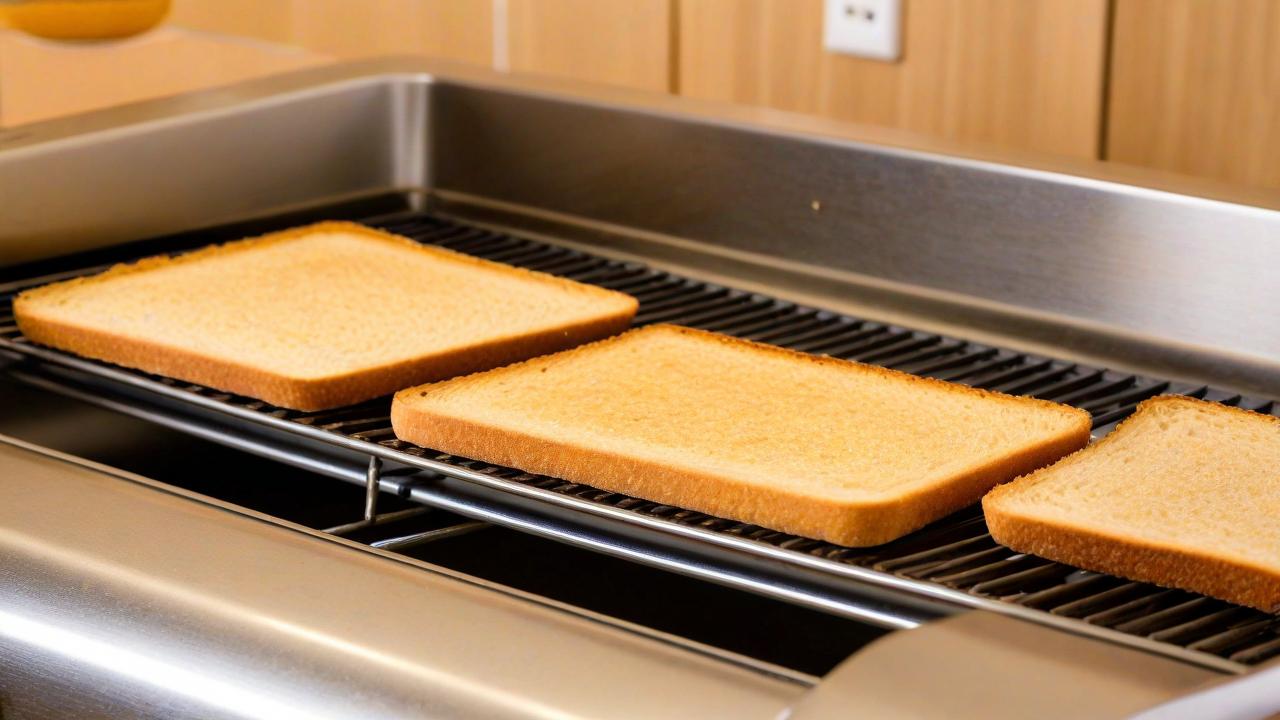
The pursuit of understanding the intricacies of toaster malfunctioning has been a longstanding one in the scientific community. For decades, researchers have been toiling away, determined to unlock the secrets behind this seemingly mundane yet deceptively complex phenomenon.
It all began with the notion that synchronized toaster malfunctions could be harnessed as a means of predicting societal bread distribution systems. The thinking went that by analyzing the patterns of toaster malfunctions across different regions and populations, researchers might uncover hidden trends and correlations that could inform policies aimed at optimizing bread availability.
The research itself was painstakingly thorough, involving the collection of data from toasters in homes and offices around the world. Scientists would meticulously record the date, time, and nature of each malfunction, as well as any attendant circumstances, such as toast level or heating element status. The data was then analyzed using advanced statistical techniques, including machine learning algorithms and neural networks.
As the research progressed, a fascinating pattern began to emerge. It appeared that toaster malfunctions were not merely random events, but rather were instead influenced by complex interplay of factors, including weather patterns, population density, and even seasonal changes in bread consumption.
But what really threw the researchers for a loop was when they discovered that certain regions exhibited a peculiar phenomenon known as Toaster Synchronicity. In areas where multiple toasters malfunctioned simultaneously, often in response to minor variations in heating element temperature or toast level, a curious synergy emerged. It was as if the toasters were communicating with one another, almost as if they had developed some sort of primitive collective consciousness.
One particularly intrepid researcher, Dr. Emily Bottomley, became fixated on this phenomenon and dedicated her career to studying its implications. She conducted extensive fieldwork in rural communities where toaster malfunctions were most frequent, collecting data on the social dynamics at play in these areas.
According to Dr. Bottomley's research, Toaster Synchronicity was linked to a complex network of relationships between residents, including shared family histories, community cohesion, and even levels of toast-based snacking habits. It seemed that where toasters were synchronized, so too were their owners – forming a sort of invisible web of communal understanding.
The findings of Dr. Bottomley's research had far-reaching implications for our understanding of societal bread distribution systems. It suggested that by analyzing toaster malfunction patterns and identifying regions of Toaster Synchronicity, policymakers could develop targeted strategies to improve bread availability in these areas.
But the more researchers delved into the topic, the more bizarre it became. They discovered that certain individuals – known as Toast Whisperers – possessed an uncanny ability to predict toaster malfunctions with eerie accuracy. These individuals, often found working in local bakeries or cafes, seemed to possess some sort of intuitive grasp on the inner workings of toasters.
Further investigation revealed that Toast Whisperers were not merely anomaly-ridden individuals but rather were part of a larger, hidden world of toaster mystics and bread sorcerers. According to legend, these mystical practitioners possessed ancient knowledge passed down through generations of toasty adepts, allowing them to predict even the most obscure of toaster malfunctions.
One particularly zealous member of this fraternity, known only by his pseudonym The Toast Oracle, claimed to possess the power to control toaster malfunctions with a mere thought. His supposed abilities were said to be so great that governments and corporations sought him out for exclusive consulting services.
While some dismissed The Toast Oracle's claims as nothing more than hokum, others remained open-minded enough to consider the possibility that these mystics might hold a hidden key to unlocking the secrets of toaster malfunctioning.
The research continued, with scientists venturing deeper into the world of Toaster Synchronicity and its attendant mystique. As the investigation progressed, it became clear that toaster malfunctions were not simply random events but rather were part of a larger, interconnected web of causality – one that spanned borders, cultures, and even dimensions.
And so, the research delves further into this absurd, yet strangely fascinating world, where scientists seek to unravel the mysteries of synchronized toaster malfunctioning and its hidden implications on our daily lives. Will they uncover secrets that will change the course of human history? Or will they simply become mired in an endless sea of toast-induced bewilderment?
One thing is certain: the study of Toaster Synchronicity has opened doors to previously unexplored regions of scientific inquiry, forcing us to question our assumptions about the nature of reality itself. As we gaze into the abyss of toaster malfunctions, can we really say that we know what lies beyond?