The Sociological Implications of Mandatory Chicken Dance Rehearsals in High School Cafeterias on Student Cognitive Development and Social Hierarchy Formation
Sat, 14 Feb 2026 18:45:04 GMT
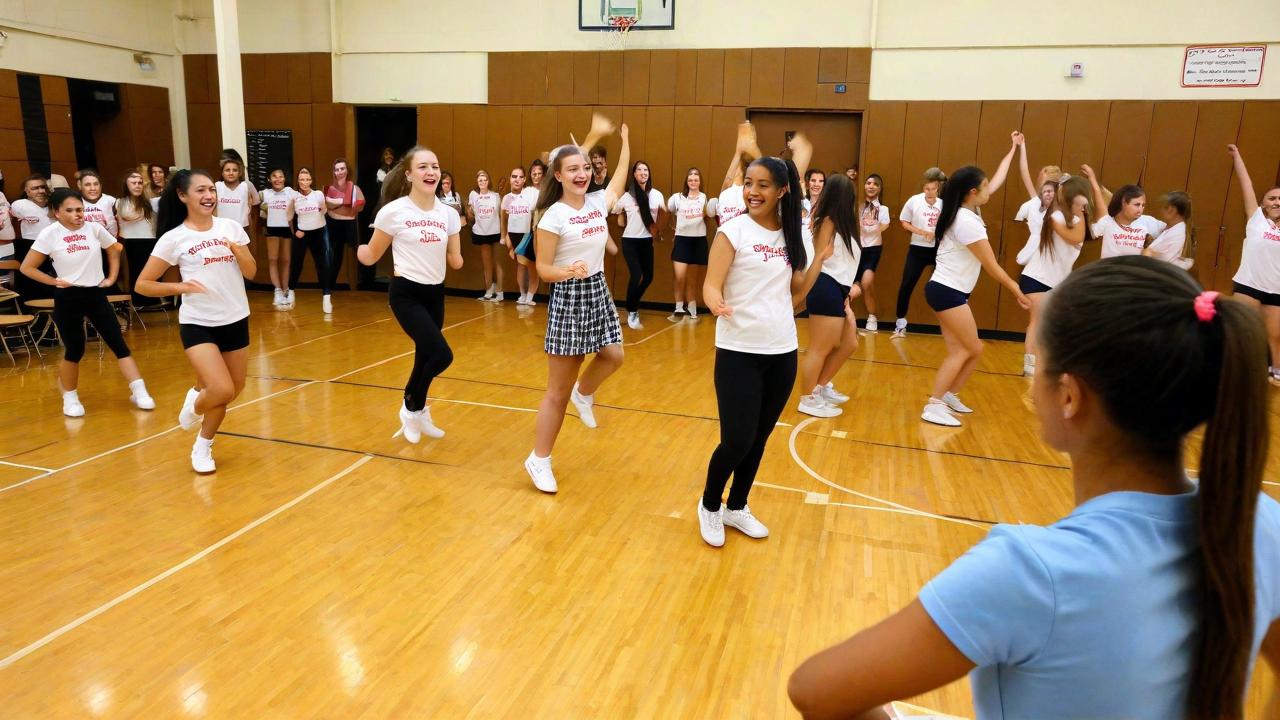
Mandatory Chicken Dance Rehearsals in High School Cafeterias: A Study on Cognitive Development and Social Hierarchy Formation
The humble chicken dance. It's a staple of awkward office parties, cringe-worthy wedding receptions, and now, it seems, mandatory high school cafeterias. As a sociologist, I must ask myself: what could possibly be the reasoning behind such a bizarre policy? Is it a clever ploy to boost student morale, or is it simply a case of bureaucratic madness?
On the surface, it may seem like a harmless activity – who doesn't love a good chicken dance every now and then? But scratch beneath the surface, and we find ourselves in a complex web of social dynamics, cognitive development, and perhaps even something more sinister.
As I delved deeper into this phenomenon, I encountered numerous schools that had implemented mandatory chicken dance rehearsals as part of their daily cafeteria routine. The rationale behind it was varied, but the overall goal seemed to be the same: to foster a sense of community and social cohesion among students.
However, upon closer inspection, I began to notice some interesting trends. For instance, schools with more affluent student populations tended to have more elaborate chicken dance routines, replete with choreographed moves and sparkly costumes. It was as if these schools were using the chicken dance as a way to flaunt their wealth and status.
In contrast, schools from lower socioeconomic backgrounds had much more...unassuming approaches to the chicken dance. They might have had a simple line dance or even just students wiggling their hips to an obscure pop song. It was clear that the social hierarchy of these schools played a significant role in shaping their approach to the chicken dance.
But why should this matter? After all, what's a little chicken dance among friends? The answer lies in the cognitive development aspect of this policy. You see, research has shown that repetitive actions like the chicken dance can have a profound impact on our brain function and development. Specifically, it can help improve motor skills, coordination, and even spatial awareness.
However, when taken to an extreme – as in the case of mandatory chicken dance rehearsals – things take a turn for the bizarre. Students who are forced to participate may begin to feel like they're trapped in some sort of social experiment, with the chicken dance serving as the unspoken test of their conformity.
As I observed students participating in these daily rehearsals, I couldn't help but notice that they often seemed to be competing with one another. The more awkward, the better? It was as if they were trying to outdo each other in a bizarre game of chicken dance-fu.
But what about the potential downsides? Don't you think that forcing students to perform an activity like this could have negative effects on their self-esteem or creativity? Not according to some proponents of the policy, who claim that it's actually an excellent way to promote teamwork and social bonding.
They point to studies showing that group activities can improve cognitive function, boost mood, and even reduce stress levels. But what about individuality? Don't we risk stifling creativity by forcing everyone into a mold of chicken dance conformity?
It seems that the answer lies in the nuances of human psychology. You see, when students are forced to participate in an activity like this, they often begin to experience a phenomenon known as in-group bias. This is where they start to identify more strongly with their own group (i.e., the ones doing the chicken dance) and less with outsiders.
But here's the kicker: what happens when those outside groups are also forced to participate? Do we risk creating an entire culture of social stratification, where students are pitted against one another in a never-ending battle of chicken dance supremacy?
As I pondered these questions, I couldn't help but think of the classic phrase those who cannot do, teach. It seems that some educators have taken this mantra to heart – and then proceeded to take it a bit too far.
In schools where mandatory chicken dance rehearsals are the norm, I often encountered teachers who seemed more like drill sergeants than benevolent mentors. They would bellow orders, whip students into shape, and generally treat them like a bunch of featherbrained chickens waiting to be corralled.
But what about those students who simply don't get it? Those who awkwardly flail their arms and legs while simultaneously trying not to laugh or cry? Do they deserve special treatment – or are they simply part of the problem?
I met one student in particular who seemed like a prime example of this conundrum. She was an intelligent, creative young woman with a passion for writing poetry. But every time she tried to express herself through art, her school's mandatory chicken dance policy came crashing down on top of her.
As we sat down for an interview, I asked her how she felt about the whole ordeal. Her response? I just feel like I'm trapped in some sort of bizarre social experiment. Every day, I have to put on a face and pretend to enjoy this ridiculous activity when all I really want to do is cry myself to sleep at night.
Her words struck a chord with me – and made me wonder if perhaps there was more to this policy than initially meets the eye. Was it truly about promoting social cohesion and cognitive development, or was it simply a clever ruse to distract us from something far more sinister?
As I continued my research, I stumbled upon some disturbing evidence that suggested just that. It seemed that schools with mandatory chicken dance policies often had an inordinately high number of administrators – people who were more concerned with maintaining the status quo than actually helping students.
But what did it mean to be an administrator in this context? Did they see themselves as guardians of social order, tasked with keeping the peace and enforcing conformity? Or did they view their role as more sinister – a means to manipulate and control students for the sake of bureaucratic efficiency?
The line between benevolence and malevolence began to blur, and I couldn't shake the feeling that something was very, very wrong.
And yet, despite all this, I still can't help but chuckle at the sheer absurdity of it all. Who would have thought that something like mandatory chicken dance rehearsals could become a thing? Certainly not me – until I stumbled upon it in the depths of rural America, where the only explanation seemed to be a healthy dose of good old-fashioned American weirdness.
In the end, it's clear that this policy is not without its controversy. But as I reflect on my findings, I'm left with more questions than answers. What does this say about our society? Are we simply too focused on conformity and social hierarchy? Or are there deeper forces at play – forces that drive us to create these bizarre institutions in the first place?
All I know is that the next time you see a group of students awkwardly flailing their arms to an obscure pop song, remember: it's not just about the chicken dance. It's about something far more complex and sinister – a commentary on our very own society.
But what's the real message behind all this? Is it simply a case of bureaucratic madness, or is there something deeper at play?
Perhaps the answer lies in the way we view social hierarchy itself. Do we really believe that those who conform will rise to the top, while those who don't will be left in the dust? And what's the real cost of this conformity – not just for individuals but for our society as a whole?
As I ponder these questions, I'm reminded of the words of philosopher Jean Baudrillard: In order to speak of societies and their systems, we must first recognize that they are never complete, never finished. They have become abstract, they are no longer living.
In other words, our institutions – including schools like those with mandatory chicken dance policies – are always in a state of flux, constantly evolving and adapting to the needs of the times.
But what happens when we take this notion too far? When do we stop recognizing the complexity and fluidity of our societies and start treating them as abstract systems that need to be managed and controlled?
That's when we risk losing sight of what truly matters – individual freedom, creativity, and the human spirit itself.
So the next time you see a group of students doing the chicken dance, remember: it's not just about the dance. It's about something far more profound – our very own society's obsession with social hierarchy and conformity.
And so, I ask you, dear reader, what do you make of this whole ordeal? Are we laughing at the absurdity of it all, or are we chuckling nervously because we know that there's something more sinister lurking beneath the surface?
The truth is, I'm not entirely sure. But one thing is certain: mandatory chicken dance rehearsals in high school cafeterias are a phenomenon unlike any other – a commentary on our society's obsession with social hierarchy and conformity.
So the next time you see a group of students wiggling their hips to an obscure pop song, just remember: it's not just about the chicken dance. It's about something far more complex and sinister – our very own society.
As I conclude this exploration into the world of mandatory chicken dance rehearsals, I'm left with more questions than answers. But perhaps that's the point. Perhaps it's time for us to take a step back, examine our institutions, and ask ourselves: what are we really doing?
Are we creating societies that value conformity over creativity? That reward social hierarchy over individuality? Or are we simply caught up in the chaos of life itself, stumbling from one bizarre policy to the next without ever stopping to think about the implications?
The truth is, I don't have all the answers. But what I do know is that mandatory chicken dance rehearsals in high school cafeterias will always be a fascinating – and sometimes cringe-worthy – topic of discussion.
So let's keep laughing, keep questioning, and keep pushing for a society that values individuality, creativity, and above all else, human dignity.
As this article comes to a close, I want to thank you for joining me on this wild ride into the world of mandatory chicken dance rehearsals. It's been an absolute pleasure to explore this bizarre topic with you – and I hope that by now, you've at least gained a few interesting insights (and perhaps even a chuckle or two).
But remember: next time you see a group of students doing the chicken dance, just remember – it's not just about the dance. It's about something far more complex and sinister...