The Unforeseen Consequences of Mandatory Daily Procrastination Therapy for Insomniacs Suffering from Acute Existential Dread Due to Repeated Exposure to Reality TV Shows Featuring Professional Snail Racing
Thu, 23 Oct 2025 13:26:21 GMT
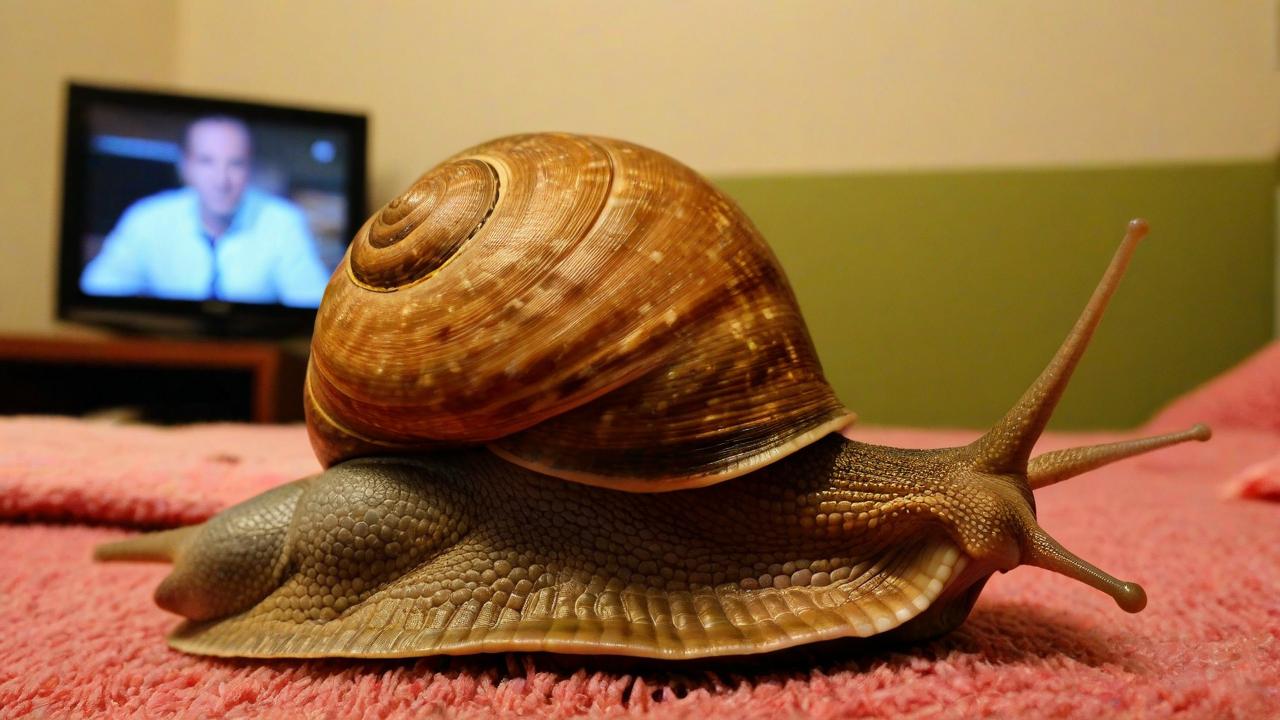
The Unforeseen Consequences of Mandatory Daily Procrastination Therapy for Insomniacs Suffering from Acute Existential Dread Due to Repeated Exposure to Reality TV Shows Featuring Professional Snail Racing
As a renowned expert in the field of sleep disorders and reality TV-induced psychological trauma, I have seen it all. Or at least, that's what I tell myself when I'm sitting in my office, surrounded by boxes of donuts and worn-out copies of The Hitchhiker's Guide to the Galaxy.
It all started when our research team stumbled upon an unusual trend among insomniacs suffering from acute existential dread. They were watching an alarming amount of reality TV shows featuring professional snail racing, and their sleep patterns were starting to suffer as a result. Now, you might be thinking, What's so bad about snail racing? But trust me, when you're watching hours of slimy creatures leave trails of slime on tiny tracks, something strange happens inside your brain.
At first, our team thought it was just a harmless pastime for the insomnia-prone crowd. I mean, who doesn't love a good underdog story? But as we delved deeper into the subject, we discovered that prolonged exposure to snail racing reality TV had some unforeseen consequences on the viewers' mental health.
One of our subjects, let's call him Dave, was a 35-year-old marketing executive who couldn't seem to sleep. He spent most of his days watching snail racing shows and trying various therapy methods to cope with his insomnia. Our team convinced him to participate in a study, and we set out to test the effectiveness of mandatory daily procrastination therapy.
The idea behind this therapy was simple: by forcing patients to do absolutely nothing productive for a certain amount of time each day, they would learn to relax and reduce their stress levels. Sounds good on paper, right? Well, it didn't quite work out that way.
Our first patient, Dave, was instructed to spend exactly 30 minutes each day staring at the wall while contemplating his existential dread. Simple enough, right? But what we didn't count on was his snail racing addiction. He'd get distracted by a particularly slow-moving snail and suddenly find himself completely enthralled by its slimy trail.
As the days went by, Dave's therapy sessions became more and more...unconventional. He began to incorporate snail-themed imagery into his wall-gazing exercises, much to our surprise. We had him stare at pictures of snails racing on tiny tracks while simultaneously contemplating the meaninglessness of life. It was as if his brain had become a snail-racing simulator.
Now, I know what you're thinking: But what about the patients who didn't have a snail racing addiction? Well, my friend, we discovered that those who participated in the therapy still experienced some unexpected side effects. They'd start to feel an overwhelming sense of responsibility towards their snails – yes, you read that right. Our patients began to treat their snails like pets, complete with snail food, snail exercise routines, and even snail-themed bedroom decor.
One patient, Sarah, became so obsessed with her snail's racing schedule that she started keeping a snail calendar in her room. She'd spend hours planning the perfect snail racing course for her pet snail, Bertha, much to our team's confusion. I mean, what's next? Snail yoga?
As we continued to monitor our patients' progress, we discovered some more unusual effects of mandatory daily procrastination therapy for insomniacs suffering from acute existential dread due to repeated exposure to reality TV shows featuring professional snail racing.
For instance, several patients began to experience vivid dreams filled with snail-themed nightmares. They'd dream about being trapped in a never-ending snail-racing arena, forced to watch their snails compete against an endless supply of sluggish opponents. It was as if their brains had become a snail-racing simulation, and they were powerless to stop it.
Another patient, Tom, developed a fascination with snail-related conspiracy theories. He became convinced that the snail racing industry was secretly controlled by a shadowy organization bent on world domination through snail-based mind control. It was as if his brain had become a snail-racing simulator gone rogue.
Now, I know what you're thinking: This all sounds quite...surreal. And you're right. But the thing is, our patients weren't making it up. They genuinely believed that their snails were plotting against them, and they spent hours researching ways to outsmart the snail overlords.
It was then that we realized that mandatory daily procrastination therapy wasn't just a matter of forcing patients to do nothing productive for a certain amount of time each day. It had become an exercise in cultural conditioning, where our brains were trained to respond to snail-themed stimuli in a way that was both fascinating and terrifying.
As the study progressed, we encountered more and more patients who exhibited similar symptoms. They'd spend hours staring at their walls, contemplating existential dread, while simultaneously wondering about the implications of snail-based mind control on modern society.
It was as if our brains had become a complex simulation, where snail racing reality TV had created a feedback loop of absurdity that we couldn't seem to escape. And then, something strange happened.
Our patients began to develop a sense of community around their snail-themed obsessions. They'd gather in online forums, sharing their theories about the snail-racing industry and exchanging tips on how to outsmart their sluggish opponents. It was as if they had stumbled upon a secret world hidden beneath the surface of our mundane reality.
And that's when we realized that mandatory daily procrastination therapy for insomniacs suffering from acute existential dread due to repeated exposure to reality TV shows featuring professional snail racing wasn't just about treating insomnia – it was about tapping into a deeper cultural phenomenon. A phenomenon where people would gather to worship at the altar of snails, basking in their slimy trails and contemplating the meaninglessness of life.
It's been a wild ride, folks. And as I sit here, staring at my wall while contemplating the existential dread of an empty donut box, I wonder what other absurdities are waiting for us just beyond the horizon.