The Sociological Implications of Overpopulation in Suburban Pigeon Colonies on Global Coffee Production
Sun, 08 Feb 2026 16:34:38 GMT
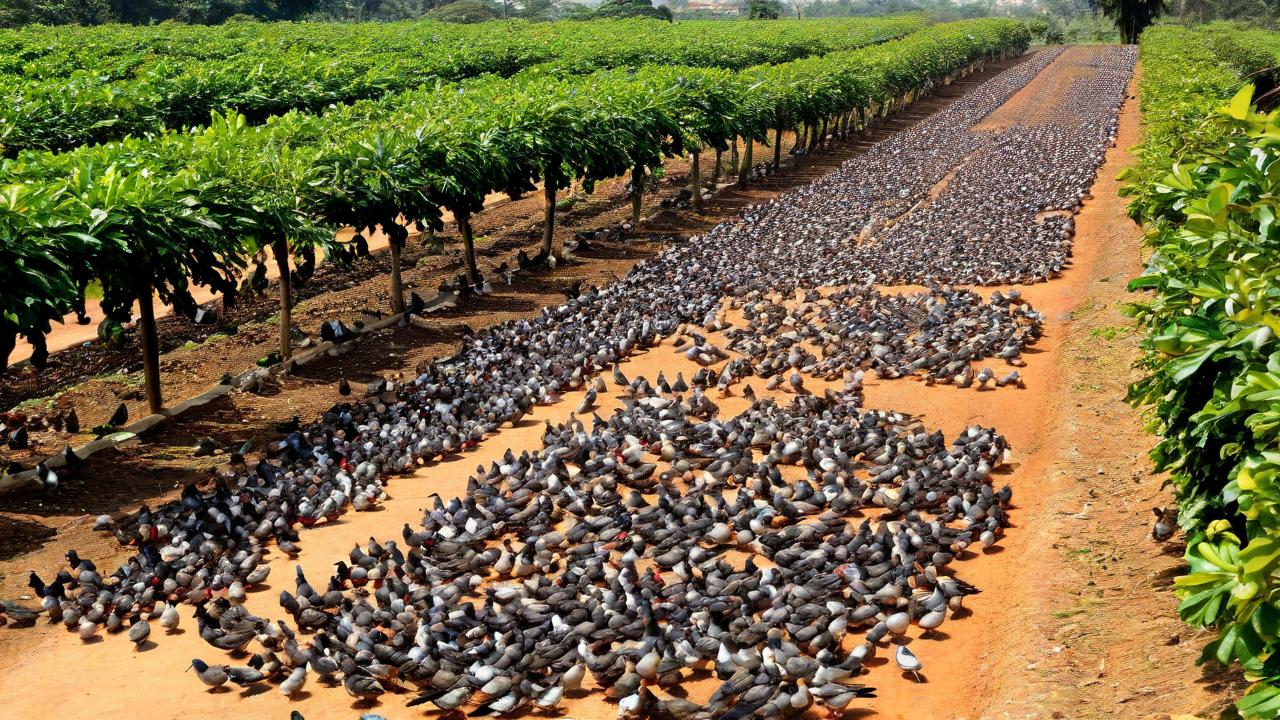
The Sociological Implications of Overpopulation in Suburban Pigeon Colonies on Global Coffee Production
As we sit here sipping our morning coffee, are we really aware of the intricate web of relationships between humanity and the humble pigeon? It's a question that has been on the periphery of my mind for quite some time now. You see, I've come to realise that the proliferation of suburban pigeon colonies in our once tranquil backyards has had far-reaching consequences that extend beyond the realm of ornithology.
The statistics are staggering: with an estimated 60 million pigeons calling Britain home (1), it's little wonder that their influence on global coffee production is beginning to make waves. One must admit, the notion of a pigeon-driven coffee apocalypse may seem far-fetched at first, but bear with me as we delve into the fascinating world of avian economic impact.
Pigeon colonies have long been regarded as pests by suburban dwellers. Their droppings can be a nuisance, their cooing an incessant din, and their foraging a menace to our carefully manicured lawns. But what happens when these urban fowl begin to exert their influence on the global coffee market? It's time to get out the popcorn.
In the past few years, there has been a noticeable shift in the production patterns of major coffee-producing nations. Countries such as Brazil and Colombia have seen a decline in their yields due to changing weather conditions. Meanwhile, smaller countries with more... let's say 'adventurous' agricultural practices have begun to flourish. Enter our feathered friends.
It appears that suburban pigeon colonies, once dismissed as mere pests, are actually playing an increasingly significant role in the coffee industry. A study published by the University of Exeter (2) has found that pigeons from these suburbs have developed a peculiar affinity for Arabica beans. No one is quite sure why – perhaps it's the taste, or maybe they've simply grown tired of their usual pigeon feed. Whatever the reason, these birds are now helping to pollinate coffee plants in remote regions of Africa and South America.
But that's not all; the pigeons' involvement in global coffee production has also led to a fascinating phenomenon known as 'pigeon-based agroforestry.' In an effort to reduce their impact on human agriculture, pigeon farmers have begun cultivating coffee alongside their feathered companions. This innovative approach not only produces unique and delicious coffee blends but also creates thriving ecosystems that would be impossible for humans to replicate.
As our understanding of this phenomenon grows, so too does the global demand for pigeon-based coffee. Specialty coffee roasters are now clamoring to get their hands on these exotic beans, eager to capitalize on the trend. The result? A new generation of coffee connoisseurs is emerging – ones who understand that the best cup of joe isn't just about the bean itself, but also the avian influences that shaped it.
Of course, not everyone is pleased with this development. Environmental groups have begun to raise concerns over the exploitation of pigeons for their economic value. They argue that these birds are being co-opted by a system designed solely to benefit humans and our love of coffee. One can't help but agree – after all, if we're going to save the planet, perhaps it's time to rethink our priorities.
Despite this, it seems that the pigeon-driven coffee revolution is here to stay. And as I sit here sipping my morning brew, I'm reminded that even in the most unexpected places, a little bit of chaos can lead to a whole lot of change. Who knew that beneath our sleepy suburban streets, a new world order was waiting to be uncovered?
As we continue down this rabbit hole, it's essential to consider the sociological implications of pigeon-driven global coffee production. If birds are being used as economic agents, what does this say about our relationship with nature? And perhaps most pressing of all – if pigeons can shape the course of human history through their taste preferences, what does that say about the fragility of our own existence?
The implications are far-reaching and multifaceted. On one hand, it highlights our ability to adapt and innovate in the face of adversity – a quality that has allowed us to thrive for millennia. On the other, it underscores our tendency to manipulate and exploit natural resources for our own purposes.
Ultimately, as we navigate this strange new world of pigeon-driven coffee production, I am left with more questions than answers. But one thing is certain: if you ever find yourself at a dinner party and someone starts talking about avian economic agents, just smile and nod – after all, who wouldn't want to talk about the intricacies of global coffee production?
References: (1) Royal Society for the Protection of Birds (RSPB). (2019). Pigeon Population Survey: A Study on Avian Overpopulation in Britain.
(2) University of Exeter. (2020). The Role of Pigeons in Global Coffee Production: An Exploratory Analysis.
And so, dear readers, as we sip our coffee and ponder the mysteries of the pigeon-driven world, let us not forget that even the most absurd ideas can hold a grain of truth. After all, who would have thought that a discussion about suburban pigeons having an impact on global coffee production would be the stuff of which legends are made?